

The War That Has No Exit, The Alliance That Has No Anchor
Trump declares it’s almost over. Iran says he doesn’t know what he’s shooting at. Thirty-five countries meet without Washington to work out who reopens a strait the US closed. Week five.

Nothing was resolved. That’s the story.
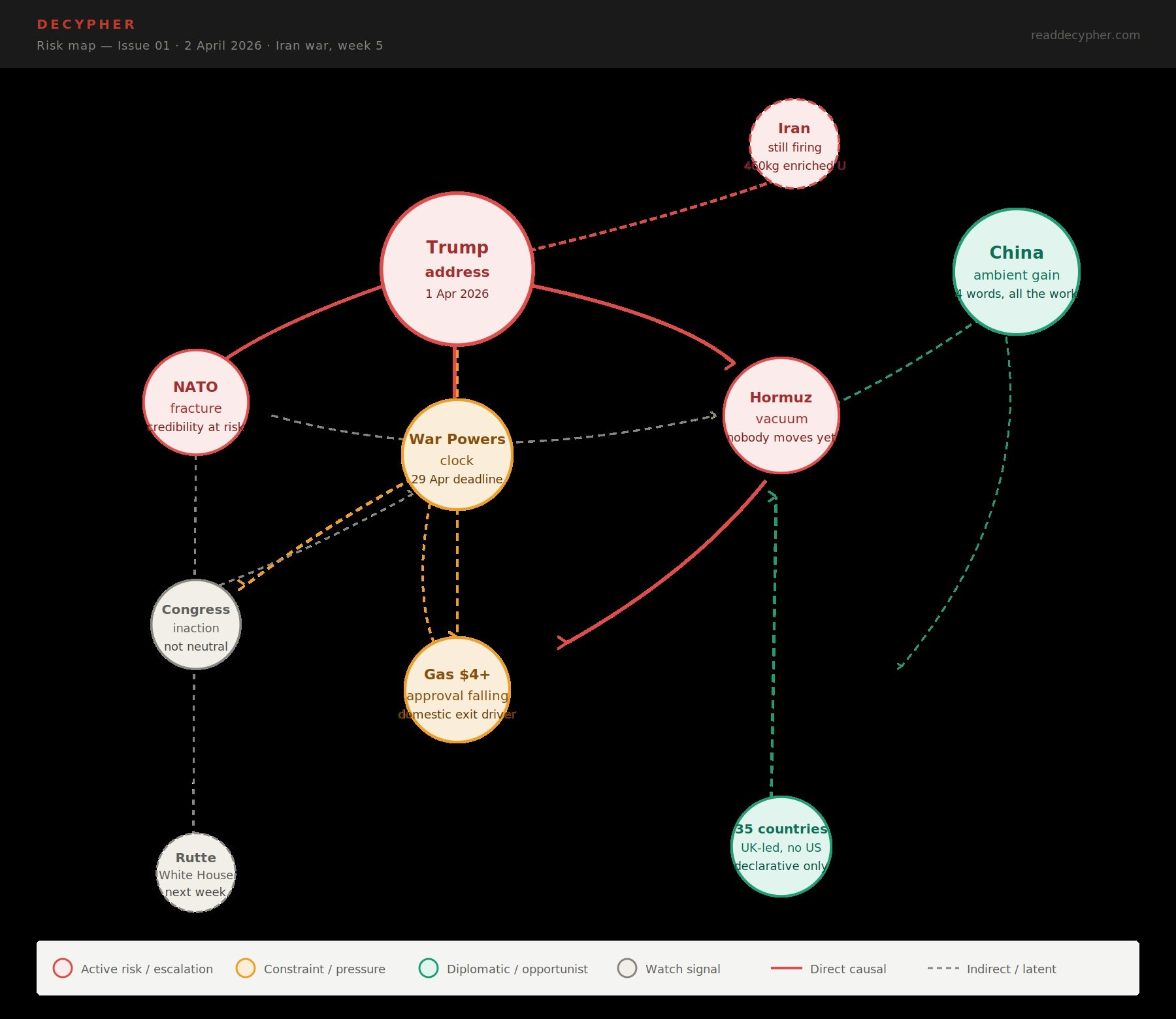
The speech changed nothing. Oil climbed after it. Thirty-five countries convened the next morning without the United States. Iran fired ten ballistic missiles at central Israel the same night Trump was telling Americans the war was “nearing completion.”
The 19-minute address on 1 April was Trump’s first formal account of Operation Epic Fury since the strikes began on 28 February. He listed four objectives — destroy Iran’s missiles, annihilate its navy, suppress its proxies, prevent a nuclear weapon. He claimed progress on all four. The claims are selectively true. Roughly one-third of Iran’s missile capabilities have been confirmed destroyed. The navy is largely gone. Everything else is contested. The enriched uranium — 460 kilograms at 60%, enough material for eleven devices — is still underground. Asked about it, Trump told Reuters: “I don’t care about that… we’ll always be watching it by satellite.”
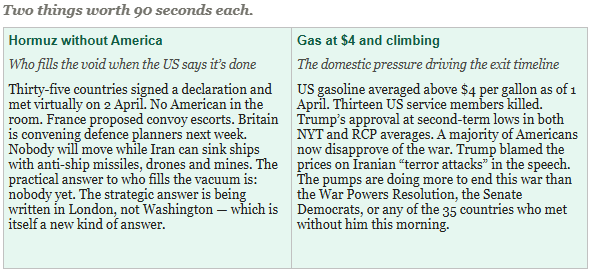
The legal clock matters here. Strikes began 28 February. Under the 1973 War Powers Resolution, unauthorised military operations must end within 60 days of initiation unless Congress acts. That deadline falls around 29 April. Both chambers voted down resolutions in early March that would have constrained Trump’s authority. But failing to pass a restriction is not the same as authorisation. The administration knows this. Trump is now promising to end the operation within two to three weeks — a timeline that lands, conveniently, just inside the deadline. Whether that convergence is coincidence or calculation is the relevant question.
The NATO thread is weirder. Trump spent the days before the address calling the alliance a “paper tiger” and telling the Telegraph he was strongly considering withdrawal. Then the address itself did not mention NATO once. Secretary Rubio said the alliance would need to be “reexamined” post-war. NATO Secretary General Rutte is now visiting the White House next week. The pattern is standard: maximum public threat, private repositioning, tactical ambiguity preserved. The damage is real regardless. Credibility does not run on statute. It runs on belief. That belief is now publicly in question for the first time in 77 years.
Then there’s Beijing. China’s response to the address: “Military means cannot offer a fundamental solution.” Foreign Ministry spokesperson Mao Ning. Said in four seconds. Doing more strategic work than the entire 19 minutes.
“Anyone watching that speech has no idea whether Trump is escalating or de-escalating the war with Iran. But to be fair, neither does he.”
— Sen. Chris Murphy (D-Connecticut), 1 April 2026
Three things to watch
▶ 29 April: the War Powers deadline. If operations continue past that date without a congressional AUMF, the legal confrontation is unavoidable. Watch whether the White House seeks authorisation or simply declares the conflict over before the clock hits.
▶ Rutte’s White House visit next week: if Trump does not publicly reaffirm Article 5 in that meeting, the structural damage to NATO cohesion is real — not a negotiating tactic.
▶ The UK’s Hormuz defence planning meeting: military planners from several countries will convene after the foreign ministers’ virtual summit. Whether that produces a credible post-ceasefire security architecture or a joint statement is the only question that matters for energy markets.


The War Powers Resolution, 1973 (50 U.S.C. § 1541–1548)

Access- congress.gov
Everyone is citing it. Almost nobody has read it. It is not a 60-day licence for presidential war-making. That is the most common misreading, and it is consequential.
Section 2(c) is the operative clause. The president may introduce US forces into hostilities without prior congressional authorisation in exactly one circumstance: “a national emergency created by attack upon the United States, its territories or possessions, or its armed forces.” The word “only” is in the text. No senator — including the Democrats who sponsored the War Powers resolutions in March — has produced evidence that Iran attacked or was imminently about to attack the United States before 28 February.
The 60-day clock in Section 5 does not vest the president with authority. It provides a grace period for Congress to act. If Congress does nothing, the law requires the president to terminate the engagement. Trump’s administration is betting on two things: that the conflict ends within the window on its own terms, and that Congress continues to defer rather than confront. Both bets may be correct. But they are bets, not legal positions.
Secretary Rubio told reporters the administration has “overcomplied” with the law. Lawfare’s analysis is blunt: Operation Epic Fury is a war in scale, scope and objective, not a limited engagement, and no plausible reading of Article II covers it. Read Sections 2, 4 and 5. Then read the Lawfare piece. The gap between those two documents is where the next confrontation lives.

Deciphering the China-Pakistan Peace Initiative: A Security Lens
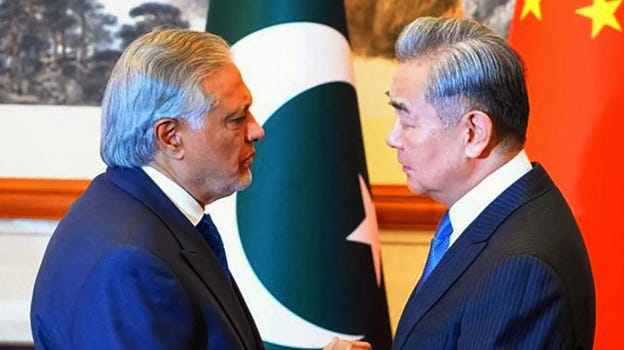
On 31 March 2026, China and Pakistan jointly released a five-point peace plan expecting at de-escalating the deepening conflict in the Middle East. Pakistan’s Foreign Minister, Senator Muhammad Ishaq Dar, travelled to Beijing to formalise the proposal alongside his Chinese counterpart, Foreign Minister His Excellency Wang Yi. The joint announcement calls for an negotiating table for lasting peace and cessation of hostilities, the resumption of diplomatic dialogue, protection of civilian infrastructure, freedom of navigation through the Strait of Hormuz, and reaffirmation of the primacy of the United Nations Charter.
China’s strategic calculus is fairly legible. As the largest buyer of Iranian oil (approx 80%) and the largest economic backer, Beijing has a direct economic stake in ending a conflict that disrupts supply chains and drives up energy costs. Also 45% of oil comes from Straight of Homruz. Also, the huge investments made in Belt and Road Initiative in that area will paced up with this plan. China on the other hand, has diligently developed economic relations with Saudi Araba, the UAE and Iraq. Providing military support to Iran could play with this delicate equilibrium. Thus, the China’s motivations are layered with energy, economics, and geopolitical reputation all playing its role simultaneously.
Pakistan’s motivations are more complex, and more existential. The country shares a 900-kilometre border with Iran, and its western frontier — Balochistan — is already in the grip of a violent insurgency. The Balochistan Liberation Army (BLA), an ethno-nationalist militant group along with its ties with TPP, has conducted sustained attacks against Pakistani state institutions and, notably, against infrastructure tied to the China-Pakistan Economic Corridor (CPEC) making the country at the top of Global Terrorism Index 2026. An escalating regional conflict would provide precisely the kind of fire it needed. Also, the ongoing turmoil with Afghanistan, militant violence in Khyber Pakhtunkhwa adds to this. Pakistan also imports around 85% of its energy needs resulted in rising oil prices in the country. Signinig strategic mutual defense agreement with Saudi Arabia in 2025, also creates obligations for Pakistan to mediate the efforts. The proposal also underscores Pakistan’s broader strategic repositioning. As analyst Rafiullah Kakar has noted, Islamabad appears intent on asserting itself as a significant middle power within the Muslim world — a role that requires demonstrating diplomatic reach beyond its traditional bilateral relationships with Washington and Beijing.
Whether this initiative produces durable results remains uncertain. What is clear is that the the new security architecture of the Middle East is now drawing in actors whose stakes are less ideological than structural — and that changes the diplomatic calculus in ways that are still unfolding.

Factories Under Pressure as War Fuels a Global Cost Surge
Factories across the world faced soaring input costs and mounting supply chain disruptions in March as the Iran war rattled global logistics networks, while tepid demand threatened the manufacturing sector’s fragile recovery, surveys showed.
Global logistics networks were disrupted by the conflict, especially in the vicinity of the Strait of Hormuz, a vital route for the transportation of oil. Delivery times increased, transportation costs increased, and production costs were directly impacted by rising oil prices as ships diverted to avoid the conflict area. Manufacturers across regions were left with little choice but to raise selling prices.
The disruption also distorted key economic indicators, making factory activity appear stronger than it actually was. S&P Global noted that headline PMI readings were artificially lifted by longer supplier delivery times — a metric that usually points to strong demand but, in this case, reflected war-driven supply disruptions. While the eurozone PMI rose to 51.6 in March from 50.8 in February, the gains masked uneven performance across countries, with Germany and Italy showing resilience while Spain and France lagged.
The sharper impact, however, was visible across Asia in March, where the region’s heavy reliance on Gulf oil imports made it especially vulnerable to disruptions around the Strait of Hormuz. As fuel prices surged and shipping delays worsened during the month, production costs rose sharply, slowing manufacturing activity across China, Japan, Indonesia, Vietnam, Taiwan, and the Philippines.
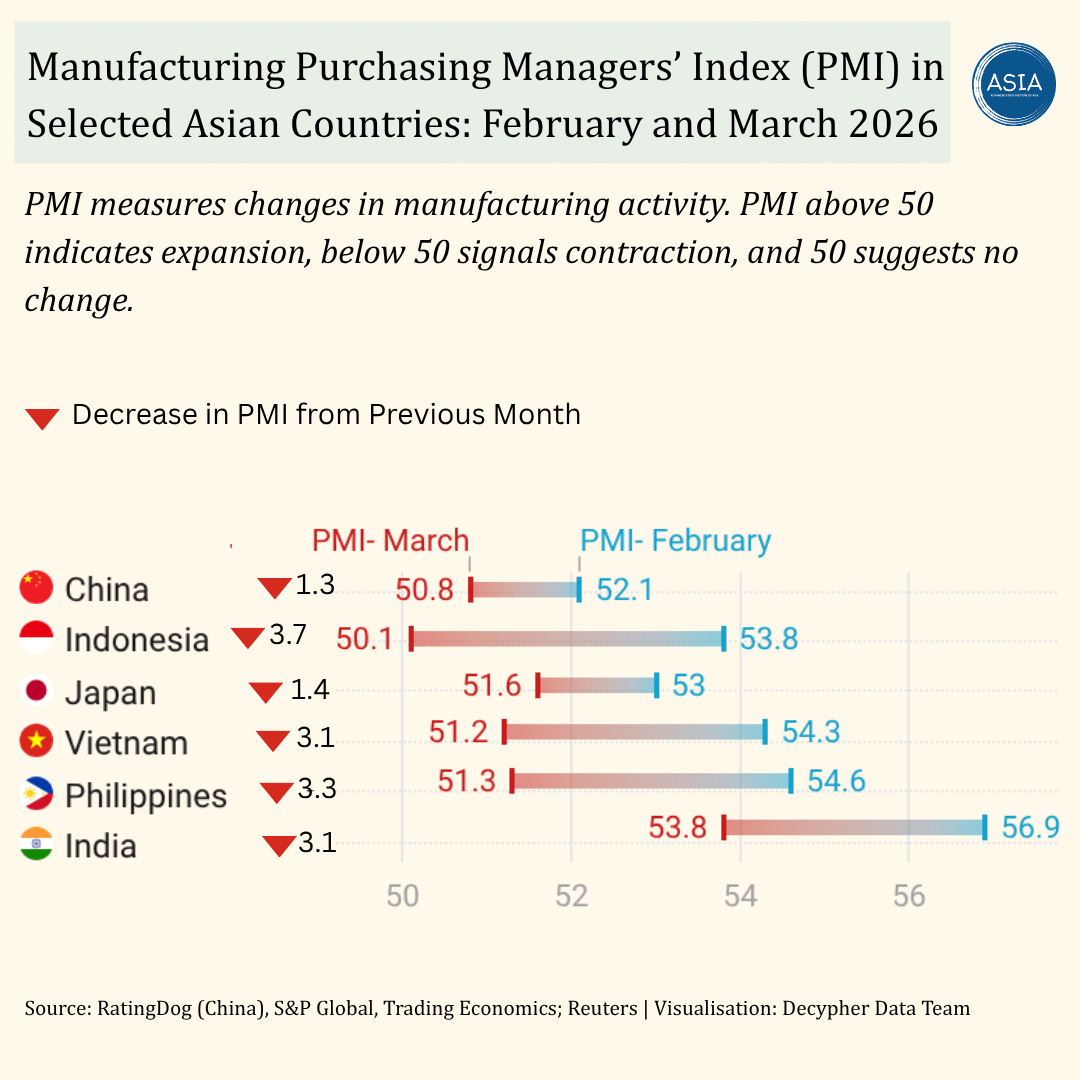
China’s manufacturing sector remained in expansion territory in March, although the pace of growth slowed compared with February. Japan also faced mounting pressure, with input costs rising at their fastest pace in 19 months, weighing on business sentiment and factory output. Across Southeast and East Asia, March marked a clear deterioration in industrial momentum, as the war-driven energy shock exposed the region’s dependence on external energy supplies and already fragile logistics networks.
South Korea was the key outlier, with factory activity expanding at its fastest pace in over four years, driven by robust semiconductor demand and new product launches.

A New Generation Takes Power in Nepal
Nepal’s 2026 snap election marks a dramatic turning point in the country’s political history. The long-standing dominance of conventional parties like the Nepali Congress and the communist blocs has been successfully overthrown by the Rastriya Swatantra Party (RSP), which won 182 of 275 parliamentary seats. This decision is more than just an electoral outcome; it represents a strong public disapproval of the previous political system, which had come to represent economic stagnation, corruption, and instability.
Balen Shah, a 36-year-old former mayor of Kathmandu, rapper, and structural engineer who became Nepal’s youngest elected prime minister, is at the center of this political overhaul. His rise is closely tied to the wave of public anger that followed the Gen Z protests and the broader frustration of a younger population facing unemployment, poor governance, and limited economic opportunities. Shah and the RSP successfully transformed this discontent into a nationwide movement for change.
Unlike Nepal’s established parties, the RSP draws its appeal not from a clearly defined ideology but from its promise of governance reform and efficient service delivery. Its campaign, driven by an extensive social media strategy and strong youth participation, found particular resonance among urban and semi-urban voters. Since assuming office, the new administration has moved swiftly, launching anti-corruption investigations and unveiling a 100-point reform agenda focused on digitization, institutional accountability, and economic modernization.
However, the true test is ahead. Governing Nepal’s complicated political and bureaucratic system will be significantly more challenging than winning an election. Whether the RSP can translate public optimism into long-term institutional transformation may mark the beginning of a new political era in Nepal.
📖 Top Pick From Decypher
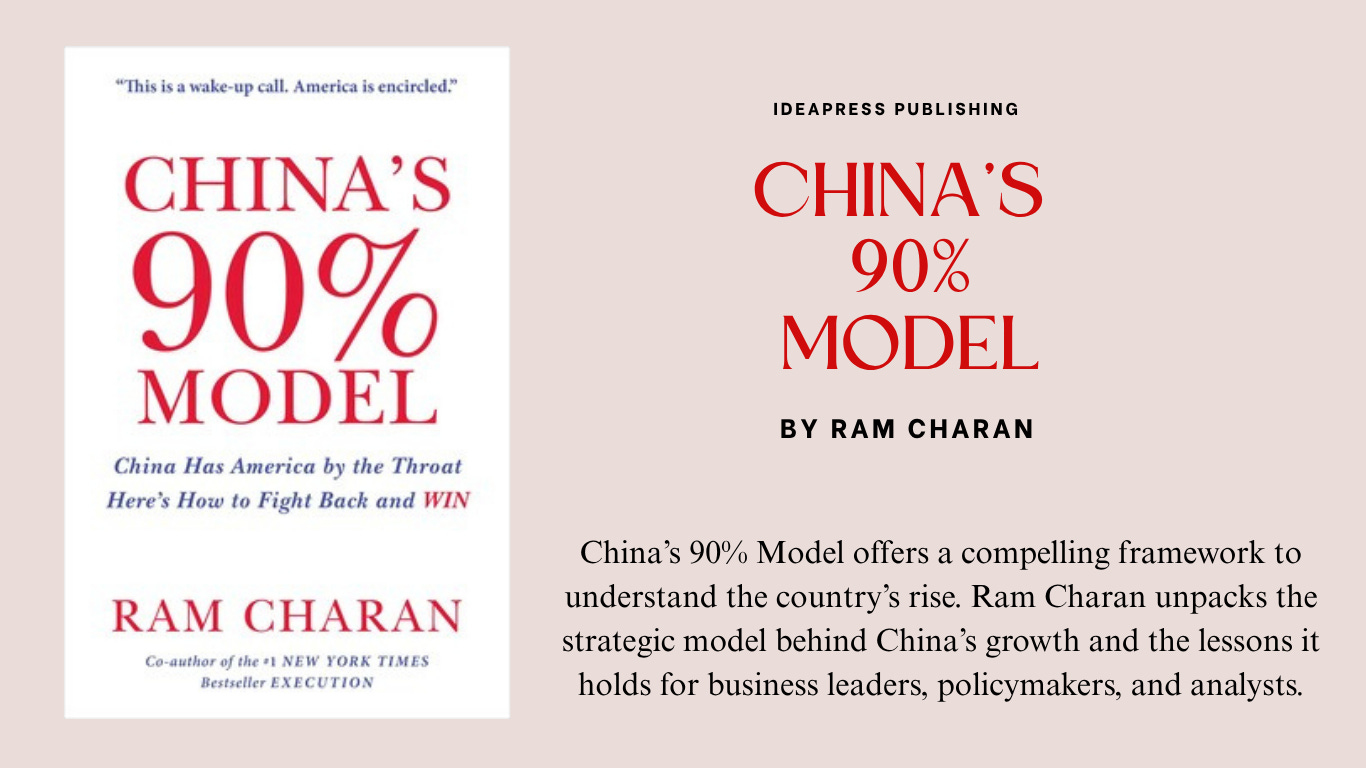
A must-read for anyone tracking Asia, trade, and global power shifts.
— — —
Essay: Amogh Dev Rai- Research Director at the Advanced Study Institute of Asia (ASIA), affiliated with SGT University, Gurugram.
Microessay: Neeti
Data and Postscript: Bhupesh
Produced by Decypher Team in New Delhi, India
— — —