

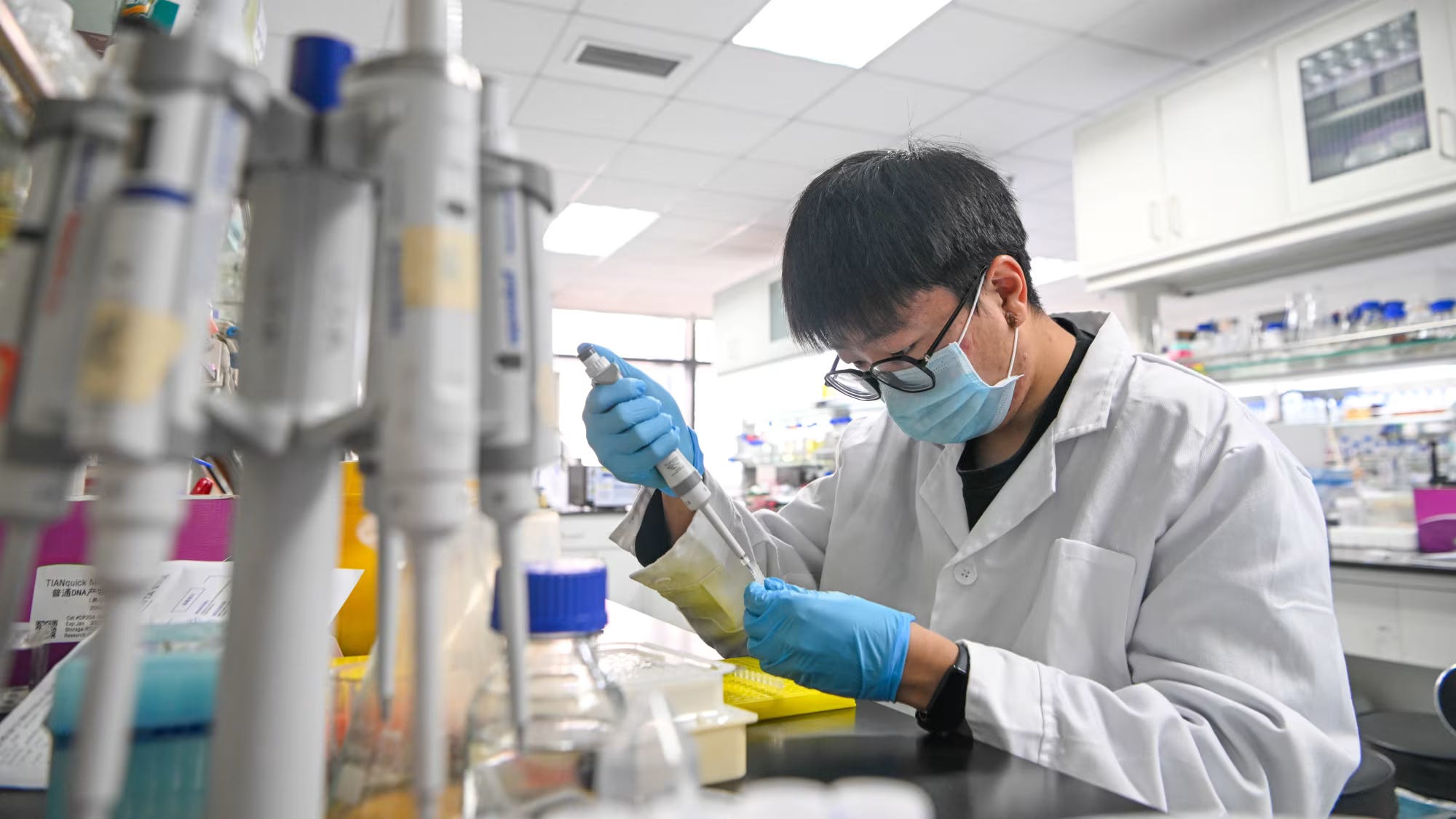

“The right approach is to reveal enough to make the point, but not so much as to give everything away.” - Huang, Beijing-based scientist.
There is a number that used to be a point of pride for China, and now it’s being quietly walked back. It is the share of the world’s scientific papers written by Chinese researchers and published in journals the West built to grade itself, the Science Citation Index SCI. It is a ledger against which a scientist’s whole career is weighed. Twenty years ago, that share was 5 per cent. By 2023 it had climbed to 30 per cent. This was not an accident but a policy sustained over two decades, and it worked. Now in the middle of 2026, Beijing is discussing how to undo the very incentive that built it.
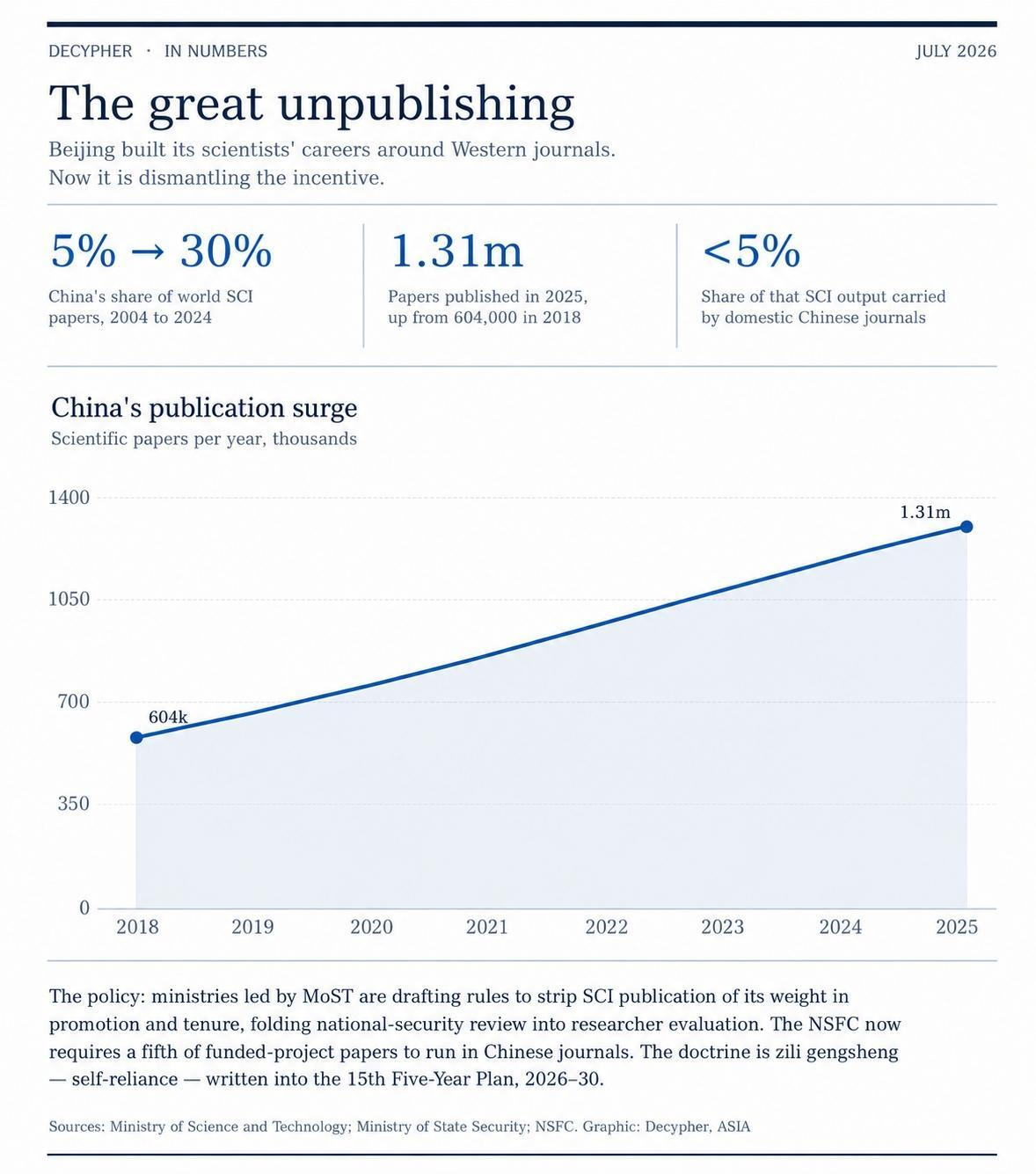
China’s total scientific publication output went from roughly 604,000 papers in 2018 to an estimated 1.31 million in 2025, more than doubling in seven years. The mechanism is dry and administrative, which is how you know it is serious. Chinese policy makers are weighing whether to strip the weight that SCI publication carries in decisions about academic promotion and tenure. For years, getting into Nature or Cell was a gateway to professorship and grants. Now several ministries, including the Ministry of Science and Technology, are drafting a framework that would fold national security considerations into how researchers get evaluated in the first place. If publishing abroad is what earns you a career, then publishing abroad is what you will keep doing, with or without a security review. Delink the reward from the act, and the leak risk shrinks on its own. The push sits inside a doctrine Beijing calls “zili gengsheng” or self-reliance, revived under Xi Jinping and folded into the 15th Five-Year Plan covering 2026 to 2030, which treats scientific independence as a matter of regime security rather than just economic policy.
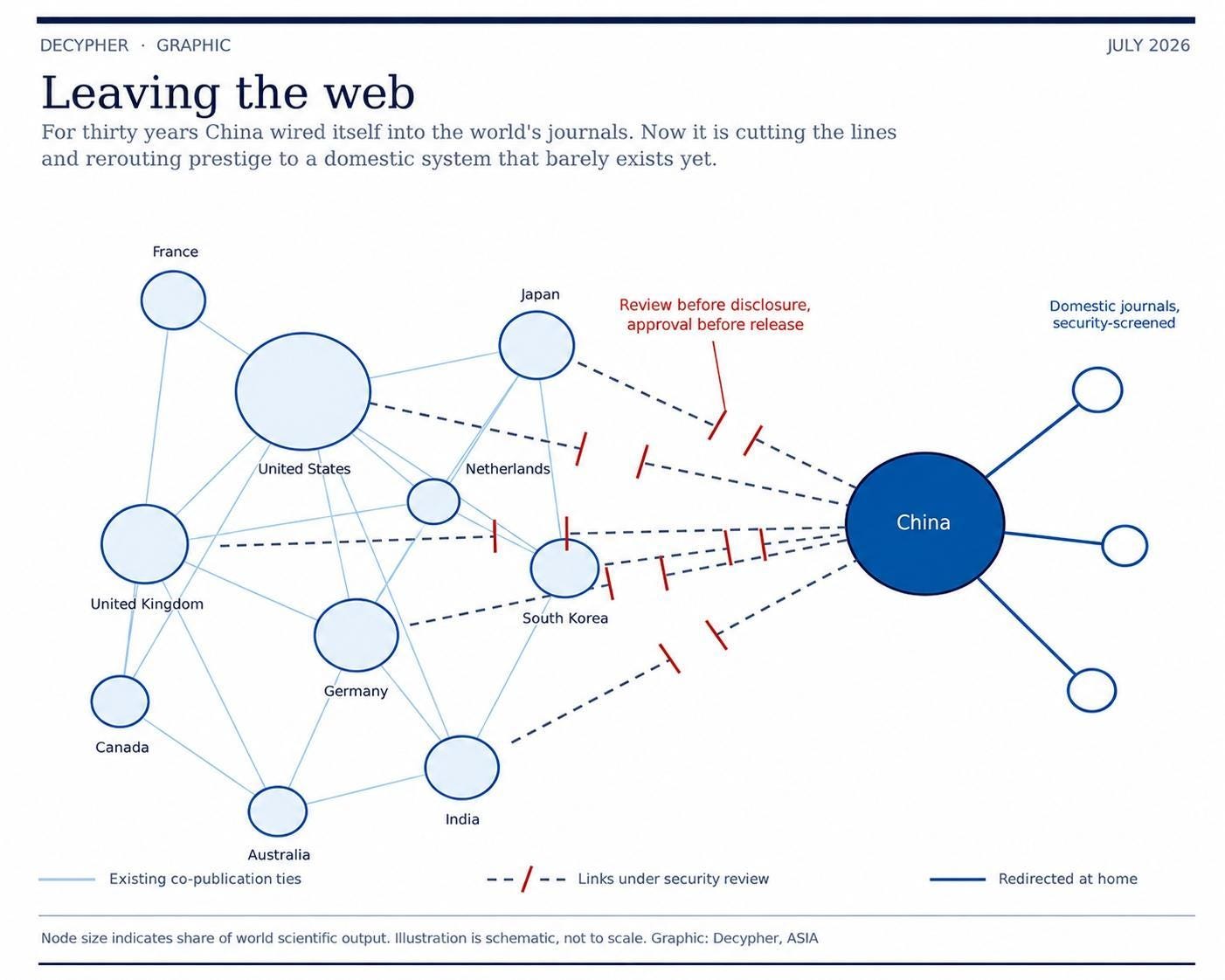
The trigger for this round of tightening was a case the Ministry of State Security made public last month. A researcher, trying to improve the odds of getting a paper accepted at an international journal, had allegedly included what the ministry called important technical details that should never have left the building. In June, the security ministry went further, warning that submissions to international conferences, publications in foreign journals, and cross-border academic exchanges must all strictly follow rules requiring review before disclosure and approval before release. It cited another unnamed researcher who had reportedly folded “core equipment structures, key technical parameters and distinctive experimental sample data” into papers aimed at foreign journals and conferences.
None of this is happening in isolation. Denis Simon, a senior fellow at the Quincy Institute, put it this way: the Chinese science system has shifted from a catch-up mode to a great power mode. China no longer needs to catch up in the way it once did, in his telling. The question now is how it manages the knowledge it already has, protecting national security while still building its own scientific prestige.
There is also a less geopolitical reason for the reform, and the FT traces it back further than the current security push. In 2021, the human resources and education ministries had already warned universities against relying on “rigid” publication requirements, well before national security became the headline justification. The obsession with SCI publication, what Chinese commentators call SCI worship, has also fed academic misconduct: inflated publication records, papers built on manipulated or fabricated data. So the current move is not a clean pivot from openness to secrecy. It is an older complaint about research quality and a newer one about leaks, arriving at the same policy at roughly the same time.
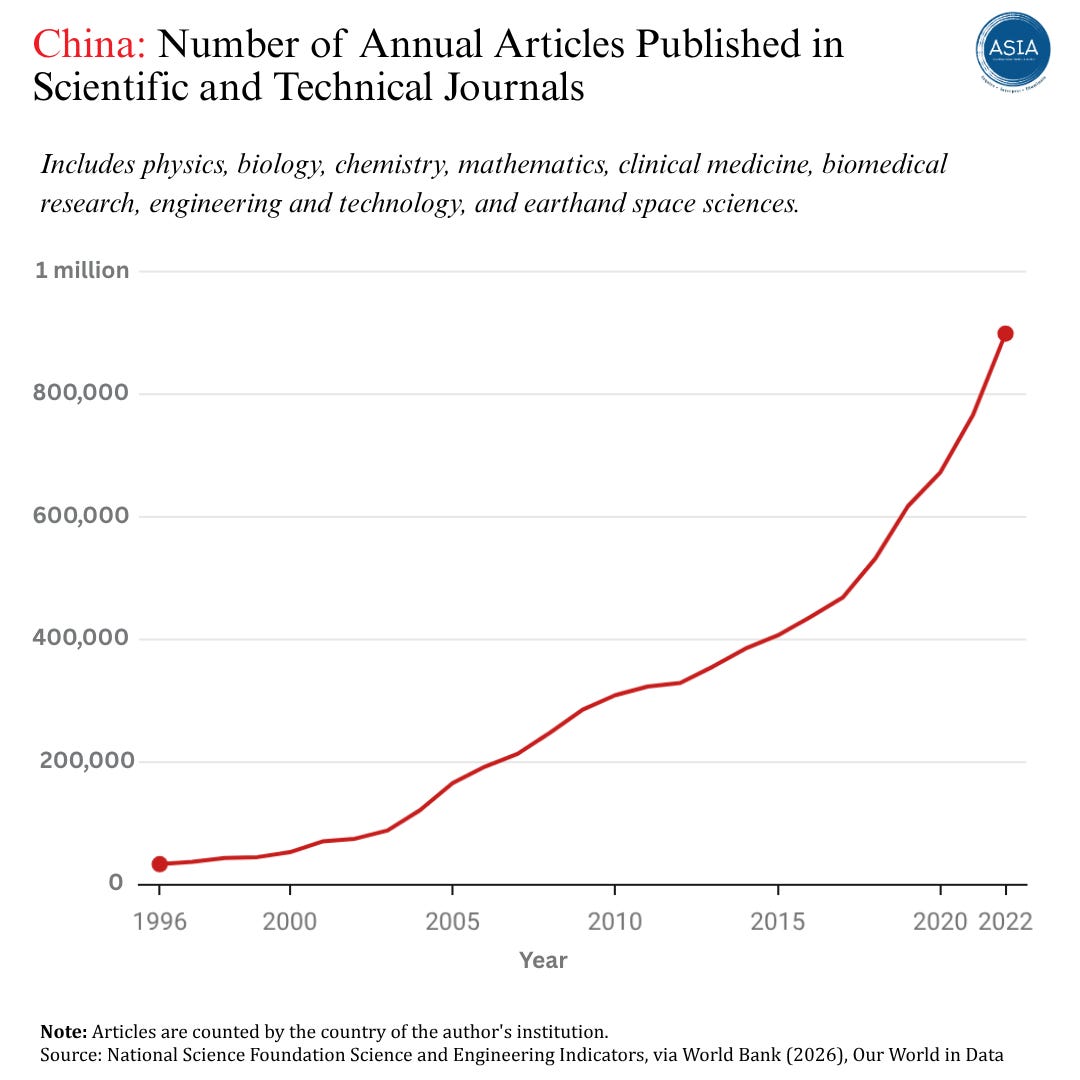
Total Publications Per Year Between Countries
Base: all world SCOPUS recorded scholarly output published between the 1996 and 2022 calendar years
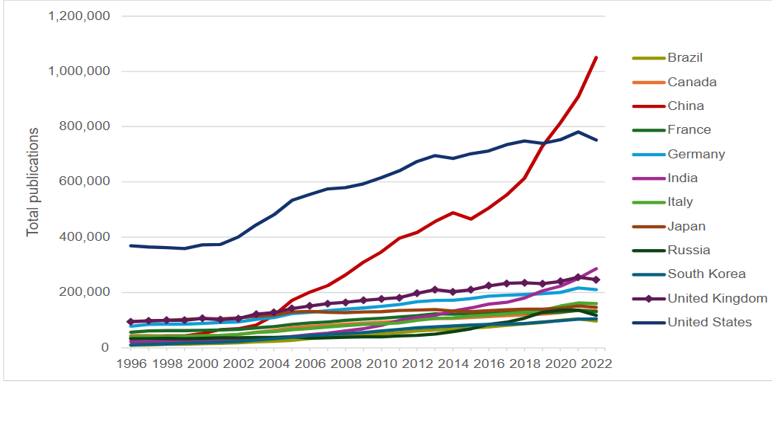
For the scientific community outside China, the practical effect is less about any single stolen formula and more about duplication. Researchers studying the trend warn that when major research powers withdraw into separate, security-screened tracks, the result is parallel vaccine pipelines, segregated AI models, and duplicated climate datasets, effort spent twice on problems that don’t respect borders. For Chinese researchers themselves, the immediate effect is narrower and more personal: a career ladder that spent thirty years rewarding one behaviour is now being told, without much clarity yet on what replaces it, to reward something else.
What the reform cannot easily fix is the alternative. Domestic Chinese journals, even the ones that make it into the SCI index, accounted for less than 5 per cent of the SCI output produced by Chinese researchers as of 2023. Telling a scientist to publish at home only works if home has somewhere to publish. The National Natural Science Foundation has already begun requiring that a fifth of the papers from its funded projects run in Chinese journals, a quota dressed up as a preference.
Not every Chinese scientist sees the retreat as a loss. But there is the quieter tension sitting underneath the security framing. A system built for thirty years to chase prestige in someone else’s journals cannot be redirected by ministerial memo alone. The prestige has to go somewhere, and right now nobody in Beijing has quite decided where.
Essay: Maseera Shaik- Research Intern (Security, Crisis and Strategy) at The Advanced Study Institute of Asia (ASIA)
Produced by Decypher Team in New Delhi, India