


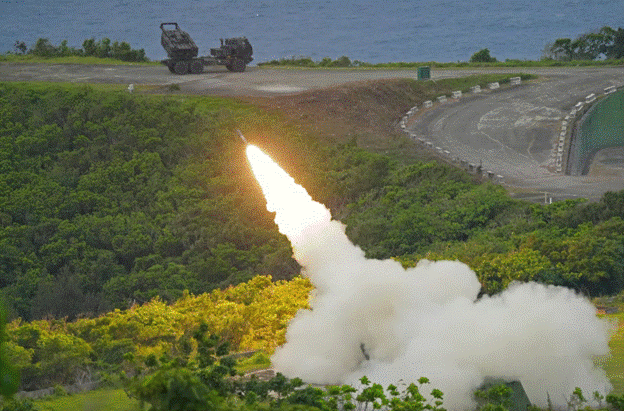
When Xi Jinping visited the White House in late September 2026, the Chinese readout recorded his central demand: that Washington stay on what Beijing calls the correct position of opposing Taiwan independence and handle the Taiwan question with prudence. The White House statement and fact sheet did not mention Taiwan. Behind that silence sat a roughly $14 billion arms package that Congress approved in January and that the administration has declined to notify for more than four months. This piece asks whether such a pause can function as a bargaining strategy, who bears its costs, and what it reveals about the American security role in Asia as American standing among allied publics falls. It argues that the pause operates as a concession in effect, that the public evidence for this is thinner than commonly assumed, and that its weight depends on what the guarantee rests on.
The package was approved by lawmakers in January and cannot advance without formal notification. After the May summit in Beijing, Trump promised a determination within a fairly short period, held the package in abeyance, and told Fox News the sale was “a very good negotiating chip”. The administration’s official explanation differs. Acting Navy Secretary Hung Cao told the Senate that sales were on a pause so the military would retain the munitions needed for the war against Iran, and Taipei says it was never formally notified. Secretary of State Marco Rubio later told senators the sale was not on a pause but under review. The package stayed stalled through a second summit, which followed an extension of the trade truce and at which the two sides agreed to seek better tariff treatment for about $30 billion of non-sensitive goods each way.
The two explanations predict different things. Scarcity should freeze items short in American stocks and spare the rest; diplomacy should freeze the whole package and follow the summit calendar. The public record does not itemize the package, so the test cannot yet be run from outside. What is observable is a president who described the sale in the language of bargaining, a freeze that survived two summits, and a trade deal that advanced while the arms question did not. These facts fit linkage without establishing it. No source shows Beijing surrendering anything specific in return, and Xi’s readout asks for prudence, not a freeze by name. “Concession” is an inference, strengthened by the president’s own framing. The pause is public; what stays unannounced is its price, and the concession lies there.
Whether a guarantee survives private bargaining depends on how the bargaining is structured. Taiwan policy has never been free of dealings with Beijing. In the August 1982 communiqué, Washington told Beijing it intended gradually to reduce arms sales; Reagan paired that with the Six Assurances, conveyed to Taipei, one of which holds that the United States would not consult Beijing on arms sales. The settlement therefore combined a concession to the adversary with a counter-commitment to the protégé, and it distinguished two kinds of ambiguity. Washington stayed vague about what it would do in a crisis but explicit about peacetime process: arms would move under the Taiwan Relations Act, which obligates the United States to provide defensive arms, with no Chinese say. The present pause reverses this. The crisis question remains vague, and the peacetime process has become vague too. Trump has confirmed discussing arms sales with Xi and dismissed an agreement signed in 1982 as a reason not to; analysts say such consultation may breach the assurances. Officials insist policy has not changed, which may be true of the written policy and still miss the point, since a guarantee is sustained by the practice that executes it.
A guarantee has three audiences. The adversary must expect the guarantor to act, the protégé must expect it enough to invest in its own defense, and the guarantor’s institutions must hold after one leader’s attention shifts. Private bargaining damages the first two once discovered, and the third limits the harm. At present, the third is intact: Congress shows bipartisan consensus behind the sales, and Taiwan’s legislature passed a special defense budget of NT$780 billion, roughly $25 billion, in May. The arrangement survives this pause. A repetition is another matter, because each one teaches Beijing that the price list is open.
Beijing rejects the term “sphere of influence” and prefers Xi’s 2014 formulation that Asian security should be managed by Asians. In analytic usage, the term denotes a zone in which states adjust their security choices to avoid one power’s displeasure and outside powers accept that adjustment as legitimate. The second element is where the pause matters. Beijing treats Taiwan as a domestic question, so it seeks the disappearance of the question. A president who weighs an arms sale against Beijing’s reaction, and treats a limit on consultation as dispensable, concedes that Beijing holds a legitimate interest in the decision. Influence shifts from pressure around the island to consultation in Washington, which costs China less and is harder to resist because the other party chooses to attend. Little else has changed: American forces, the alliances with Japan and the Philippines, and Taiwan’s budget remain. A sphere also requires third states to defer, and the evidence is thin. A CSIS analyst argues that economic pressure on India while Washington seeks stability with China risks persuading New Delhi that independent leverage protects better than alignment. Pew’s 2026 survey found the United States ahead of China in favorability in only six of 36 countries, among them India, Japan, the Philippines and South Korea, which suggests proximity to Chinese power breeds wariness before deference.
The fall in American reputation raises the question of whether the umbrella itself changes. The umbrella divides into capability, credibility, and consent. Opinion does not touch capability, which consists of forces, bases, and munitions stocks. Credibility is partly a matter of belief. Consent, meaning basing access, joint planning, defense budgets, and the willingness of local politicians to stand beside Washington, depends most on public tolerance, and tolerance is falling. Pew found China viewed more favorably than the United States in 27 of 36 countries, and confidence in the United States as a reliable partner fell from 83 to 35 percent in Canada and from 79 to 37 percent in Australia between 2022 and 2026. The effect is bounded by threat, however. In South Korea, 55 percent now view the United States unfavorably, yet more than eight in ten still name it the most important ally. Alliances rest on fear of a neighbor more than affection for a patron, so for states facing direct threat the umbrella holds in the near term while its terms change: protégés hedge, diversify suppliers, build their own capacity and seek written guarantees.
Taiwan shows the pattern with a complication. Academia Sinica’s January 2026 survey found trust in the United States as a credible country down from 45 percent in 2021 to about 34 percent, yet 58.7 percent would resist invasion at all costs even without American intervention. About half of respondents also worried that Washington and Beijing could eventually reach a deal that harms Taiwan’s interests, and the survey’s lead researcher writes that in this climate arms sales do not automatically reassure. If so, the pause costs Taipei less in perception than in hardware. The guarantor’s electorate matters equally: a Chicago Council survey released in September 2026 found support for sending US troops to defend Taiwan down to 38 percent from a 2021 peak of 52 percent.
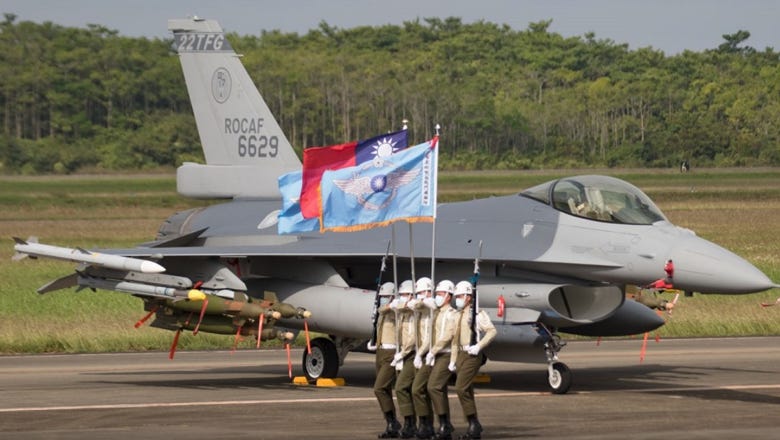
Taipei’s conduct shows where the umbrella now stands. It has chosen persuasion over protest toward Washington and reserved sharper language for Beijing, whose account of the summit its foreign ministry called a distortion. Deputy Foreign Minister François Wu argued that Taiwan’s self-defense serves American interests, citing semiconductors. The likeliest reading is that public recrimination would harden the transactional logic Taipei wants to escape, at the cost of arguing for its defense as an American interest rather than an obligation. An interest can be priced. Deterrence rests on Beijing’s beliefs, and Beijing reads Washington’s conduct more closely than allied polls. The reputational slide is slow, and the pause is fast, and the second feeds the first: Pew’s reliable-partner question measures the belief that commitments are not for sale, which a quiet pause erodes.
Four observations would convert inference into evidence: whether the freeze covers the whole package or only items in short supply; whether other Taiwan sales proceed on schedule; whether Beijing gives anything visible beyond the tariff relief and coal purchases already announced in September, such as further purchases or reduced military pressure around the island; and whether Congress moves to force notification. The harder outcome to read is a quiet release. If the freeze lifts after the next summit with no visible Chinese concession, the price will have been paid in precedent rather than goods. Beijing will have shown that summit pressure can move a sale Congress-approved, and every ally will have watched. A notification can be issued in a day; a reputation for keeping commitments takes far longer to rebuild.
Essay: Maseera Shaik- Research Assistant (Security, Crisis and Strategy) at The Advanced Study Institute of Asia (ASIA)
Produced by Decypher Team in New Delhi, India