


The Talent That Testing Kills
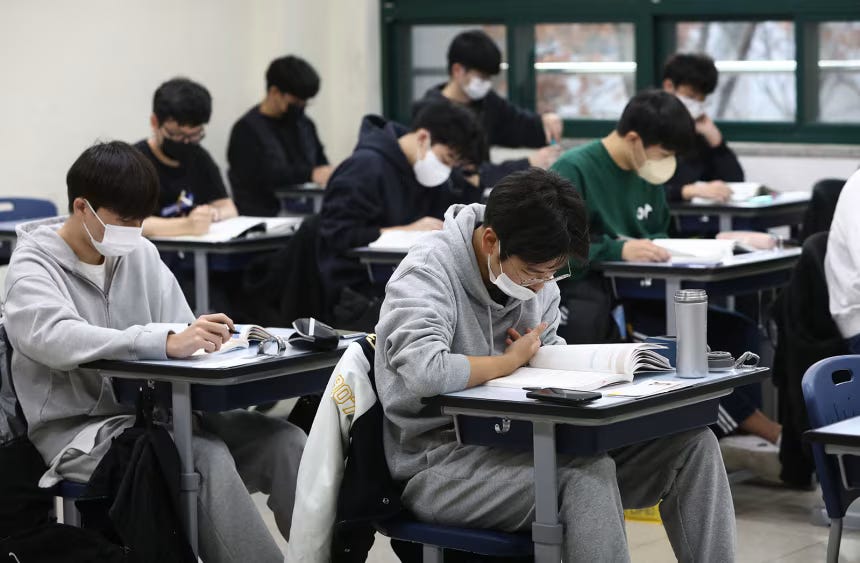
On innovation as national security, the state as experimenter, the keju’s ghost in four countries’ exam halls, and large populations whose talents the system was built not to see.
The keju lasted thirteen hundred years. Introduced under the Sui dynasty in 605 CE and abolished by the Qing in 1905, the imperial examination system selected China’s governing class through a single instrument: mastery of the Confucian classics. Candidates memorised roughly 400,000 characters from the Four Books and Five Classics, according to Benjamin Elman’s A Cultural History of Civil Examinations in Late Imperial China. Boys began drills at the age of three. By the Ming dynasty, the system had hardened into the eight-legged essay the baguwen a rigid, formulaic structure enforced from 1487 to 1901 that Britannica describes as “notoriously repressive of creative thought and writing.” The keju tested memory, obedience to form, and endurance. It did not test the ability to pose a question nobody had asked before.
The system produced the world’s first meritocracy. It also produced the conditions for the world’s most consequential civilisational stagnation. The keju focused, as a 2026 academic study published by DR Press notes, “solely on knowledge of classical Confucian texts, literature, poetry, ethics, and policy essays” not on mathematics, not on natural philosophy, not on the mechanical and navigational sciences in which China had once led the world. This is the context for what scholars call the Needham Question: why did China, which invented the compass, gunpowder, paper, and movable type, fall behind a Europe that had none of these advantages? The answer is not that China lacked genius. It is that China built a system that selected for a specific kind of genius textual, classical, backward-looking and then used that system to staff every institution that mattered for thirteen centuries. The compass was invented. The man who could have improved it was studying for the exam.
When the Qing abolished the keju in 1905, the historian Zhitian Luo described the result as “societal dislocation.” The examination had been not merely a test but the organising principle of Chinese social life the ladder, the lottery, the legitimiser. Its removal, as Ancient War History notes, “was a declaration that the traditional mechanisms of political control and social integration were failing.” Six years later, the Qing itself fell. The examination that had sustained the dynasty for three centuries could not sustain a dynasty that needed engineers, scientists, and strategists rather than essayists. The keju did not cause the Qing’s collapse by itself. But it ensured that when the crisis came, the governing class was trained to write eight-legged essays about Confucius rather than to build railways, command modern navies, or negotiate with industrial powers that had spent the previous two centuries doing what China had not: selecting for curiosity rather than compliance.
The keju is gone. Its structure is not.
DeepSeek’s research team is mostly under thirty. Most of them trained in China. They did not study at MIT or Stanford. They sat the gaokao, survived it, entered domestic universities, and built a large language model that matched OpenAI’s o1 at roughly a tenth of the compute. Marc Andreessen called it AI’s Sputnik moment. What nobody called it was a teaching moment. But that is what it is. The question it poses is not about chips or algorithms. It is about where talent comes from, and what happens to it on the way up.
A 2021 national survey of more than 131,000 primary-school science teachers in China, published by Zheng and colleagues in the Journal of East China Normal University, found that more than 70 per cent lacked a background in science, technology, engineering, or mathematics. Many taught science only part time. China built a frontier AI lab on top of a primary-school system in which seven out of ten science teachers are not trained in science. The foundation and the achievement do not match. Something intervened, and what intervened was the gaokao a filter so fine it catches the exceptional and discards everyone else. The system does not develop talent at scale. It identifies talent under pressure and then funds the survivors. The keju selected for Confucian essayists. The gaokao selects for exam performance. The format has changed. The logic has not. Both systems produce a governing and technical elite drawn from a vanishingly small fraction of the population while leaving the rest the overwhelming majority — uncounted, undeveloped, and institutionally invisible.
That is not innovation infrastructure. That is a sieve. And the sieve is everywhere.
South Korea’s Suneung spans an entire day — the Korea Herald reported in November 2025 that more than half a million students sat the exam under a second year of reforms aimed at eliminating “killer questions” that required university-level knowledge. Eighty per cent of Korean youth attend private academies. The tutoring industry is worth an estimated $20 billion. The country tops PISA rankings in mathematics. It also reports teen suicide rates that multiple studies place at roughly double the global average. Japan’s entrance exam system puts half its high schoolers through cram schools; in 2025, Japan introduced an IT section into the exam a reform of the filter, not of the system the filter sits inside.
India’s version is the most consequential because of scale. The country has 248 million school students across 15 lakh schools. The Observer Research Foundation reported in December 2025 that 70 per cent of teaching time in Indian schools is spent on rote learning methods. NITI Aayog has found that over 60 per cent of Indian schools face a shortage of qualified mathematics and science teachers. The Annual Status of Education Report 2024, which surveyed 649,491 children across 605 rural districts, found that only 23.4 per cent of Class 3 students in government schools could read a Class 2-level text the highest figure since the survey began in 2005, which tells you about the baseline. Only 33.7 per cent could do subtraction. India projects 2.5 million STEM graduates annually by 2030, according to NITI Aayog. The pipeline is vast. The question is what is inside it.
Four countries. Roughly half the world’s population. Each has built an education system organised around a single high-stakes examination — the gaokao, the Suneung, the entrance exam, the board exam and its children (JEE, NEET, UPSC). Each system is the keju’s heir: optimised to rank, not to think. Philip Altbach, professor of higher education at Boston College, observed in Times Higher Education that tinkering with these exams is “part of a global trend,” noting that China has been adjusting the gaokao and similar reforms are underway in Japan and South Korea. The adjustments are real. They are also cosmetic. Removing killer questions from the Suneung does not change the fact that a single day’s performance determines a Korean eighteen-year-old’s access to opportunity. Adding an IT section to the Japanese entrance exam does not change the fact that half the candidates prepared for it in a cram school at a cost that prices out the lower half of the income distribution. In India, the coaching industry for JEE and NEET is the modern equivalent of the keju’s private tutors: an entire commercial ecosystem built not to educate but to optimise performance on a test that measures recall under pressure.
The keju tested whether you could reproduce the classics in the prescribed form. The gaokao tests whether you can solve problems at speed under artificial constraint. The Suneung tests whether you can endure nine hours of cognitive load without breaking. The Indian board exam tests whether you can memorise a textbook and reproduce it on paper. None of these tests what innovation actually requires: the willingness to be wrong, the ability to hold contradictory ideas in suspension, the tolerance for ambiguity that lets you stay with a problem long enough for something genuinely new to emerge. You cannot train that capacity under exam conditions. You can only train its opposite: the instinct to converge on the known answer as fast as possible and move on. Every year, these four countries put roughly a hundred million young people through systems designed to reward convergence and punish exploration, and then wonder why the innovative output comes from the tiny fraction that survived the filter with their curiosity intact.
Innovation is national security. This is the argument the Nature article by Tao, Wei, and Zheng, published on 26 May 2026, makes with unusual clarity. Their framing is that teachers are “innovation infrastructure” not a metaphor but a literal description of the institutional layer on which everything else rests. China’s response has been to move upstream: the Fertile Soil Plan replaces rote coverage with interdisciplinary, project-based learning. The National Excellence Programme, launched in 2023, places future STEM teachers at research universities where science is produced as well as taught. By November 2025, it had attracted more than 15,000 applicants across 43 top-tier institutions. The Chinese Academy of Sciences now runs a national science-literacy programme for in-service teachers, giving them direct exposure to frontier research. In 2024, a museum-school collaboration organised 24 intensive workshops across China, training 2,587 primary and secondary educators and producing 426 jointly developed curricula.
These are experiments, not solutions. That distinction matters. China is doing what states should do when confronted with a problem too large for any single intervention: running multiple small experiments across the system simultaneously, with different designs, different institutional partners, and different theories of change, and watching which ones produce results. The Fertile Soil Plan is one experiment. The National Excellence Programme is another. The museum collaboration is a third. None of these will fix the 70 per cent problem alone. Together, they constitute an experimental infrastructure a system for learning how to teach, not just a system for teaching. This is how the keju’s legacy is dismantled: not by abolishing the gaokao (which would produce the same societal dislocation the keju’s abolition produced in 1905) but by building the foundation beneath it so that the filter catches more than it loses.
India has announced the same ambition. The National Education Policy 2020 calls for foundational literacy, multidisciplinary education, reduced emphasis on rote learning, and the integration of vocational and academic streams. The NIPUN Bharat Mission targets foundational skills for children in Classes 1 through 3. These are serious documents. The distance between the document and the classroom is where they die. India’s 1.03 million public elementary schools have a median enrolment of 63 students. The system’s problem is not that it lacks a policy for innovation. It is that the policy must travel through an institutional terrain — state education departments, district offices, block-level administration, school principals who answer to compliance audits rather than learning outcomes that is optimised for process, not for discovery.
The state must step in. Not with a single national programme but with a hundred local ones. Fund fifty district-level experiments in inquiry-based science teaching across five states. Give each one a different design a local engineering college here, an IIT there, a science museum somewhere else and a three-year runway. Measure what the students can do, not what they can recall. Publish the results honestly, including the failures. Let the experiments that work spread through demonstration, not through mandate. That is how China is approaching the problem not because China has solved it (it has not; 70 per cent of its primary science teachers still lack STEM training) but because it has understood that the problem is too complex for a single solution and too urgent for perfection.
The argument against this is always time. Governments face pressure to fund advanced laboratories, industrial subsidies, strategic technologies the visible architecture of innovation. School science feels slow. It is slow. A child who encounters good science teaching in Class 4 will not produce a research paper for fifteen years. But as the Nature authors write, this objection “mistakes speed for resilience.” The country that builds its innovation on a sieve catching the exceptional, losing everyone else will always depend on the handful who survived the filter with their curiosity intact. The country that builds its innovation on a foundation where curiosity is sustained, not tested out of existence produces a system that can regenerate itself.
The Qing fell, in part, because it had spent thirteen centuries training essayists when it needed engineers. The keju was not merely an exam. It was a theory of what mattered and the theory was wrong, and by the time anyone noticed, the theory had shaped the governing class, the curriculum, the culture of aspiration, and the institutional definition of merit for so long that changing it meant changing everything. The gaokao, the Suneung, the JEE, the board exam are the keju’s descendants. They are smaller, faster, and test different content. But they encode the same theory: that the purpose of education is to rank, and that the ranked output is the talent. It is not. The talent is the hundred million who sit the exam every year. The ranked output is the residue the sieve did not destroy.
The talent is there. It was always there. The system does not find it. The system does not know how to look or where to look. In the age of AI the support is needed to use all the version of intelligence not just run-of-the-mill mill testing kind.

Faith Is the Battlefield: Inside the Fight for Tibet's Next Spiritual Throne
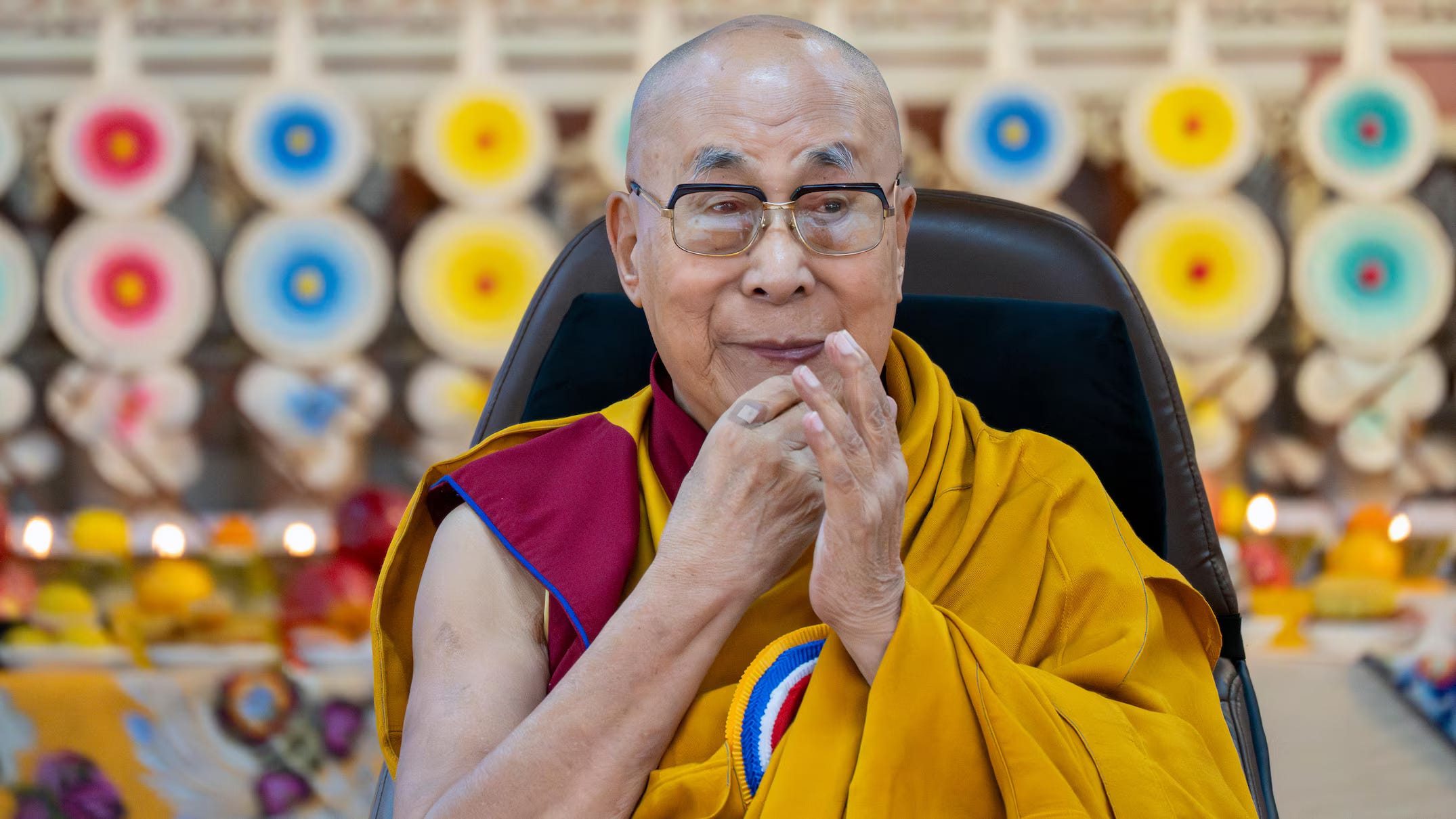
At 90 years old, the 14th Dalai Lama has done what Beijing feared most: forced the succession question into the open. The Tibetan Buddhist leader has declared that his successor will be chosen exclusively through his own Gaden Phodrang Foundation, directly undercutting China’s claim to religious authority over the process. In 2007, Beijing passed a rule asserting government oversight over all reincarnate Tibetan lamas a move the Dalai Lama has called a self-contradicting absurdity, given that the Communist Party explicitly rejects the beliefs of reincarnation altogether.
The stakes are geopolitical, not just theological. The Dalai Lama has floated that his successor might be born outside Tibet, may even be a woman, or that the institution could end entirely with him each option a deliberate attempt to insulate the lineage from Chinese state capture. The most alarming scenario now being discussed by analysts is the emergence of two rival Dalai Lamas one recognised by Tibetan religious tradition, another recognised by Beijing with long standing consequences for India, regional diplomacy, and global perception of China. Scholars at the Brookings Institution have warned that Beijing’s meddling is likely to backfire, potentially triggering renewed popular resistance inside Tibet. What looks like a religious dispute is really a sovereignty contest dressed in saffron robes.
China’s Long Battle Against Smoking
In 2012, during a meeting in Beijing, Xi Jinping — then China’s vice president — told Bill Gates that smoking was a major problem for China and promised to take action against tobacco use. More than a decade later, however, China remains the world’s largest cigarette market, consuming nearly half of all cigarettes globally. While smoking rates among young people have declined, overall cigarette sales in China rose sharply between 2003 and 2023, even as global cigarette consumption fell.
One major reason is the enormous power of China’s State Tobacco Monopoly Administration, which both regulates the tobacco industry and controls the country’s main cigarette producer. Tobacco revenue contributes heavily to government finances, especially as China’s economic slowdown and property crisis strain public budgets. The industry generated hundreds of billions of dollars in taxes and profits, funding priorities ranging from banks to semiconductor projects.
Efforts to impose stricter anti-smoking laws, including a nationwide indoor smoking ban, have repeatedly stalled. Local governments often resist stronger regulations because cigarette taxes are essential to their revenues. Health warnings on cigarette packs also remain weak compared with Western countries.
Despite limited government action, young activists and public figures have started pushing back against smoking culture through online campaigns and public criticism. China still aims to reduce smoking rates by 2030, but officials admit the challenge remains enormous.

China’s Growing Role in Central Asia’s Water Crisis
As geopolitical uncertainty grows, Central Asia is increasingly looking to China, with Beijing emerging as a crucial partner in addressing the region’s looming water crisis. The recent US-Israeli war on Iran showed the vulnerability of important water infrastructure, as desalination plants in Iran, Bahrain, and Kuwait were damaged, increasing concerns in neighboring regions that rely on vulnerable water systems.
Central Asia was already in trouble. Decades of Soviet mismanagement, climate change, rapid urbanisation, and population growth have strained a region dependent on fast-melting Tian Shan glaciers. Disputes between upstream nations like Kyrgyzstan and Tajikistan and downstream governments like Uzbekistan and Kazakhstan over shared rivers have repeatedly turned tense and, at times, violent.
Against this backdrop, China is positioning itself as an important source of investment, technology and expertise. Beijing has expanded cooperation through irrigation modernisation projects, hydropower investments and water-saving technologies across the region. Chinese firms are already involved in canal repairs, hydropower construction and training water management professionals.
However, experts warn that while Chinese support may strengthen infrastructure and improve water efficiency, Central Asia’s deeper challenge remains regional coordination over shared rivers. Sustainable water security will ultimately depend on cooperation among the five Central Asian states themselves.
China's Pig Cycle Hits the Floor
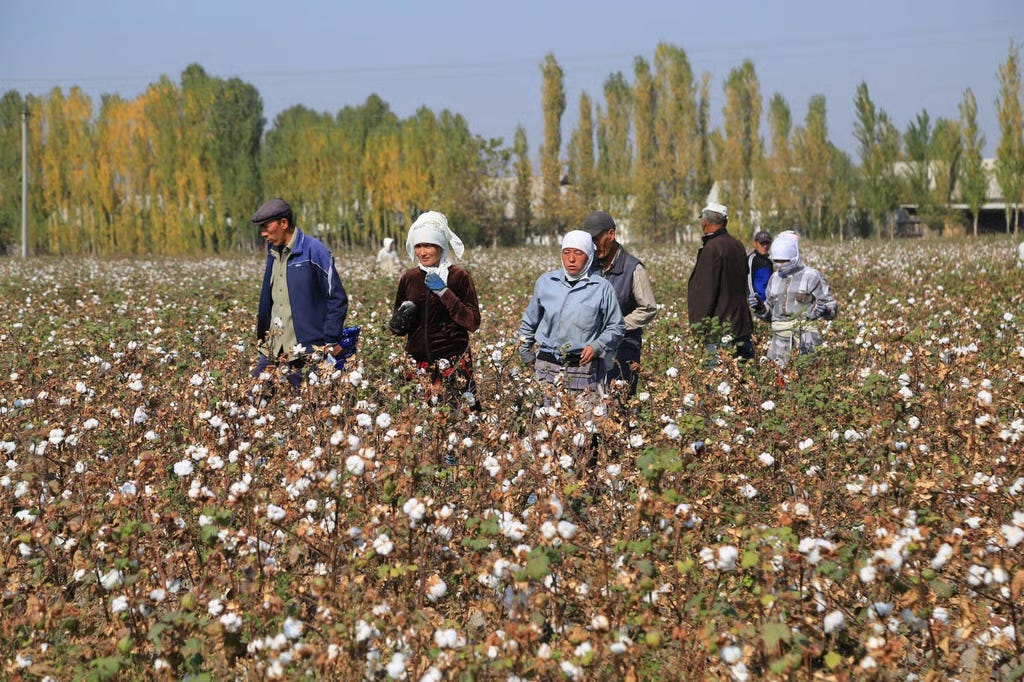
China's hog farmers are losing money on every animal. Live-hog prices have sunk near seven-year lows — external-three-way pigs fetched 9.73 yuan/kg in mid-May, down 34% on the year, with the hog-to-grain ratio at 4.1:1 (below 6:1 means losses). Wholesale pork held firmer at 14.78 yuan/kg, but white-strip ex-factory prices fell 35.9% year-on-year in April. The cause is dull and structural: too many pigs, soft demand.
Beijing has reached for its usual levers. Central frozen-pork reserves are buying again, and the agriculture ministry wants the breeding-sow herd culled toward 36.5m head. State-aligned outlets already write of prices "stabilising," crediting capacity discipline and a consumption upgrade. The market is less sure. Traders see a low-level tug-of-war in the 9.5–10.5 yuan/kg band, with only Dragon Boat demand offering a lift. Most forecasts put the cycle's turn no earlier than late 2026.
Pork inflation once moved China's CPI and its politics. Now the problem runs the other way — deflation in the pen, and a state engineering the recovery rather than waiting for it.
Watch the sow count. If culling stalls above target through summer, the 2027 rebound slips and the losses deepen.
Artificial Intelligence, Financial Compliance, and the US–China Technology Rivalry in Hong Kong
Hong Kong's financial sector has quietly become a front line in the US-China tech. Citigroup Hong Kong launched an in-house AI agent platform called Arc this month, targeting internal developers with tools capable of automating complex tasks like client prospecting a process that previously consumed hours of manual analysis. But there is a problem with it.
OpenAI and Anthropic have not made their models officially available to users in Hong Kong or mainland China, forcing banks into a compliance minefield if they use restricted AI tools improperly. The clearest casualty so far is Goldman Sachs. Goldman quietly locked Hong Kong employees out of Anthropic's Claude after a strict reading of its contract with the company even as ChatGPT and Google Gemini remained accessible on the same internal platform. The underlying anxiety is about model distillation which means US AI firms fear intensive use of their models in China-adjacent jurisdictions could allow local players to reverse-engineer capabilities and extract intellectual property a concern amplified after OpenAI accused DeepSeek of leveraging its models for training.
The Goldman move signals a broader shift AI adoption in finance is entering a more compliance-driven phase, where institutions are becoming selective not about whether to use AI, but which models they trust and where. Hong Kong, once the West's open door into China, is now a legal gray zone that AI companies are increasingly choosing to wall off.

— — —
Essay: Amogh Dev Rai- Research Director at the Advanced Study Institute of Asia (ASIA), affiliated with SGT University, Gurugram.
Postscript: Bhupesh and Neeti
Produced by Decypher Team in New Delhi, India
— — —