


The Gulf Fracture
What Prince Turki Al-Faisal’s op-ed reveals about the Saudi-UAE split, and where Pakistan sits.
Prince Turki Al-Faisal, former director-general of Saudi intelligence and former ambassador to the United States and the United Kingdom, published an op-ed this month that reads as a defence of Saudi restraint during the Iran war. Its most revealing line is the one that claims unity: “The crown prince did not allow Iran to divide the brotherly Gulf states.” That sentence is doing the work of denial. The division has already occurred. The Chaos Map shows where.
Three arrows, three endpoints
All three actors — Saudi Arabia, the UAE, and Pakistan — used arrow motion during the crisis: goal-directed, building toward defined endpoints. But the arrows point in different directions, and the divergence is the signal.
Saudi Arabia was struck. Iranian missiles hit pumping stations, production facilities at Manifa and Khurais, and oil refineries. On 21 March, Riyadh expelled Iranian defence officials, giving them 24 hours to leave. But it kept its embassy in Tehran open. It did not retaliate. It backed the ceasefire, called for Hormuz to reopen without restrictions, and hosted the GCC summit in Jeddah on 28 April where the collective warning was issued: an attack on one member is an attack on all. Prince Turki’s framing — “had the Kingdom wanted, and it is capable of doing so, to respond in kind” — states the restraint doctrine plainly. The arrow points toward de-escalation as a strategic endpoint, not toward confrontation. The calculation is that Saudi oil infrastructure, desalination plants, and Vision 2030 are more valuable intact than any military satisfaction retaliation could produce.
The UAE drew the opposite conclusion. Iran targeted the UAE more than any other Gulf state, including a strike on the Fujairah oil zone. The Soufan Center reports that this drove the UAE into “a close partnership with the U.S. and Israel.” The Middle East Journal reports alleged UAE strikes on Iran’s Lavan Island refinery. The UAE closed its embassy in Tehran. Its doctrine, as the Soufan Center describes it, is that “military confrontation with Iran and its allies can produce transformative change.” The Atlantic Council’s assessment is direct: the MBS-MBZ relationship is “too frayed” for the war to bring them closer. Policy disagreements on Yemen and Sudan persist. They will “take divergent approaches to responding to the Iran threat.” The fracture is structural, not temperamental.
Pakistan positioned itself as the connector. It mediated the ceasefire. It hosted the Islamabad Talks on 10–11 April. PM Sharif visited MBS in Jeddah around 12 March and expressed “full solidarity.” Pakistan’s Foreign Minister reminded Iran of the mutual defence agreement signed with Saudi Arabia in September 2025. After the ceasefire, Pakistan deployed 13,000 troops and fighter jets to the Kingdom. But it ruled out military participation in any campaign against Iran. Analysts described the posture as “limited alignment without military entanglements” — diplomatic sympathy for all sides, operational commitment to Saudi Arabia, institutional nodes deposited without entering the chaos quadrant. Pakistan is the only actor whose strategic position improved relative to where it started.
Reading the Chaos Map
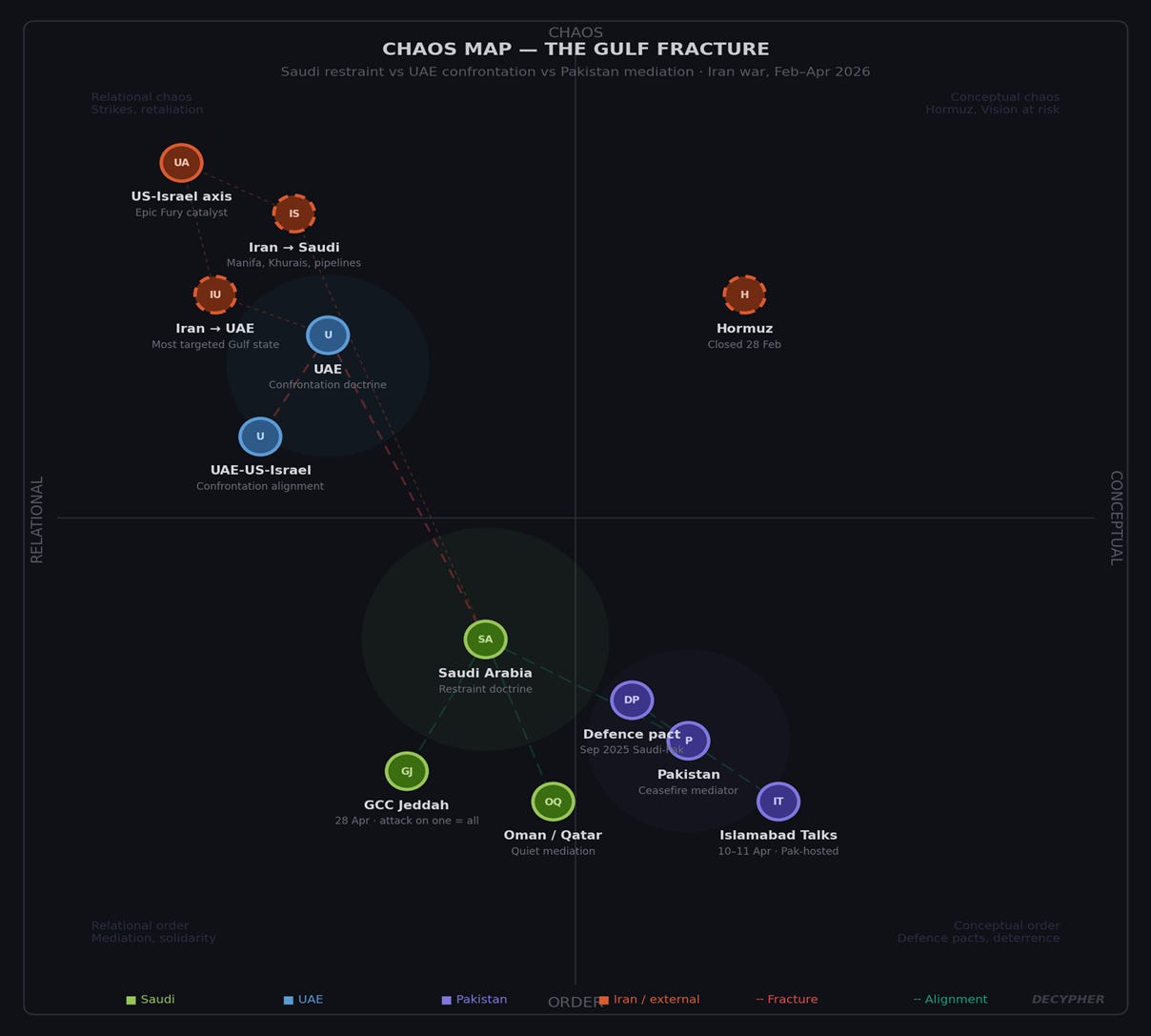
The map’s structural finding: Iran’s strategy was to divide the Gulf states by targeting them asymmetrically — hitting the UAE hardest to pull it toward confrontation while hitting Saudi Arabia hard enough to provoke but not hard enough to compel. The strategy partially succeeded. The UAE moved toward the US-Israel axis. Saudi Arabia moved toward restraint and mediation. The two responses are incompatible in a crisis that requires unified action. The Jeddah declaration (“attack on one is attack on all”) is the attempt to paper over the incompatibility. Whether it holds under a second wave of Iranian strikes is the test Prince Turki’s op-ed is written to pre-empt.

Source: Soufan Center (14 May 2026), Atlantic Council (20 Apr & 25 Mar 2026), Middle East Journal (May 2026), ACLED (16 Apr 2026), The Conversation (May 2026), Wikipedia (Iranian strikes on Saudi Arabia; Pakistan in the 2026 Iran war). Prince Turki Al-Faisal op-ed via Arab News.
Chaos map based on an op-ed published by Arab News

Pakistan’s Crypto Ambition and its Grid Problem
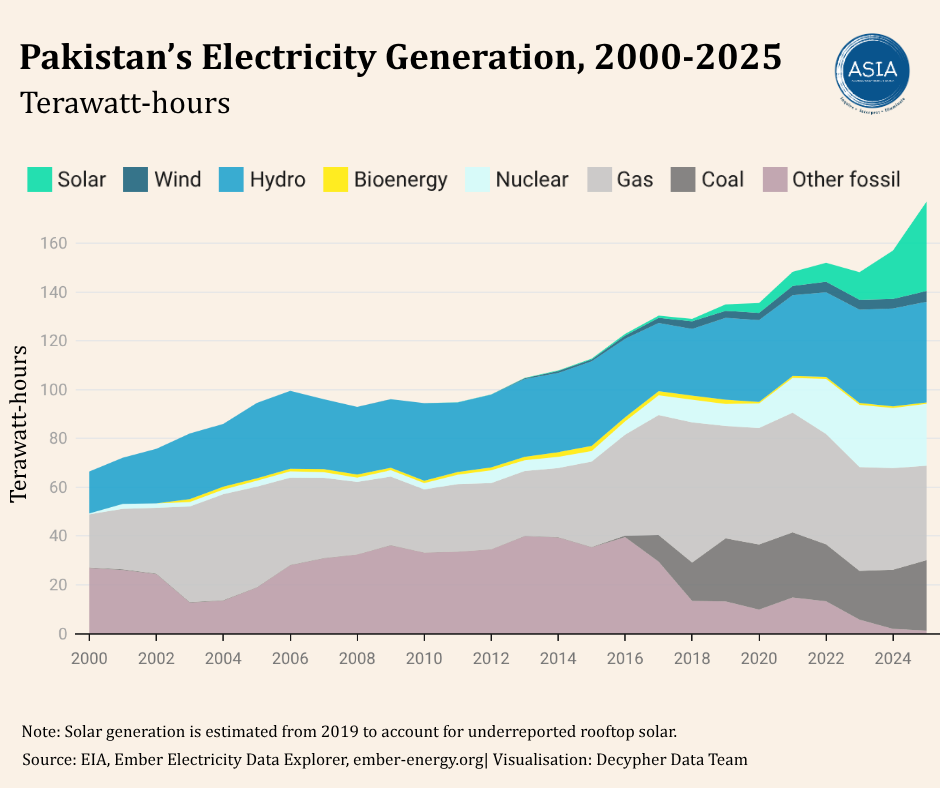
Pakistan’s crypto ambition begins in the power grid, not the blockchain. Islamabad is trying to turn an old liability into a new development story: surplus electricity, high tariffs and falling grid demand are being repackaged as the foundation for Bitcoin mining, AI data centres and dollar-linked digital payments. On paper, the conversion is attractive. A stressed power system gets new demand. A cash-starved state gets foreign investment. A country repeatedly negotiating with the IMF presents itself as a digital-finance frontier.
The clear answer is that Pakistan is not managing its power well enough to make this crypto ambition credible. It is trying to monetise the consequences of having mismanaged power. The result is not yet a digital strategy. It is an energy workaround with futuristic branding.
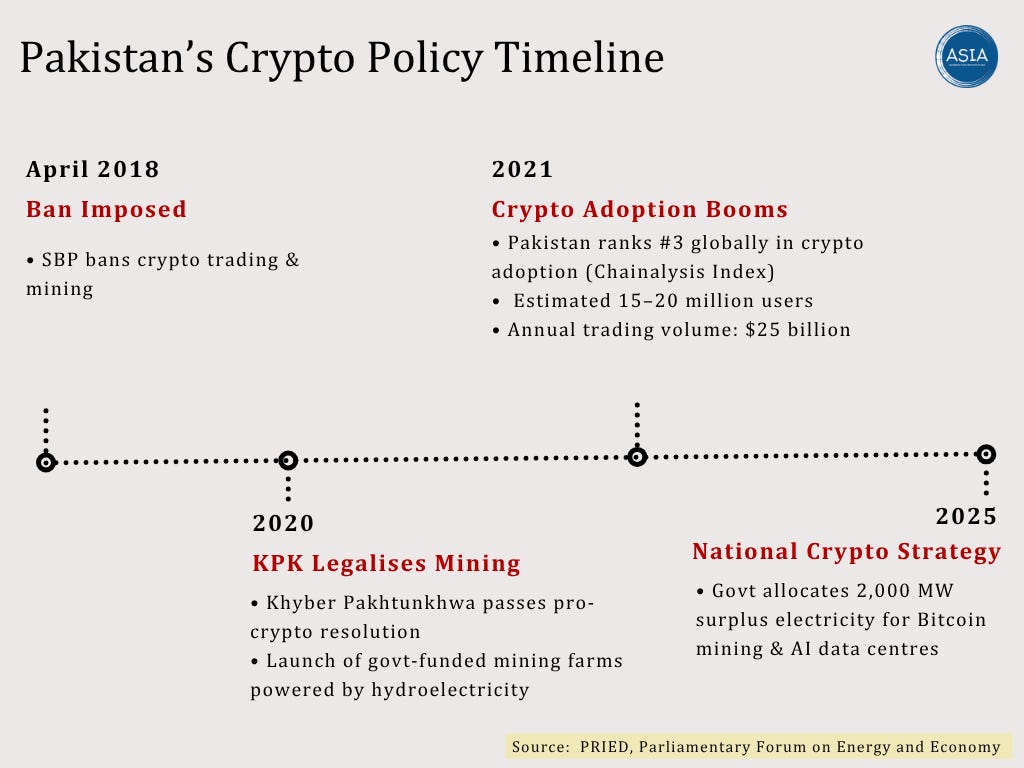
In May 2025, Pakistan moved to allocate 2,000 megawatts of electricity for Bitcoin mining and AI data centres. The policy was presented to use surplus power, create high-tech employment and attract investment. The context matters. Pakistan has excess generation capacity in parts of the system, but this is not the same as having cheap, reliable and well-managed electricity. Surplus exists alongside high tariffs, weak recoveries, distribution losses, circular debt, and consumers moving to solar to escape grid costs. That surplus is therefore not a sign of strength. It is a symptom of distortion. Pakistan has electricity, but it struggles to sell because the grid has become too expensive for many consumers and too unreliable as an economic promise. As households and businesses reduce dependence on the grid, the burden of fixed costs falls more heavily on those who remain. The state then needs new buyers of electricity, and energy-intensive digital industries begin to look convenient.
Crypto mining fits this need almost too neatly. It consumes large amounts of electricity, can theoretically be located near underused generation, and can be sold politically as innovation rather than crisis management. But mining does not solve the power-sector problem. It only changes who consumes the electricity. If miners are offered cheap power, ordinary households and industries will ask why they are paying more. If miners pay the full cost, Pakistan may struggle to attract serious operators. If the state absorbs the gap, crypto becomes another subsidy hidden behind the language of digital transformation.
The IMF tension makes the contradiction harder to ignore. Pakistan’s creditors have repeatedly pushed energy-sector reform because electricity sits at the centre of fiscal weakness and industrial competitiveness. The IMF’s December 2025 review stressed the need to reduce electricity production and distribution costs, address inefficiencies and contain circular debt. A few months later, the Fund was still discussing electricity tariff revisions with Pakistan, including their impact on lower- and middle-income households. A country negotiating the social burden of power tariffs cannot treat cheap electricity for digital ventures as a simple growth policy.
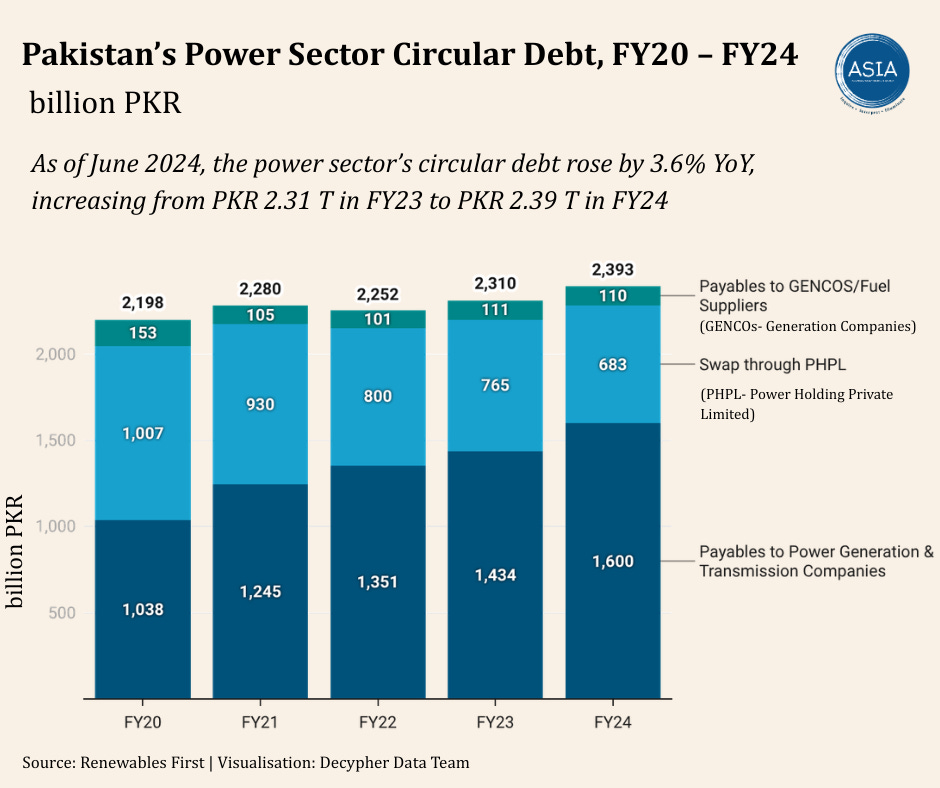
Pakistan’s power-sector debt problem also remains too large to be dressed up as spare capacity. In June 2025, Islamabad signed $4.5 billion in loans with local banks to ease circular debt in the power sector. That move underlined the scale of the burden: unpaid bills, subsidies and liquidity stress have not disappeared simply because the government has found a new consumer category for electricity.
The United States-linked crypto story adds glamour, but not stability. Pakistan’s agreement with SC Financial Technologies, an affiliate of World Liberty Financial, the crypto venture associated with Donald Trump’s family, gives Islamabad a Washington-facing narrative. The plan to explore a dollar-linked stablecoin for cross-border payments fits some real needs: remittances matter, cash usage is high, payment frictions are costly and formal digital rails could help. Yet proximity to a U.S. crypto venture cannot substitute for institutional depth. Stablecoins require reserve confidence, anti-money-laundering controls, regulatory clarity, banking integration and trust in the monetary system. AI data centres require reliable power, cooling, connectivity, data governance and skilled labour. Bitcoin mining requires predictable energy pricing. Pakistan is trying to assemble all of this while the foundations remain unsettled.
A serious strategy would distinguish between digital infrastructure and speculative extraction. Regulated payment systems, remittance channels and data infrastructure can serve Pakistan’s economy if tied to formalisation, exports and skills. Bitcoin mining is weaker as a development pillar. It absorbs electricity, but it does not automatically build a productive digital economy. If it competes with households, industry or export sectors for affordable power, the developmental case becomes thin.
Pakistan is managing power tactically, not strategically. It has identified a real problem: unused generation capacity carries costs. It has also found a politically appealing use for that problem: crypto, AI and stablecoins sound like the future. But the same distortions that produced the surplus threaten the ambition built upon it. Digital finance can amplify a strong system. It cannot rescue a weak one. The test is not whether Pakistan can announce Bitcoin mines or sign stablecoin agreements. It is whether the state can price electricity rationally, reduce losses, manage circular debt, attract durable investment, and build credible regulation. Without that, crypto becomes another shortcut in Pakistan’s economic imagination: a futuristic vocabulary wrapped around an unresolved structural problem.

Pakistan and China Move to Accelerate Strategic Partnership Projects
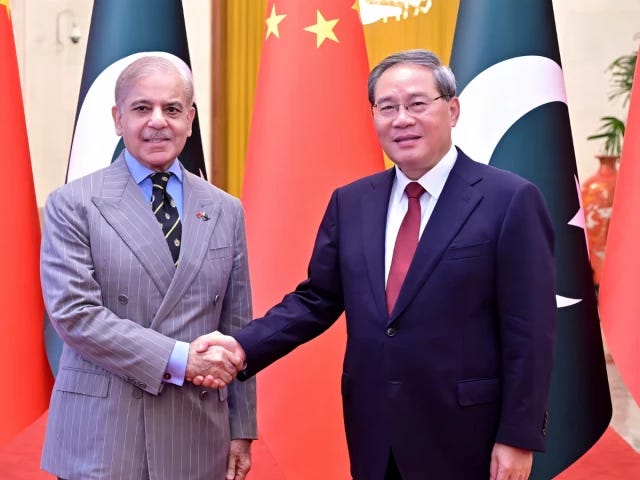
Pakistan’s Prime Minister Muhammad Shehbaz Sharif met with Chinese Premier Li Qiang in Beijing on Monday as part of a four-day state visit to commemorate 75 years of diplomatic relations between the two nations. The conference emphasised a shared commitment to advancing their bilateral partnership through practical, outcome-oriented cooperation.
The two leaders agreed to strengthen cooperation and accelerate the progress of ongoing collaborative efforts, with a focus on projects under the China-Pakistan Economic Corridor. Sharif described the All-Weather Strategic Cooperative Partnership with China as a cornerstone of Pakistan’s foreign policy, founded on mutual trust, strategic confidence, and a shared goal for peace and development.
Political, economic, strategic, security, and cultural linkages were all discussed extensively. The Prime Minister announced Pakistan’s goals for the next phase of CPEC, which will focus on industrialisation, infrastructure, agriculture, technology, digital innovation, clean energy, and broader socioeconomic development. He also advocated aligning China’s next 15th Five-Year Plan with Pakistan’s own “Uraan Pakistan” development goal to better align economic priorities and stimulate growth.
Sharif thanked China for its persistent support of Pakistan’s economic resilience and reiterated Islamabad’s commitment to protecting Chinese personnel and assets on Pakistani soil. He also advocated for increased engagement in frontier fields such as artificial intelligence, advanced technologies, and space, citing Pakistani astronauts’ participation in China’s space station program as a tangible sign of the two countries growing strategic partnership.

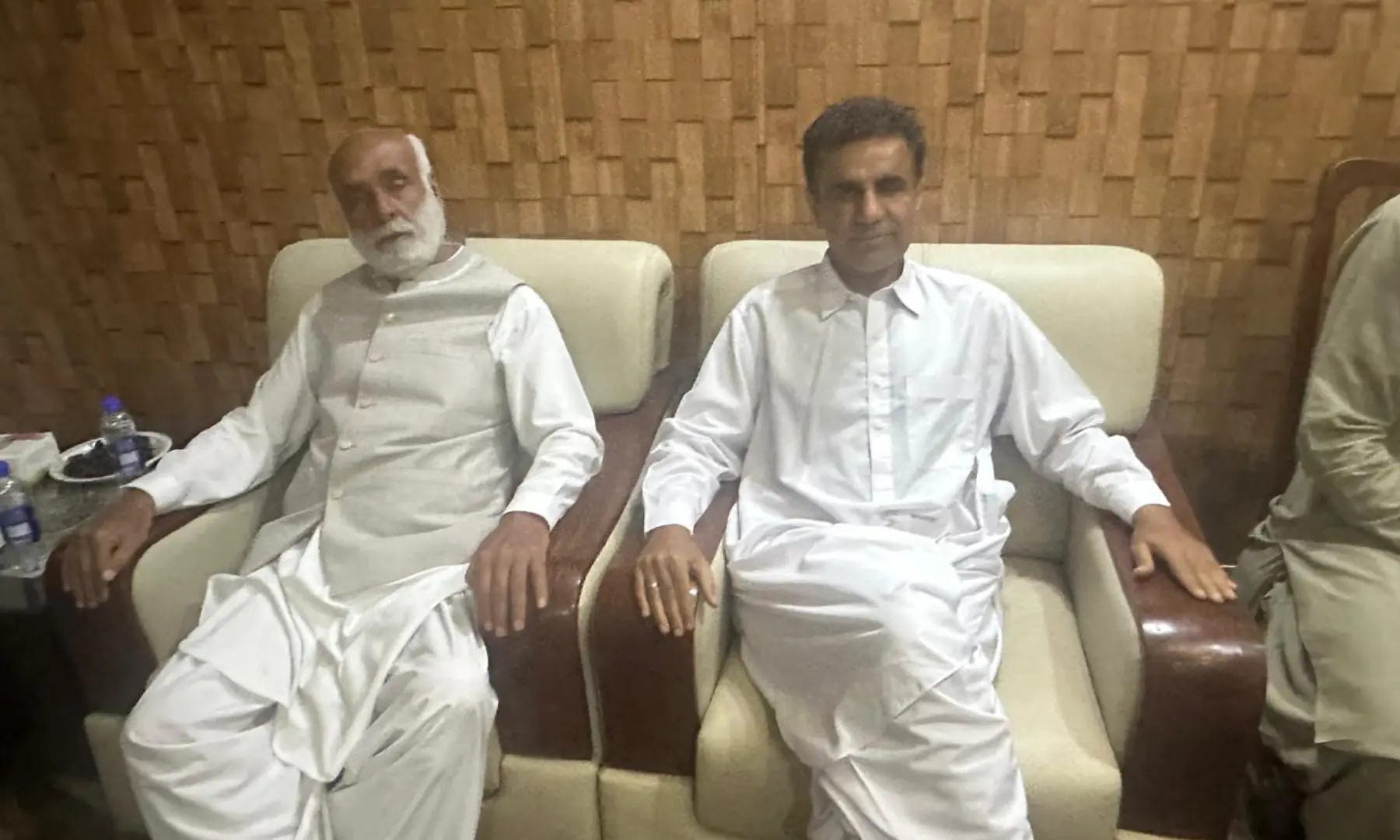
Gwadar University Officials Back Home After Abduction
The vice chancellor of the University of Gwadar and three other staff members abducted earlier this month have safely returned home, a provincial official confirmed on Tuesday. Vice Chancellor Dr. Abdul Razzaq Sabir, Pro-Vice Chancellor Syed Manzoor Ahmed, lecturer Dr. Muhammad Irshad and driver Muhammad Hatim were abducted on May 13 near Mastung when armed men intercepted their vehicle on the Quetta-Karachi highway.
The Balochistan Home Department confirmed the safe return of all four individuals, but officials offered no details on the circumstances of their release — including whether negotiations or any ransom payment were involved. No militant group claimed responsibility, though suspicion has fallen on separatist armed factions known to operate across the province.
The incident has renewed concerns over security in Pakistan’s largest yet least developed province, where ethnic Baloch militant groups frequently target government officials, security forces and infrastructure linked to the China-Pakistan Economic Corridor. Gwadar port, a key component of Beijing’s Belt and Road Initiative, sits at the heart of Islamabad’s regional economic ambitions — yet recurring militant attacks and abductions continue to overshadow investment and development prospects in Balochistan.
Explosion Derails Military Train in Quetta, Killing at Least 20
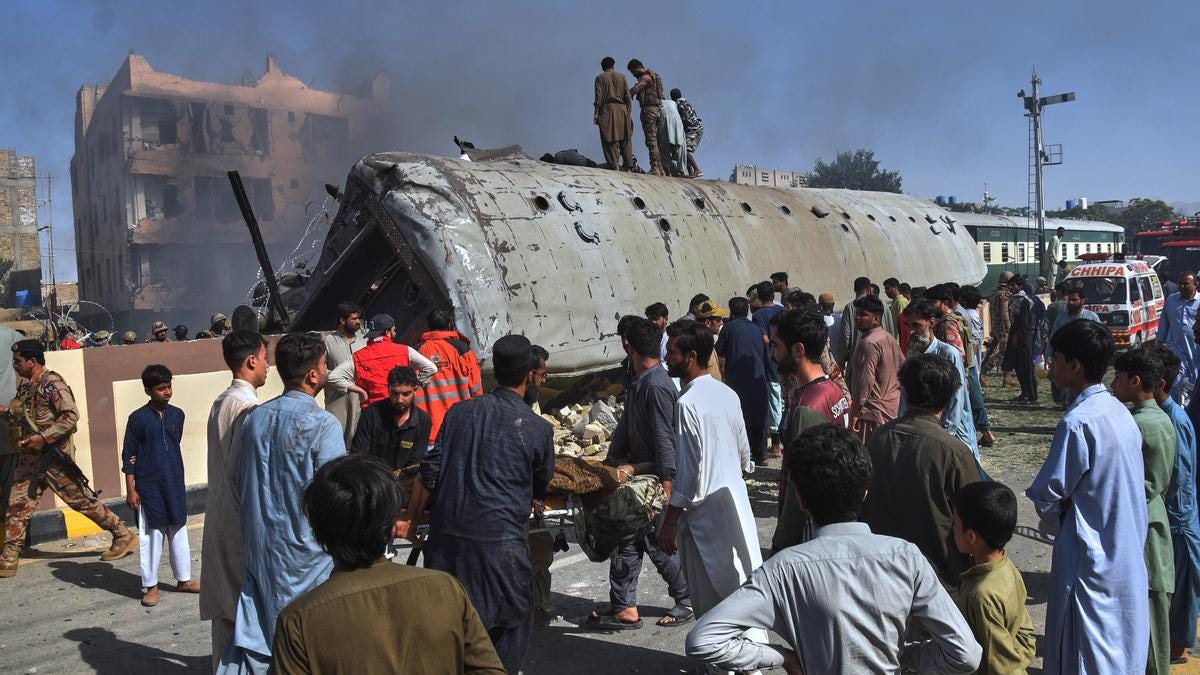
BBC News reported that at least 20 individuals lost their lives and approximately 70 were injured in a fatal blast aimed at a train transporting military personnel in Quetta, underscoring the deteriorating security conditions in Balochistan. The explosion took place close to Chaman Phatak station on Sunday morning as the train carried troops and their families back home for Eid. The blast caused the engine and multiple coaches to derail, flipping two carriages and creating extensive damage.
Officials attributed the assault to the separatist Balochistan Liberation Army, characterising it as a suicide bombing. Witnesses stated that a car loaded with explosives crashed into the moving train prior to blowing up. Photos from the location displayed charred train carriages, harmed automobiles, and devastation to adjacent structures. Authorities verified that a minimum of three soldiers were included among the fatalities, while medical facilities in Quetta announced an emergency to care for the injured.
Pakistan’s Prime Minister Shehbaz Sharif condemned the attack, calling it an act of terrorism that would not weaken the country’s resolve. The attack is part of a broader insurgency in Balochistan, where the BLA frequently targets security forces and infrastructure, accusing Islamabad of exploiting the province’s resources without benefiting local communities.
— — —
Long View: Amogh Dev Rai- Research Director at the Advanced Study Institute of Asia (ASIA), affiliated with SGT University, Gurugram.
Essay: Preksha
Postscript and Data: Bhupesh
Produced by Decypher Team in New Delhi, India
— — —