

By Amogh Dev Rai | Research Director and researcher on China, and Chinese Geopolitics.
There is a number that the Chinese state publishes every month, and another that it publishes with more reluctance, and if you lay the two beside each other on a desk they begin to tell a story that neither was meant to tell alone. The first is the concentration of fine particulate matter in the air, the soot and sulphates and nitrates small enough to enter the blood, measured in micrograms per cubic metre. The second is the share of young people between sixteen and twenty-four who are looking for work and cannot find it. One is a measure of how much the country is burning. The other is a measure of how little the burning now buys or sells at home.
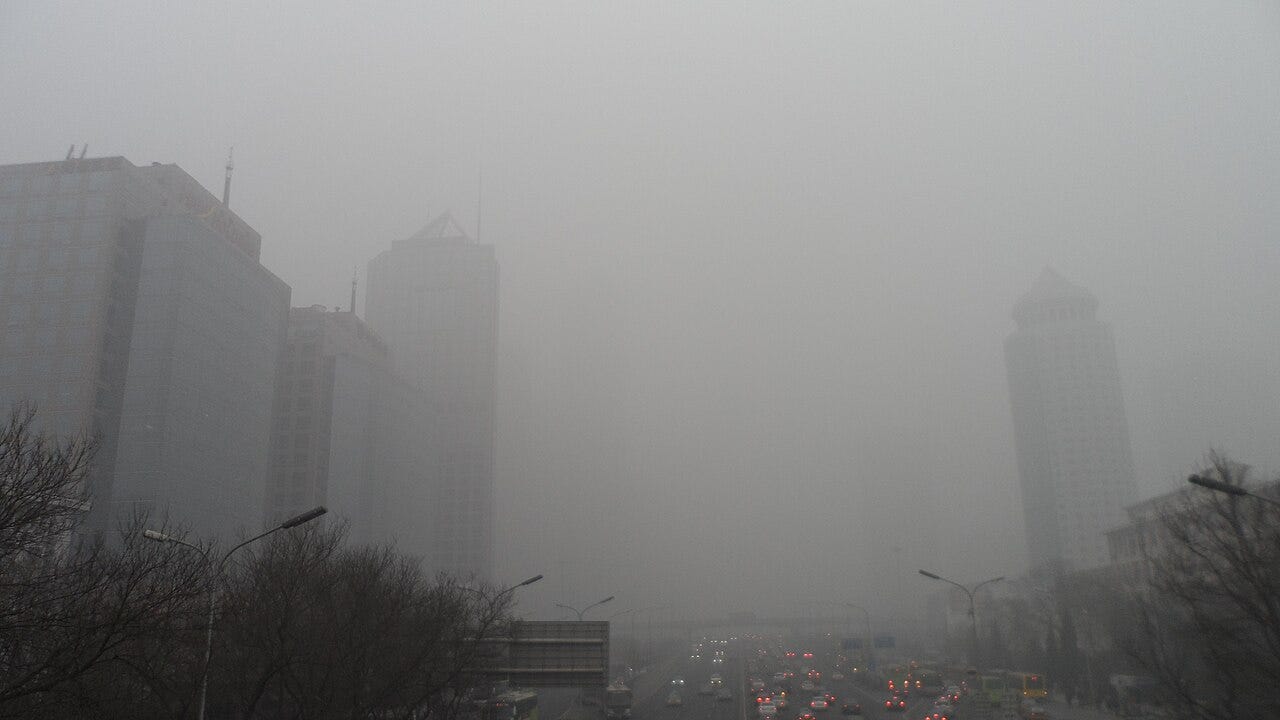
For a decade the first number fell. This was one of the genuine achievements of the age, and it is worth pausing on before the story turns, because the story does change. In 2013 the air over China’s cities was a byword for catastrophe. By 2019 the average concentration of PM2.5 had dropped by half. Factories were fitted with scrubbers, coal plants were closed or moved, the north was heated by gas instead of briquettes. A person who had left Beijing in 2013 and returned in 2020 would have looked up and seen a different sky. The state had promised blue skies and, for once, more or less delivered them.
Then the pandemic ended, and the number stopped falling. In 2023 it rose for the first time since the campaign began. The Ministry of Ecology and Environment said, with a candour that is rare and therefore instructive, that the rebound was tied to a surge in energy-intensive industrial production after the restrictions lifted. When a country wants to grow again in a hurry, it makes steel and cement and chemicals, and when it makes those things the air tells on it. The sky is an honest accountant. It records what the factories do regardless of what the ministries say.
By 2025 the national average had settled at around 28 micrograms per cubic metre. This is within China’s own standard of 35. It is also roughly six times what the World Health Organisation considers safe. Both of these facts are true and the gap between them is the whole matter. The country has cleaned its air enough to satisfy itself and not nearly enough to satisfy the lungs of the people breathing it. And the improvement, such as it is, has grown uneven in a way that maps almost exactly onto where the economy is straining. In the first quarter of 2025 the national figure fell by five per cent, which sounds like progress, until you look at the provinces. In Guangxi the concentration rose by thirty-two per cent. In Yunnan by fourteen. In Xinjiang by eight. These were not the accidents of a bad wind. They were the residue of industry moving west, chasing cheaper land and looser enforcement, carrying its smoke with it.
Now set the second number down.
In the summer of 2023 the share of urban young people out of work reached twenty-one per cent, a record, and the state did a curious thing. It stopped publishing the figure. For six months there was silence, and then the number returned in 2024 wearing new clothes, recalculated to exclude students, which lowered it. Even in its gentler form it has stayed high. In August of 2025 a record twelve million university students graduated, and the youth jobless rate climbed to nearly nineteen per cent. This spring it sat near seventeen. In May of 2026 it eased to fifteen and a half, the lowest in eleven months, which the ministries reported as good news and which is good news the way 28 micrograms is clean air, that is, only against a standard that has already made its peace with the trouble.
Here is where the two numbers speak to each other. The economy is burning enough coal to dirty the sky over Guangxi and Yunnan. The factories are running. The chemical plants and the steelworks and the thermal power stations are lit. And yet the young cannot find work in them, because the work has changed. The factories that stayed open increasingly run on machines. The twelve most labour-intensive industries in the country shed three and a half million jobs between 2019 and 2023. The smoke rises but fewer hands are needed to make it rise. This is the thing the pollution data quietly reveals that the growth figures conceal. Industrial activity and industrial employment have come apart. The country can pollute at full capacity and still leave a fifth of its graduates idle, because the modern factory is a place of few workers and many robots, and the robot does not job-hunt and does not appear in the unemployment line.
There was a third number once, though nobody wrote it down, and it was the hours. For the better part of two decades the bargain in the Chinese city was plain enough that people gave it a name. They called it 996. You worked from nine in the morning to nine at night, six days a week, and in exchange you were paid and you belonged to the machine that was lifting the country. Jack Ma of Alibaba called the arrangement a blessing in 2019 and said that if you wanted to join his company you had better be ready to give it twelve hours a day, and why else would you bother. Richard Liu of JD.com wrote that slackers were not his brothers. These men were stating the terms of the pact aloud, and the terms were these: your youth and your health and your evenings, in return for a place on the escalator that was carrying everyone up. For a long time the young signed. The escalator was real and it was moving and the price, however steep, bought a ticket that seemed worth having.
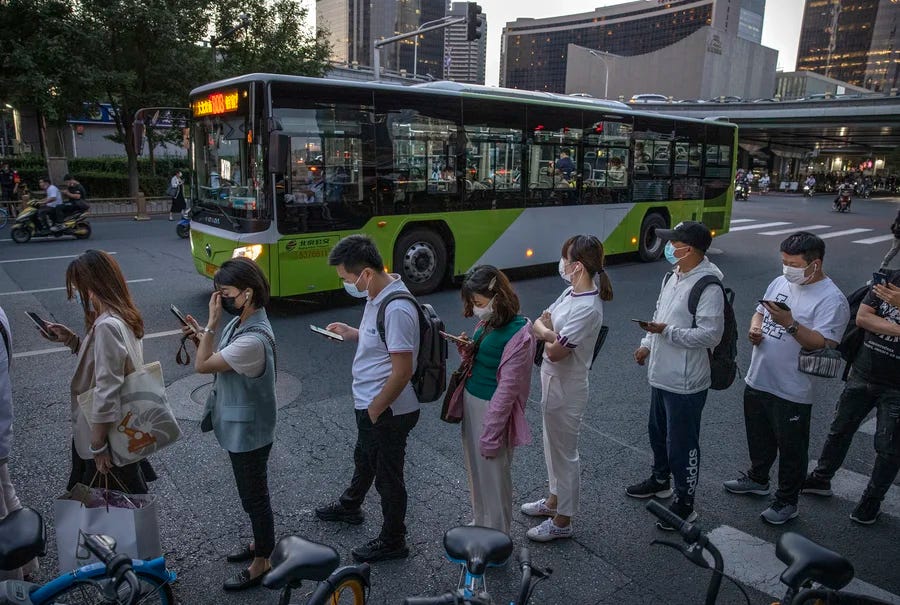
Then in March of 2019 a programmer opened a page on GitHub and called it 996.ICU, the letters standing for the intensive care unit where the schedule would eventually land you, and something broke open. Workers began posting the names of the companies that demanded the hours. They voted. They compared. The browsers made by Tencent and Alibaba and Xiaomi quietly blocked the page, which told you the nerve had been touched. This was not a strike in the old sense. It was quieter and stranger, a refusal conducted in code and comment threads, but it was the first time the young had said the price was too high in a voice the whole country could hear. The Supreme People’s Court ruled the schedule illegal in 2021. Enforcement wandered. Companies renamed the thing “big week, small week” and carried on. In 2024 a Baidu communications chief said it was not her business if her employees’ personal lives were destroyed by their work, that she was not their mother, and she resigned within days under the weight of the reaction. The bargain was cracking not because the state decreed it but because the people inside it had stopped believing the escalator was still moving.
And this, finally, is what the sky over Chengdu is telling us. A superpower makes a pact with its own people, and the pact is growth. You give me your labour and your lungs and your long hours, says the state, and I will give you a life better than your parents had. For thirty years both sides kept the terms. The air darkened and the wages rose and the cities filled with people who had come from villages and would not go back. The smoke was the visible sign of the transaction, hanging over Beijing and Tianjin, and the young breathed it because the breathing bought something. That was the devil’s part of the bargain, and the devil was paid on time.
What happens when the pact changes is what we are watching now. The state still asks for the labour, but the growth it offers in return has thinned. The factories still burn, but they no longer hire. The young are still told to sacrifice, but the escalator has slowed to a crawl and some of them can no longer see where it leads. A generation raised on the promise that hard work and a degree would carry them upward has arrived to find the smoke still rising and the jobs gone into the machines, and they have begun, quietly, in code and in silence and in the flat refusal that the Chinese have named “lying flat,” to decline the terms their parents accepted. When a nuclear firm posts eight thousand jobs and one million people apply, the young are not lazy. They are looking at a bargain that has stopped paying and deciding, some of them, not to sign.
The delivery driver on his scooter, degree in one pocket and phone in the other, threading through the traffic of a city whose air is a little cleaner than it was and a little dirtier than last year, is the figure in whom all of this meets. He is the labour the pact still wants and the prosperity it can no longer promise. He works hours his parents would recognise and earns a future they would not. No state can hold a bargain together forever when only one side is still being paid, and the deepest question hanging over China now is not whether the sky will clear or the economy will grow. It is what a country does when the generation it was built to reward looks up at the smoke, does the arithmetic, and concludes that the old exchange of breath for bread is a trade it would rather not make. The devil, in these arrangements, is patient. He waits to be paid. And when the young decide the debt is no longer theirs, someone else must settle it, and no one yet knows who.
Produced by Decypher Team in New Delhi, India