


South Asia does not need to be convinced that climate change is dangerous. It needs to recognise what kind of danger it has become. The climate-security debate is often framed too narrowly. The question is not whether a flood will cause a war or whether drought will automatically produce violence. Climate change rarely works through such direct chains of causation. Its security significance lies elsewhere: it is changing the physical conditions in which states defend territory, exercise authority, and maintain the systems on which national power depends.
That distinction matters particularly in South Asia, where some of the region’s most strategically sensitive spaces are also among its most climate-vulnerable. India and Pakistan remain locked in a nuclear rivalry. India and China contest a heavily militarised Himalayan frontier. The Himalayas contain not only glaciers and river systems but military deployments, roads, tunnels, hydropower projects and critical border infrastructure.
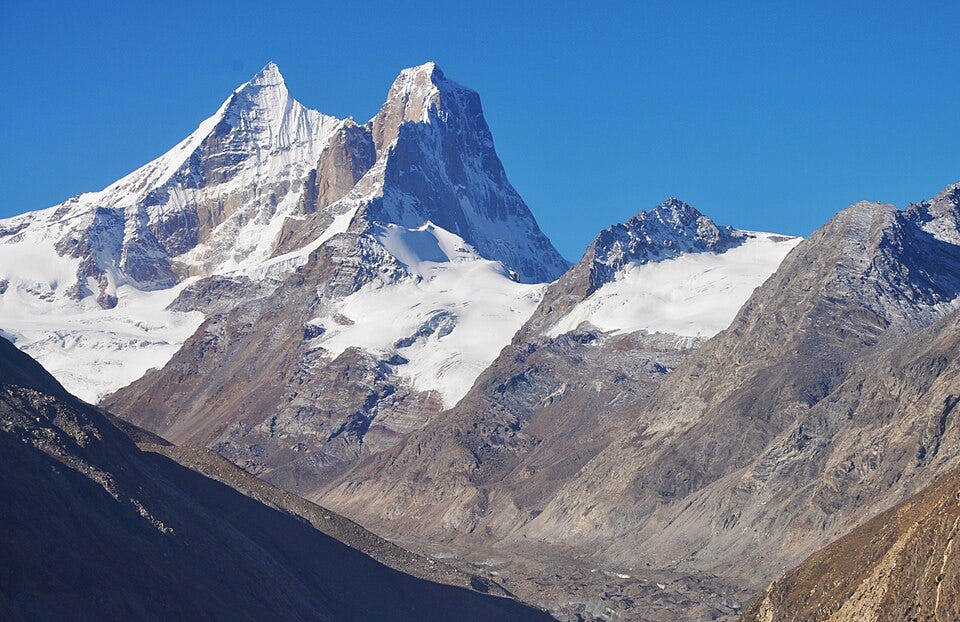
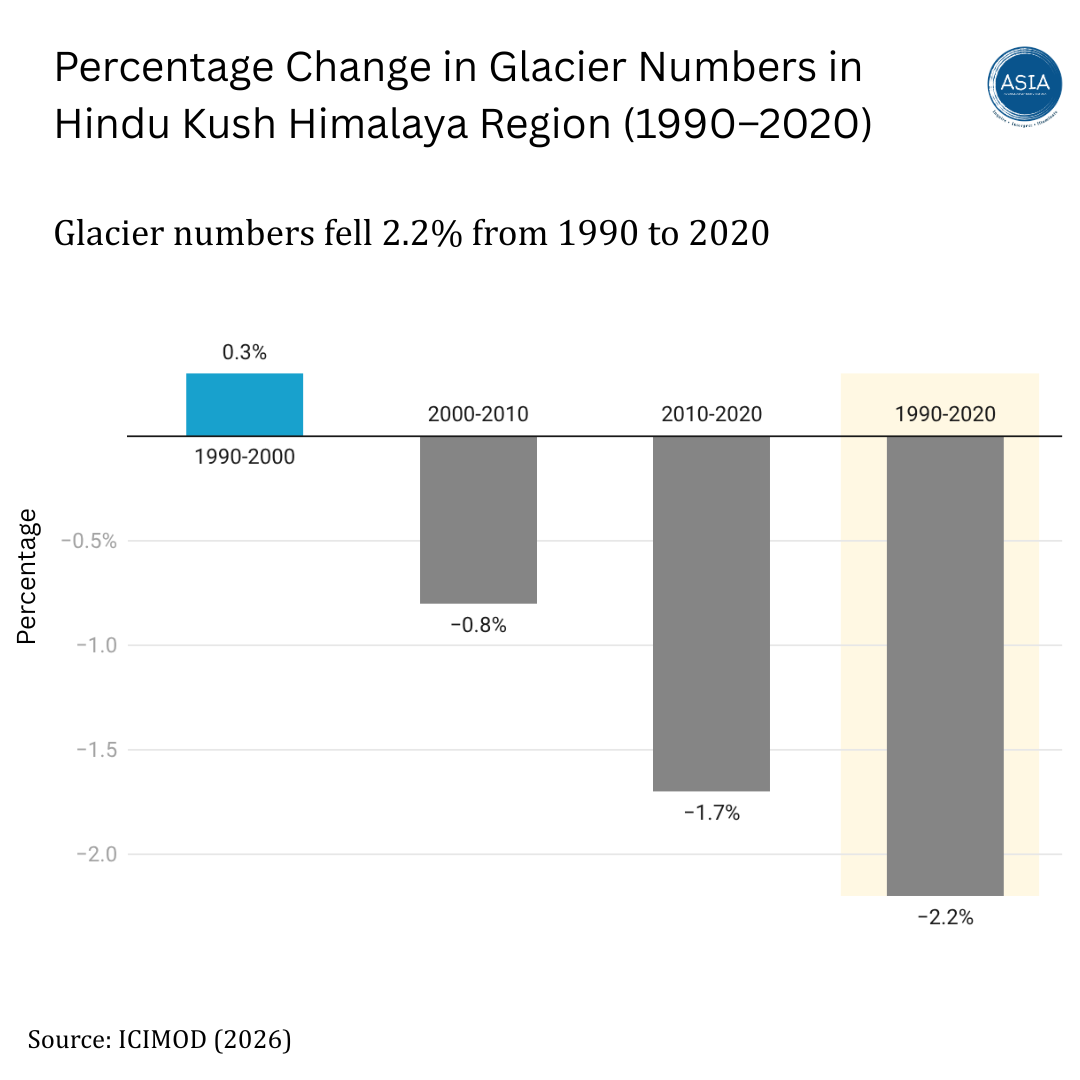
Climate change is not replacing these security challenges. It is altering the environment in which they have to be managed. The Himalayas make this especially clear. According to ICIMOD’s 2026 assessment, glacier ice loss across the Hindu Kush Himalaya has doubled since 2000. Rapid cryospheric change is making mountain terrain and river systems less predictable while increasing the risks of floods, landslides and glacial hazards. In a heavily militarised and strategically contested region, this is not simply an environmental problem. It threatens the infrastructure through which states maintain territorial presence and connectivity.
The recent disaster in Nepal illustrates the point. A massive mountain collapse and flood devastated infrastructure in the Nepal-China border region, demonstrating how cascading Himalayan hazards can destroy roads, bridges and energy infrastructure within hours. The significance of the event was not that it triggered military conflict. It was that a climate-related hazard could abruptly disrupt movement, connectivity and state capacity in a sensitive borderland.
Climate change also threatens the economic and resource foundations on which security rests. Extreme heat is already reducing people’s capacity to work across agriculture, construction, and the informal economy. A recent World Bank assessment estimates that extreme heat is costing South Asia the equivalent of nearly 31 million full-time jobs annually and could reduce the region’s economy by almost 7 per cent by 2050.
Those losses matter beyond individual livelihoods. States cannot indefinitely sustain strategic autonomy, military capability or political stability if climate shocks steadily weaken economic growth and strain public finances. Climate risk enters national security long before it reaches a border or requires military deployment.
Water adds another layer of pressure. The Hindu Kush Himalaya feeds the Indus, Ganges and Brahmaputra systems that underpin food, energy and livelihoods across the region. Glacier loss and increasingly erratic rainfall are making those systems harder to predict. Climate change will not automatically turn water disputes into wars, but it raises the stakes of managing shared resources in a region already marked by mistrust.
This is South Asia’s central climate-security contradiction: its climate systems are regional, but its security thinking remains overwhelmingly national and adversarial. Rivers and hazards cross borders. The institutions required to manage them often do not. Yet South Asia’s security establishments remain primarily organised around protecting states from hostile neighbours rather than managing risks that demand cooperation with them.
Environment ministries can formulate adaptation plans, and disaster agencies can respond when catastrophe strikes. But neither controls the strategic resources required to protect critical infrastructure, incorporate climate vulnerability into national planning or manage transboundary risks. Those decisions sit with finance ministries, foreign-policy establishments, defence bureaucracies and national security institutions.
A climate-security constituency would not mean militarising climate policy. Nor would it mean treating climate migrants as threats. It would mean recognising that climate risk now affects the material foundations of conventional security and must therefore enter the institutions that make strategic decisions. A state can have a powerful military and still become less secure if its border infrastructure repeatedly collapses, its energy systems become unreliable, its workforce becomes less productive, and its civilian institutions are overwhelmed by recurring disasters.
South Asia’s security establishments have spent decades preparing for threats that cross borders with hostile intent. The harder challenge is preparing for one that crosses borders without intent at all, but can still reshape a state’s ability to defend territory and maintain critical systems.
Essay: Preksha Jalan- Associate Fellow, Digital History Lab at The Advanced Study Institute of Asia (ASIA).
Produced by Decypher Team in New Delhi, India