

Amogh Dev Rai is a Research Director and researcher on China, and Chinese Geopolitics.
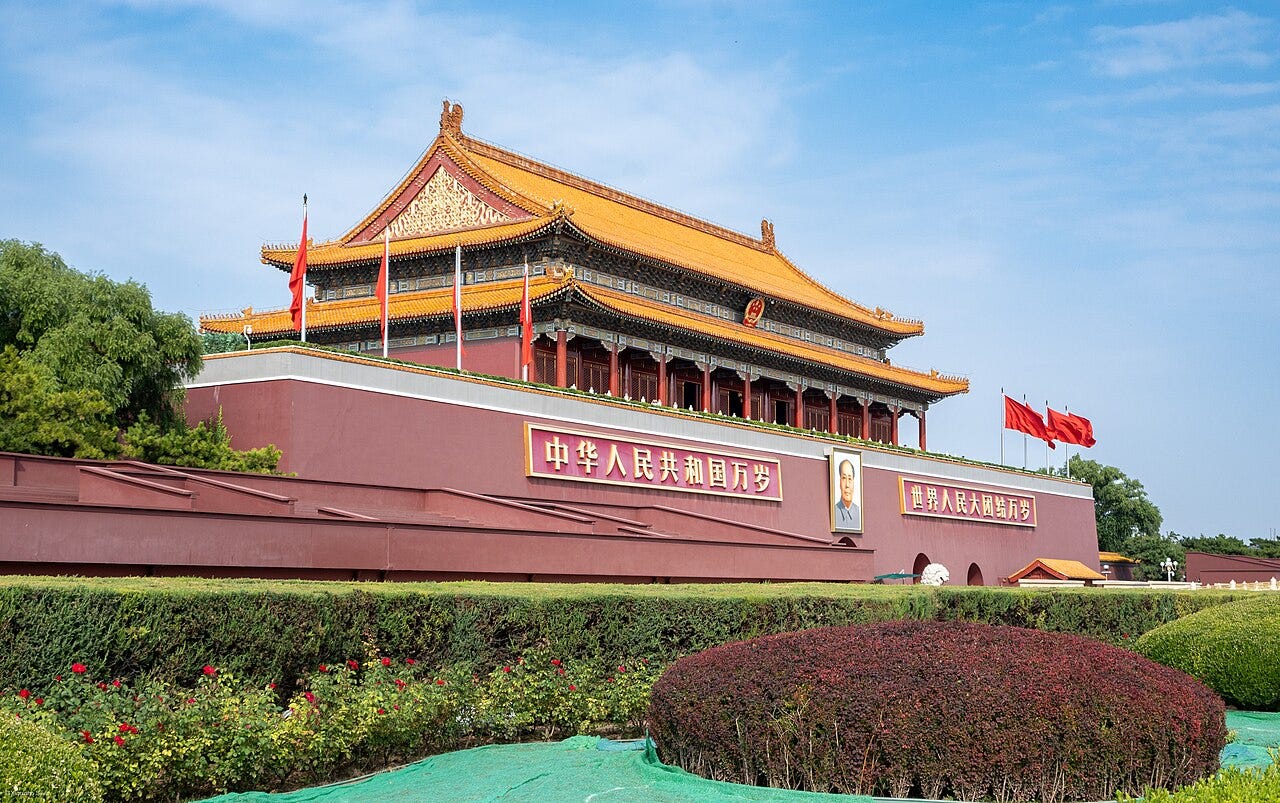
You will read it a day after 4th June. 4th June is an important date for China watchers. Somewhere in China today there are a few people thinking about the events of Tiananmen Square. They are helpless and a little worried. The party knows this. The party has not forgotten the events of that fateful day from thirty-seven years ago.
I start this piece not because I want to reflect on Tiananmen, I can’t. I am not equipped. I do want to reflect on an important lesson from that year. What happens to the leaders who have risen in the meritocratic system of the party to reach the top, and lose the trust of the leadership? In 1989 it was Zhao Ziyang, as General Secretary he opposed the martial law. Spoke to the student leaders. For his troubles he was removed, placed under house arrest and never really seen till his death in 2005. Ziyang was not corrupt, but he made a decision that the party was not in favour of.
I keep thinking about Zhao Ziyang when I read about Zhang Youxia. Zhang Youxia was Vice Chairman of the Central Military Commission. Youxia was number two to the President of China and Chairman of the Central Military Commission, Xi Jinping. In January 2026, a notice appeared on the CCDI website announcing an investigation into him. There was the boilerplate announcement but it was an intriguing reading, for it was not a run-of-the-mill corruption charge. It was something unpardonable. The leader of China might not have liked his attitude to military preparedness for contingencies related to a small but pivotal island close to China.
The analysts at the Jamestown Foundation’s China Brief, looking at China-based sources on PLA contingency planning, have converged on what the absence of corruption charges could possibly mean. The analysts think that Zhang and a cohort of experienced generals had persisted in questioning the 2027 directive for the PLA to be ready for military action against Taiwan. The generals were not sure that the 2027 target was realistic.
Xi’s response was brief. He removed the generals. The 2027 directive stayed intact and remains for now.
I think this matters a great deal. The CCDI — the Central Commission for Discipline Inspection (CCDI)— is the party’s highest discipline body. The party knows what it is doing with the CCDI in 2026 and it is not modest. In just three months, 245,000 cases were opened. Thirty of those were at provincial and ministerial level. 183,000 cadres were disciplined. In January alone, eight of the most senior officials — those at the tier requiring Xi’s personal authorisation to investigate — came under scrutiny. In January 2025, the number was two. By May 17th, when Wang Xiaodong, the former Governor of Hubei Province, became the latest senior official to fall, the tally for the year had reached 25. The full-year figure for 2025 was 65.
The pace is something else. And it is not slowing. There is something intriguing about how the CCDI communicates these investigations. A careful reader learns over time to look for what is absent, not what is present. The standard notice follows a familiar course — severe violations of discipline and law, investigation approved by the party leadership, the anti-corruption mandate invoked. Boilerplate, yes, but it places the case within a well-worn narrative. This official was corrupt. The party caught him. The party is cleaning house.
When that formula changes, it is informative. In April, a notice appeared on Ma Xingrui — former Xinjiang Party secretary, the third sitting Politburo member to fall under Xi’s current tenure. Something small was missing. The honorific “comrade” was not there. In the party’s elaborately maintained grammar, this is not a small thing. It is a pre-verdict. The decision had been taken before the notice appeared. The investigation is procedure, not inquiry. I am not sure most outside China appreciate quite how significant an absence this is.
Then there is a number I think deserves considerably more attention than it has received.
In March 2026, the CCDI bulletin recorded that of 33 cadres cited for political discipline violations, 27 were charged with actively resisting the party’s own investigation — duìkàng zǔzhī shěnchá in Chinese. That is 82 percent. Four out of five officials caught inside the disciplinary process fighting back against it.
I have been watching anti-corruption campaigns across Asia for a long time. Vietnam under Nguyen Phu Trong ran what he called a burning furnace and it was fierce, hauling in officials who had genuinely thought themselves untouchable. Even there, even at the campaign’s most intense, you did not see the majority of political-discipline cases with officials openly contesting the process. When four out of five such cases involve active resistance, you are not reading a corruption story. You are reading about officials who believe the charges against them are not the actual charges.
I think they are probably right about that.
The CCDI’s own January communiqué said as much, if you read it in the way these documents reward reading. The Commission’s purpose, the document states, extends well beyond financial wrongdoing. It wants to prevent leading cadres from becoming agents of interest groups and power cliques — lìyì jítuán hé quánshì tuántǐ. The word jítuán — bloc, clique — carries weight in party political vocabulary. It appeared in the official denunciation of the Gang of Four as a counter-revolutionary bloc. It is not a word the party reaches for accidentally.
The machine is announcing, in its own official text, what it is actually checking for. Networks. Loyalties. Connections that run somewhere other than to the top. The money, in a significant number of these cases, is almost incidental.
The provincial data adds to this picture. Hubei Province has lost three senior officials since the 20th Party Congress — Jiang Chaoliang, Zhou Xianwang, Wang Xiaodong. Three from one province is not a coincidence. It is the footprint of a network being pulled apart, investigators following threads until the cloth comes apart, each fall implying a web of relationships that connects to the next.
Gansu tells a related story. Lei Siwei, the vice governor and standing committee member, was investigated in March, his NPC membership terminated in April. For his troubles Gansu is also, at the same time, running one of the most aggressive financing-platform elimination programmes in the country — 81.3 percent of local government financing vehicles dissolved, per data in the 21st Century Business Herald. The officials who presided over the platform-construction era carry personal exposure for decisions made then. It is the reckoning for what was built in the decade before last.
This week, Zhang Haifeng, the chairman of Inner Mongolia Power Group, appeared on the CCDI’s list. Inner Mongolia’s energy infrastructure — coal, wind, the grid — is not provincial in its implications. These things never really stay local.
One more thing in the data that I think is worth a moment. Most of 2026’s tigers were investigated after leaving their posts. Zhang Jianlong, former head of the National Forestry and Grassland Administration, was 69 years old when his notice appeared. Five and a half years into retirement.
Five and a half years.
There is no earned safety. The party knows this and intends it. The generation that built the platform economy, accumulated the networks, benefited from the growth years — they are finding that stepping down is not an exit.
Let me try to be plain about what I think the CCDI’s 2026 data is actually showing. The Commission handles genuine corruption. Its numbers include real cases — officials who took money, bent procurement, diverted funds. That work is real and in a country the size of China it matters.
But in 2026 it is also something else. The cases where the standard language is missing, where “comrade” disappears, where the anti-corruption frame is entirely gone — those are not corruption cases. They are political cases wearing disciplinary clothing. The question being asked is not whether the official stole. It is whether they belong, wholly and without reservation, to Xi’s configuration of power.
The 82 percent tells you this. A genuinely corrupt official caught by a functioning anti-graft system tends to cooperate — return assets, acknowledge the wrongdoing, seek mitigation. An official who believes the charge is political fights back. Because cooperation is pointless for them. The real charge is not the written charge. The party knows this too.
Xi’s use of the CCDI is not without precedent. Mao used discipline mechanisms for political purposes throughout his rule. Deng tolerated a degree of organised corruption as the price of reform momentum and cracked down selectively when the signal was needed. Jiang and Hu ran softer versions of the same machine. What is different now is the specific targeting — officials removed not for what they took but for what they said. For the professional judgment they offered. For telling the leader something he was not in favour of hearing.
Ziyang did that in 1989. For his troubles he was removed and never really seen again. Youxia did that in 2026. For his troubles there is a CCDI notice that declines to say what he did wrong.
The instrument has changed. The political dynamic has not. Somewhere in China today, a few people are still thinking about what happened thirty-seven years ago. They are a little worried. The party knows this. And the CCDI’s 2026 numbers suggest that Xi is making sure there will be fewer and fewer officials willing to say the unpardonable thing at the wrong moment. Not 25 tigers. Not 245,000 cases.
82 percent. That is the number.
Vanishing Generals: Why China’s Top Command Is Disappearing
Produced by Decypher Team in New Delhi, India