

What China Is Actually Learning From the Iran War
The United States and Israel have been bombing Iran for three weeks. China has said very little. That restraint is not passivity — it is strategy. Beijing is running one of the most cost-effective intelligence operations in recent memory, and it hasn’t fired a single shot.
Here is what Xi Jinping’s government is watching, what it is taking away, and what it plans to do differently because of it.
The live demonstration problem
Military planners rarely get to watch their primary adversary fight a real war against a capable opponent. The Gulf War in 1991 was China’s last major wake-up call — the display of American precision firepower was so far beyond what the PLA could field that it triggered a two-decade military modernisation programme. The Iran War of 2026 is the next data drop.
In the opening 48 hours of Operation Epic Fury, the US deployed B-2 stealth bombers against hardened underground facilities, fired Tomahawk cruise missiles from destroyers in the Arabian Sea, and used a new autonomous drone called LUCAS in combat for the first time. LUCAS is particularly interesting: it is a $35,000 one-way suicide drone that the US reverse-engineered from Iran’s own Shahed. The fact that America is now deploying cheap, mass-producible attack drones alongside its expensive precision missiles is not a tactical footnote. It is a doctrinal statement — the US has concluded that flooding defences with affordable disposable platforms is now a serious part of how it fights wars.
China reached that same conclusion about its own adversary years ago. Watching the US arrive at the same logic and act on it simply accelerates Chinese timelines for doing the same thing at scale.
But the more valuable intelligence is on the Iranian side of the ledger — specifically, what failed. Iran’s air defence network incorporates Chinese and Russian components. It has been systematically dismantled. The specific failure modes — which radar nodes were hit first, how American electronic warfare degraded the command network, how quickly the suppression sequencing worked — are exactly what Chinese defence engineers need to find and fix in their own architecture. Iran is effectively a stress test of equipment and doctrine that China shares. The results are being studied carefully.
The interceptor problem nobody is talking about
Here is the strategic calculation that matters most for the next decade, and it barely features in mainstream coverage of the war.
Every Patriot missile fired to intercept an Iranian ballistic missile over Bahrain or Qatar is a Patriot missile that is no longer available for a Taiwan contingency. Every THAAD engagement over the Gulf reduces the buffer available to defend US forward bases in Guam or Okinawa. These systems take months to replenish. The production lines are not running at surge capacity.
US bases in the Indo-Pacific are already at insufficient interceptor depth relative to what China’s Rocket Force could throw at them in a conflict. A sustained Gulf campaign that burns through stocks and creates replenishment timelines extending into 2027 narrows the window in which the United States can credibly defend those bases. This changes Chinese targeting calculations in a Taiwan scenario — not because China plans to strike immediately, but because the buffer it would need to overcome keeps shrinking without China doing anything.
Japan and the Philippines are watching this arithmetic. So is every government that hosts American bases and relies on extended US deterrence. Beijing does not need to actively exploit this dynamic. The depletion is the message, and allies are receiving it.
The lesson about talking to America
The most important thing China is taking from Epic Fury has nothing to do with weapons. It is about what happened on 27 February 2026.
On that day, Oman’s foreign minister announced that a breakthrough had been reached in US-Iran nuclear talks. Iran had agreed to never stockpile enriched uranium. Full IAEA verification was on the table. Peace was, in the Omani foreign minister’s words, “within reach.” Talks were scheduled to resume on 2 March.
The bombs fell on 28 February.
Chinese state media’s response was unusually direct: diplomacy with a dominant power, it said, is not a forum for sovereign equals. It is an instrument the dominant power can end whenever it decides to. The lesson Beijing is now codifying at a strategic level — and articulating publicly through analysts and former officials — is that entering negotiations with the United States while in a position of vulnerability is not a path to a deal. It is a vulnerability in itself.
This has a direct implication for any future US-China conversations about Taiwan, Indo-Pacific military posture, or technology competition. Beijing will not refuse to engage — Xi and Trump are still meeting in Beijing in the coming weeks. But every negotiation will now be read through the Iran frame: the US struck while talking. The response is not to stop talking. It is to never be in Iran’s position. Which means: build enough hard power that striking while talking is no longer a calculation the United States can make in its favour.
What China gains from staying out
China’s response to the strikes — calling for restraint from both sides, refusing to send warships, declining to provide new weapons to Iran — looks like fence-sitting. It is not. It is a precise extraction of multiple benefits from a war it did not start and has no need to join.
The diplomatic benefit is real. While the US is dismantling a country mid-negotiation and killing its supreme leader, China is positioning itself as the responsible power that respects sovereignty and process. This is cynical — China’s behaviour in the South China Sea and Taiwan Strait is not exactly a study in restraint — but it works in the Global South, where the image of the United States bombing a country whose foreign minister had just announced a peace breakthrough is landing badly.
The economic picture is more complicated. China buys roughly 90% of Iran’s crude exports, and about 40% of its total Gulf oil imports transit through the Strait of Hormuz. A prolonged war is genuinely painful — its strategic petroleum reserves provide a buffer, but not an indefinite one. China wants this conflict to end relatively quickly, which is why its calls for de-escalation are not purely rhetorical. What it does not want is to be seen delivering that resolution at American request, because that would recast it from neutral arbiter to junior partner in a US-led regional security order it has spent twenty years working to displace.
The deepest benefit is structural and costs China nothing. Every week the United States is absorbing diplomatic damage, spending precision munitions, and consuming interceptor stocks in the Gulf is a week it is not focused on the Indo-Pacific. Every government watching the US kill a supreme leader during live negotiations is a government quietly recalibrating how much it trusts American security guarantees. China doesn’t need to win anything from this war. It needs the United States to pay costs. That is happening on schedule.
The bottom line
Beijing’s muted response to Epic Fury is not fence-sitting or indecision. It is a strategy that simultaneously collects military intelligence, documents American operational doctrine, watches allied confidence erode, runs down US interceptor stocks, and builds a global narrative positioning China as the stable power in a world where the United States has become unpredictable.
The Iran War will end — probably within the next two to three months, in some form of negotiated resolution or frozen stalemate. When it does, China will have learned more from three weeks of American combat operations than it could have acquired through any other means. And it will not have paid a cent for the lesson.
China’s Ethnic Unity Law (2026): Integration, Assimilation, and the Question of Minority Rights
Very recently, on March 12, 2026, China passed the Law on Promoting Ethnic Unity and Progress, to be implemented from July 1, 2026. The law seeks to mandate “national unity” across all 55 recognised ethnic minority groups, positioning the state—and by extension the Chinese Communist Party—as the central unifying force. It aims to bridge divisions between the Han Chinese majority (around 91% of the population) and minority groups such as Mongols, Hui, and Tibetans, many of whom inhabit resource-rich regions covering nearly half of China’s landmass.
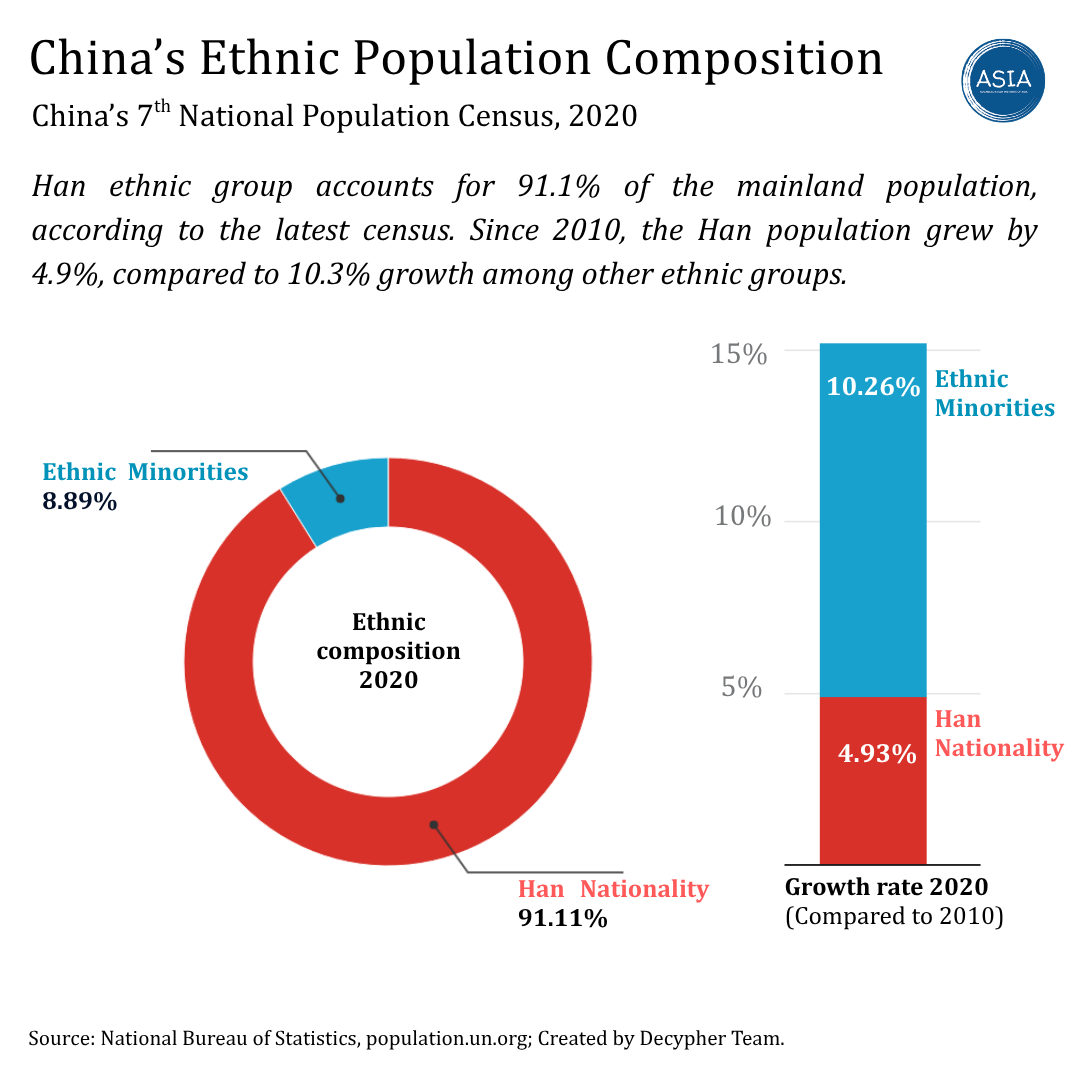
A core provision is the prioritisation of Mandarin as the principal language in education, governance, and public administration, giving it higher institutional status than minority languages. While the law formally emphasises protection of cultural traditions and pluralism, scholars argue that it reflects a shift toward assimilation, often described as “Sinicisation.” Additional provisions, such as restrictions on interference in inter-ethnic marriages, reinforce social integration.
From a rights perspective, tensions emerge. Although China’s constitutional framework guarantees linguistic and cultural autonomy, the expanded role of Mandarin may erode these protections in practice. However, critics highlight the risk of marginalising minority identities, indicating a move from pluralism toward a more centralised and homogenising governance model.
China’s Hydrogen Push Amid Global Energy Disruptions: Strategy, Transition, and Challenges
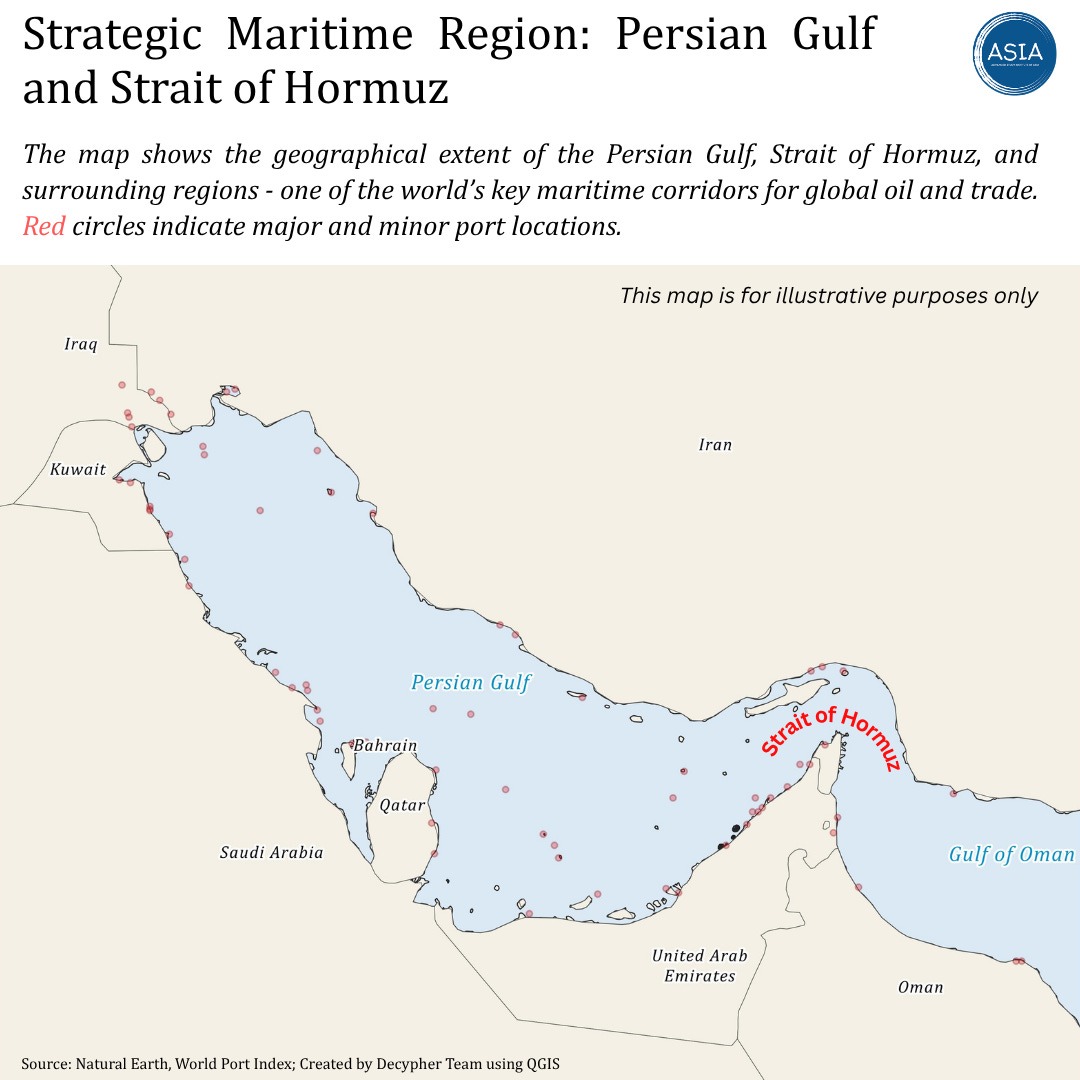
Beijing is initiating a pilot programme to expand the industrial use of hydrogen energy amid growing concerns over global fossil fuel dependence. The ongoing conflict in the Middle East, including disruptions in the Strait of Hormuz, has exposed vulnerabilities in oil and gas supply chains. In response, China’s Ministry of Industry and Information Technology has set targets to reduce hydrogen prices to below 25 yuan (US$4) per kilogram by 2030, and further to 15 yuan in select regions.
The programme will be implemented across urban clusters, focusing on sectors such as transport and heavy industry. It aims to expand hydrogen-powered public transport, urban logistics, and fuel-cell vehicle adoption, while also exploring applications in ride-hailing fleets. Plans include blending hydrogen into natural gas pipelines and industrial boilers to promote its use as a heat source.
A key objective is to transition from fossil-fuel-based hydrogen production—currently dominated by coal—to renewable alternatives such as green hydrogen. While cost remains a barrier, China is also exploring natural hydrogen, despite high exploration costs and limited infrastructure. The initiative aligns with Beijing’s broader strategy to prioritise clean energy transition within its five-year plan.
As Hormuz Disruption Deepens, Africa Faces Growing Fertilizer and Food Risks
The Gulf region is a major producer of fertilizer in addition to oil products and liquefied natural gas (LNG). Gulf nations, in particular, are significant manufacturers of nitrogen fertilizers, which rely on natural gas processed under high pressure with hydrogen to produce ammonia.
Africa is bracing for another external shock as the Middle East conflict ripples through critical supply chains. As reported by The Guardian, the disruption of the Strait of Hormuz—a key artery for both energy and fertilizer trade—has exposed structural vulnerabilities across the continent.
Many African economies rely heavily on fertilizer imports from the Gulf, where abundant fossil gas supports large-scale production of nitrogen-based inputs like urea. Countries such as Sudan, Somalia, and Kenya are particularly exposed, with a significant share of their fertilizer arriving via these disrupted maritime routes. As prices surge, the knock-on effects are being felt in food systems, household budgets, and inflation.
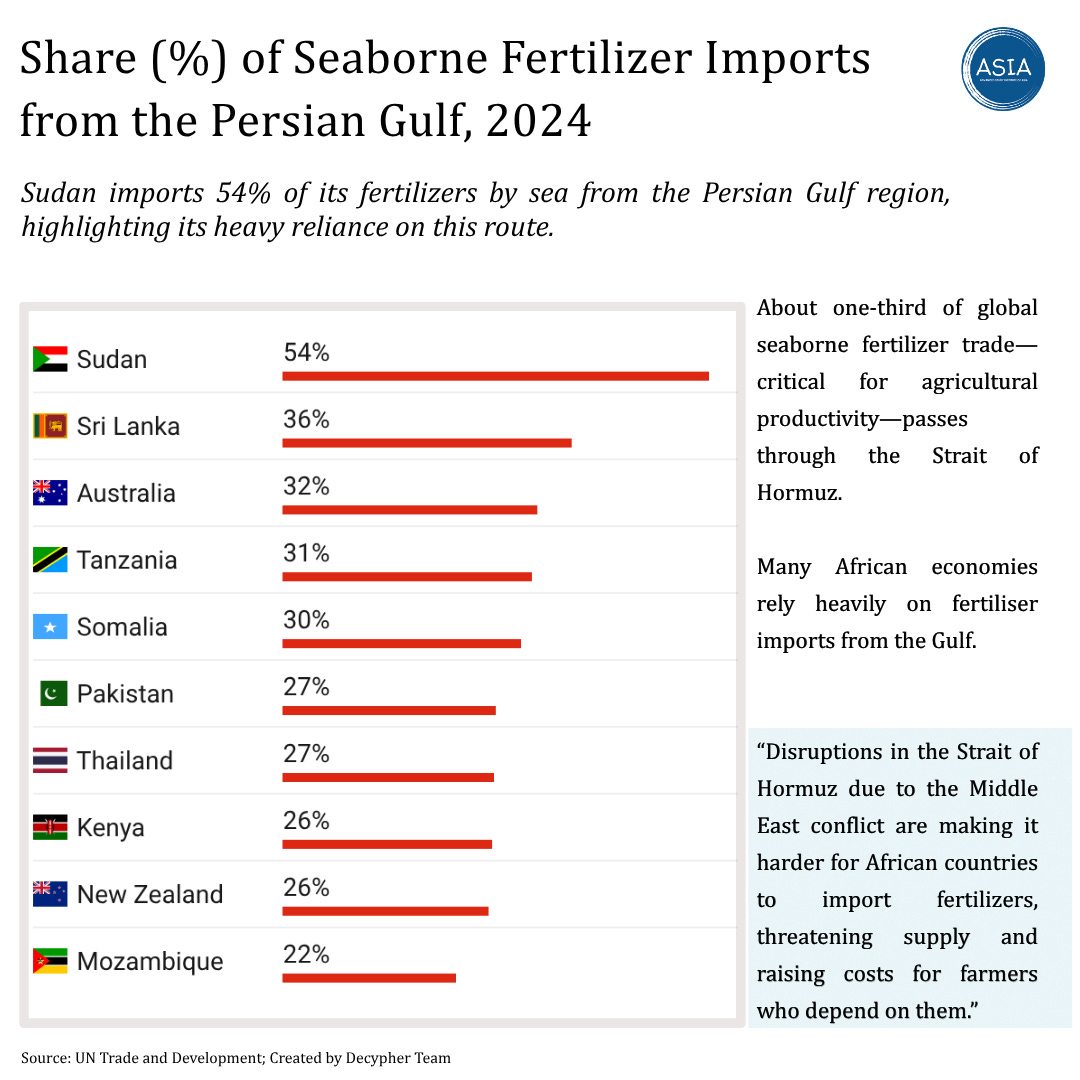
The crisis is compounded by broader structural weaknesses—high import dependence, volatile export earnings, and limited fiscal space. Governments are responding with subsidies, strategic reserves, and supply assurances, but these measures may offer only short-term relief.
While oil exporters like Nigeria, Algeria, and Angola could benefit from elevated crude prices, the overall outlook remains fragile, with both imports and exports under strain.
Philippines Rejects China’s South China Sea Claims, Reasserts Legal Basis in Scarborough Shoal Dispute
The Philippines has formally rejected China’s renewed assertion of sovereignty over the entire South China Sea, following claims by the Chinese embassy that a former Filipino diplomat had acknowledged the disputed Scarborough Shoal was not part of Philippine territory.
Responding to the statement, Philippine foreign ministry spokesperson Rogelio Villanueva emphasised that maritime and territorial disputes must be addressed through established international legal mechanisms rather than unilateral declarations or informal public statements.
The Scarborough Shoal, located approximately 200 km from the Philippines and within its exclusive economic zone, remains a critical point of contention. While sovereignty over the atoll has not been formally resolved, China maintains de facto control through sustained coast guard presence. The area holds strategic significance due to its proximity to key shipping routes, rich fishing grounds, and a lagoon that offers shelter to vessels during adverse weather.
Tensions between the two countries have intensified in recent years, with Manila accusing Beijing of increasingly assertive actions within its maritime zone. The dispute underscores broader regional frictions over competing territorial claims and the challenges of enforcing international maritime law in contested waters.
Pakistan–Afghanistan Escalation Deepens as China Pushes for Restraint and Dialogue
President Asif Ali Zardari has issued a strong warning to Afghanistan’s Taliban administration, stating it has “crossed a red line” after alleged drone strikes on civilian areas in Pakistan. The statement comes amid the most severe phase of cross-border violence between the two countries in recent years, with clashes ongoing since late last month and no clear signs of de-escalation.
Civilian impact has been reported on both sides. In Pakistan, falling debris injured individuals in Quetta and nearby regions. The Taliban, in turn, accused Pakistan of launching airstrikes in Kabul and eastern Afghanistan, resulting in civilian casualties and damage to infrastructure, including fuel facilities near Kandahar airport. Pakistan has denied targeting civilians, maintaining that its operations are directed at militant groups as part of “Operation Ghazab Lil Haq,”, particularly the Pakistani Taliban and their support networks.
The crisis reflects deep-rooted mistrust, with Islamabad accusing Kabul of harbouring insurgents, while the Taliban denies these allegations. Wang Yi has urged restraint, with China actively facilitating dialogue, envoy shuttles, and ceasefire efforts. Afghan officials have also signalled openness to negotiations, emphasising diplomacy as the only sustainable path to reducing tensions and preserving regional stability.
— — —
Essay: Amogh Dev Rai- Research Director at the Advanced Study Institute of Asia (ASIA), affiliated with SGT University, Gurugram.
Data and Postscript: Bhupesh and Neeti.
Produced by Decypher Team in New Delhi, India
— — —