


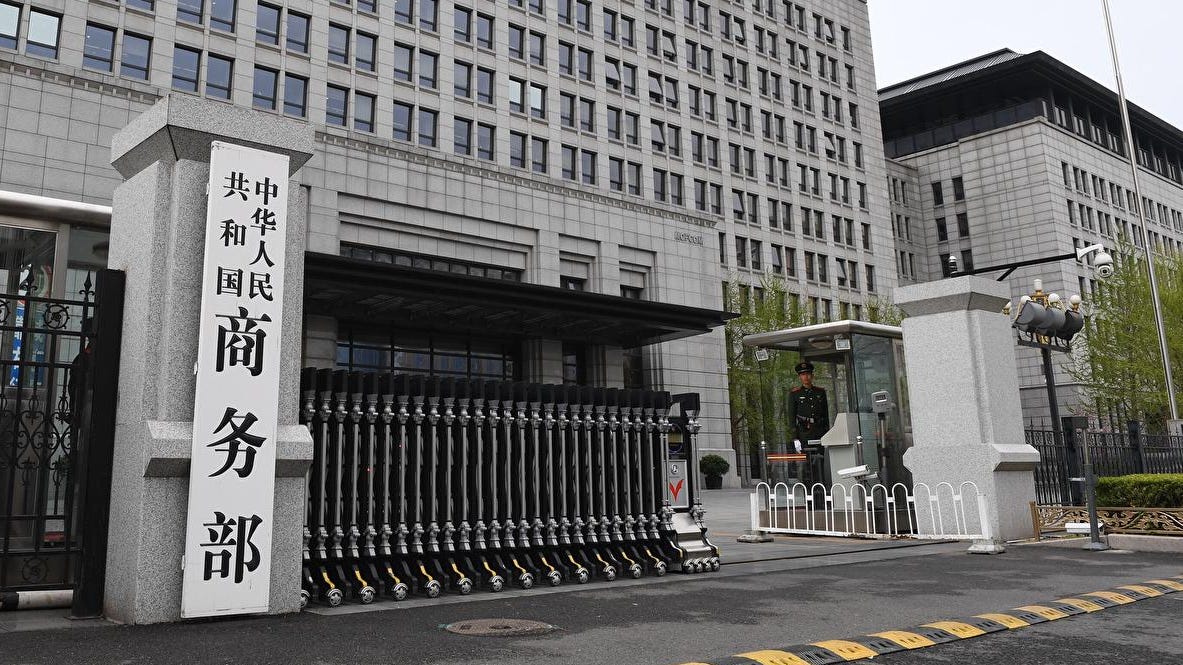
On 19 October 2026, China’s Ministry of Commerce (MOFCOM) and the General Administration of Customs announced export controls on tunnel boring machines (TBMs), their components, remanufacturing technology, walking excavators and high-altitude shotcrete machines. The rules take effect on 18 November 2026. Beijing calls the items dual-use and says the rules follow international practice. New Delhi reads them as aimed at the machines that dig its metro, rail and Himalayan tunnels.
China has not banned these exports. It has made them conditional, and before the rules existed it let India-bound machines sit at customs. The central question asks why Beijing delays and licenses where it could simply refuse. A second question follows from the first: what does that hesitation do to Indian manufacturers who build, assemble or service these machines? The rules take effect in a week, so nothing yet shows how licences will be handled.
What the hesitation looks like
The measures cover full-face TBMs and specially designed components. Shipments to what the announcement calls sensitive countries and regions with which China has disputes need a licence, while other destinations face a lighter registration process. The text names no country, though India’s unresolved boundary is a close fit. The shotcrete rule catches only machines built to work above 3,000 metres that also meet technical thresholds for engine, motor, compressor and hydraulic oil performance. Few specifications could be narrower or more Himalayan.
The rules also follow the place a machine leaves China, whatever design it carries. A German-designed machine built in Guangzhou still passes through Chinese customs, and if India counts as a disputed destination it would need a Chinese licence to reach India.
The hesitation began earlier. By late 2024, Herrenknecht was saying that Chinese customs were holding up its India-bound machines. In September 2025, Germany’s ambassador said customs had blocked at least three of them and suggested the reasons were political. The October rules turn that informal delay into a statute.
Why China hesitates
The first reason is that a ban spends leverage and a licence keeps it. A ban pushes every buyer towards alternatives at once and settles the question. A licence puts every Indian project on a timetable that Beijing can slow without announcing anything. Coercion has a use-it-or-lose-it problem: the more visibly a lever is pulled, the faster the target works to remove it. Takshashila researchers argued in January 2025 that China’s export restrictions give it little real leverage over India, since most of the items India imports from China can be substituted in the short to medium term. If they are right, a closed door would destroy the lever it was meant to use, and a half-open one preserves it.
Discretion also carries a second advantage, which is deniability. Beijing can approve, delay or condition shipments case by case and still say, accurately, that nothing is banned. Its public statements follow that line. A MOFCOM spokesperson called the items clearly dual-use, said the measures serve regional stability and offered bilateral dialogue. A Global Times editorial argued that the announcement names no country, that licensing is no ban, that legitimate civilian uses will be approved, and that a single TBM “should not become a source of friction.” Each claim can hold while the structure still conveys leverage, because the power sits in the approval process and the rule text says little about it. The 3,000-metre shotcrete threshold suggests the border dimension was deliberate.
A third reason is commercial. Chinese makers have produced more than 4,000 TBMs and hold roughly 70 per cent of the global market. The leading maker, China Railway Engineering Equipment Group, got there by buying design data from German firms, hiring around 200 engineers and holding state-backed R&D at roughly nine per cent of revenue. A position that large depends on buyers continuing to treat Chinese machines as dependable supply, and a formal ban aimed at one customer would damage that reputation. This is my inference and Beijing has not said it, but it would explain why the controls are drafted as general rules with a licence process and not as a country-specific embargo.
The fourth reason is that delay can be traded. In August 2025, after talks with India’s foreign minister, Beijing had reportedly promised to address India’s concerns on rare earths, fertilisers and TBMs. A lever can be eased in return for something only while it is still held. A ban cannot be lifted in instalments, but a licence queue can be shortened one project at a time.
A plainer explanation remains possible. The delays could reflect bureaucratic caution, or dual-use screening may simply be slow, and the German ambassador’s view that the motive was political is itself an inference. The structure of the rules, the 3,000-metre threshold and the pattern across 2024 and 2025 fit the strategic reading better than the administrative one. None of them settles the question.
What this does to Indian manufacturers
Herrenknecht is the only TBM maker with a dedicated assembly facility in India, in Chennai. The plant, set up in 2007, localises about 70 per cent of its components, and the company’s India head has acknowledged that some critical components still come from Europe. Final assembly onshore removes transit and licence risk for the finished machine. The reporting does not say how much of the plant’s supply passes through China. Wherever it does, those components fall under the controls and the plant is exposed.
Domestic firms are at an earlier stage. State-owned BEML issued an expression of interest in July 2025 for design consultancy on indigenous TBMs, and a second in September 2025 seeking a technology tie-up with an established maker. Larsen & Toubro’s president has said the firm is building a TBM prototype. For makers at this stage, the controls on components and remanufacturing technology probably matter more than the controls on whole machines, because a first prototype needs parts and know-how that India does not yet produce. The public record does not say which components these programmes would source from China, and that is worth asking.
Government money is meant to close the gap. India is preparing a $1.2 billion, seven-year incentive scheme to draw about $1.8 billion in investment into high-value equipment, TBMs among it. If the scheme rewards assembly, it will reproduce dependence under a local label. Its real test is whether it pays for design capability, main bearings, drives, and the experience that comes from running machines across varied geology.
The official claims need the same scrutiny. Railway Minister Ashwini Vaishnaw said India now makes machines of 8 and 15 metres in diameter, that a Tamil Nadu plant will soon build machines above 16 metres, and that this amounts to self-reliance from design to maintenance. The reporting does not say whether these are Indian designs or foreign designs assembled locally. BEML’s tenders for design and technology transfer partners point to the second, since a company still looking for a design partner has not reached design self-reliance.
Spares and servicing are the weakest point. The public record cannot yet say how Beijing will treat spares and servicing for machines already working in India. Delay there would hurt the most and show the least, and the burden would fall on whoever services these machines in India.
The pressure has a useful side for Indian makers. The informal squeeze came before the BEML tenders and the incentive scheme, so the hesitation has already pushed India towards a domestic route. Commerce Minister Piyush Goyal said India will build its own machines if supplies are refused, adding that “India is not one to bow down”. The rhetoric is firm and the policy cautious. India needs machines now and has nothing to replace them with, so it escalates in words and diversifies in practice. Friction that is certain to recur strengthens the case for the domestic programmes and gives Indian makers a steadier market to build for.
Conclusion
China hesitates because hesitation pays better than a ban. A licence keeps leverage in reserve, allows denial, protects a global market and leaves room for bargaining. For Indian manufacturers the cost falls where capability is thinnest, in components, design and servicing, with final assembly the least affected. India’s task is to avoid mistaking assembly for capability. After 18 November, three things are worth watching: how quickly licences are issued for machines already ordered, how Chinese factories of Western firms are treated, and whether the incentive scheme is built around design and component capability or around final assembly.
Essay: Maseera Shaik- Research Assistant (Security, Crisis and Strategy) at The Advanced Study Institute of Asia (ASIA)
Produced by Decypher Team in New Delhi, India