

China Quote 🗩
“If I’m China, I’m liking this new world order.”
– Political scientist Ian Bremmer, commenting on Canadian Prime Minister Mark Carney’s remarks on a new world order
SITREP | China — Xi’s Home-Court Diplomacy Amid Trump Reset, Trade and Critical Minerals
As of 16 Jan 2026, 13:00 IST
Executive Summary
President Xi Jinping is leveraging a thaw with Washington under Donald Trump to pull Western and allied leaders back to Beijing. A steady stream of visits reflects diplomatic anxiety about being sidelined by US-China bargaining, commercial pressure to secure market access, and urgency over China’s dominance in critical minerals. Beijing is positioning itself as predictable and transactional, while selectively pressuring rivals and testing how far partners will recalibrate policy after Trump’s tariff truce.
Current Situation
Diplomatic traffic: South Korea’s Lee Jae Myung has visited, Canada’s Mark Carney is in Beijing, and the UK’s Keir Starmer is due shortly. Germany’s Friedrich Merz is expected next month. For several capitals, these are the first leader-level visits in years.
US-China context: The visits follow a Trump-Xi tariff truce that reduced headline tensions. Trump and Xi are slated to meet multiple times in 2026, signalling sustained top-level engagement despite lingering tariff threats.
Technology signals: Washington is edging toward allowing Nvidia to sell more advanced chips to China, while still blocking top-tier products. This marks a clear shift from tighter multilateral controls under the previous US administration.
Pressure tactics: Beijing is using the moment to isolate Japan’s Sanae Takaichi after comments on Taiwan. China announced export curbs targeting Japan during Lee’s visit, while Seoul publicly balanced ties across major Asian economies.
Critical minerals: Rare earths are central. China agreed to a one-year suspension of tighter export controls under the October trade pact, but partners are seeking firmer guarantees. G-7 finance ministers met in Washington to address supply-chain vulnerabilities.
Actors & Intent
China leadership: Present China as stable and business-first; exploit US unpredictability; extract concessions on EVs, agriculture and market access; probe wedge strategies against Japan while courting Europe and US allies.
United States: De-escalate tariffs selectively; retain leverage through technology controls; manage allied unease while prioritising bilateral bargaining with Beijing.
Middle powers and allies: Avoid exclusion from US-China deals; secure trade and minerals; soften rhetoric on security and human rights without triggering retaliation.
Key national calculations
Canada: Beijing is pressing for relief from Canada’s 100 percent tariffs on Chinese EVs, offering eased curbs on Canadian rapeseed in return. Carney is resetting ties after the Trudeau-era freeze.
United Kingdom: Starmer seeks commercial wins to address weak growth while managing security concerns and a pending decision on a new Chinese embassy in London.
European Union: Considering minimum price mechanisms to replace EV tariffs imposed since 2024, signalling pragmatism after Chinese retaliation against EU sectors.
South Korea: A more dovish approach than the previous administration, including efforts to lift China’s informal ban on K-pop, while avoiding overt alignment against Japan.
Australia: The Albanese template of de-emphasising security disputes and restoring trade is being quietly emulated by others.
Economic and Market Implications (near term)
Trade: Expect incremental, sector-specific deals rather than sweeping resets.
Supply chains: Short-term reassurance on rare earths is possible, but China’s leverage remains structural.
Technology: Partial easing for mid-tier chips may continue, but top-end controls are likely to hold, sustaining uncertainty.
Political optics: Leaders will prioritise stability and access over values disputes, reducing immediate trade risk while increasing domestic political friction.
Outlook (7–14 days)
Diplomacy: Continued announcements of visits and MOUs; momentum optics will outweigh substance.
Trade: Watch for signals on Canada EV tariffs, UK commercial agreements, and EU EV pricing moves.
US-China: Any renewed Trump tariff threats could rapidly destabilise allied engagement with Beijing.
Japan-China: Elevated risk of targeted economic retaliation linked to Taiwan-related statements.
Indicators & Tripwires
Public confirmation of rare-earth licensing extensions beyond the one-year suspension
Formal US approval for expanded Nvidia sales to China
Chinese retaliatory measures against Japan or outspoken partners
EU decisions replacing EV tariffs with minimum pricing
Abrupt Trump tariff escalations
Recommended Actions (governments, firms, analysts)
Policy: Separate security red lines from commercial talks; expect Beijing to price silence on Taiwan and human rights into access.
Business: Stress-test exposure to China-centric mineral supply chains; do not assume the rare-earth pause will be renewed.
Risk monitoring: Track visit outcomes against concrete concessions, not rhetoric; Japan-related flashpoints are the key spillover risk.
Bottom line: Xi is exploiting a US reset to pull nervous partners back to Beijing on China’s terms. The shift is pragmatic, transactional and fragile. One shock from Washington or a Taiwan misstep could unravel it quickly.
Russia and the Unravelling of Authoritarian Alliances
The recent pattern of Russia’s interactions with its strategic partners reveals a clear erosion of Moscow’s reliability as a security guarantor and geopolitical patron. Anchored by its all-consuming war in Ukraine, Vladimir Putin’s foreign policy has produced a paradox: Russia proclaims itself a defender of an alternative international order, yet its actions increasingly expose its limitations, leaving erstwhile allies feeling abandoned when support mattered most.
The dramatic capture of Nicolas Maduro by United States forces in early January 2026 crystallises this decline. Venezuelan officials privately characterised their years-long security relationship with Moscow as a “paper tiger,” complaining that neither Russian nor Cuban intelligence provided actionable warning of the threat to Maduro. They further cited technical shortcomings in Russian-provided air defence and cyber-defence systems, which failed to deter or respond to U.S. action. Trust in both Russian and Cuban partners has sharply deteriorated, forcing Delcy Rodriguez, Maduro’s successor, to entertain cooperation with Washington that would have been unthinkable a year ago.
Across the Middle East and the Caribbean, similar frustrations surface. Syrian leader Bashar al-Assad reportedly fled to Moscow as Russian military backing weakened, while in Cuba and Iran allies confront their own crises with minimal Moscow intervention. Despite formal declarations of partnership — such as a strategic treaty with Tehran — Moscow’s practical support remains muted. Coverage notes Putin’s conspicuous silence on the Iranian protest crackdown and limited delivery of promised military hardware, signalling that Russia will avoid deeper entanglement that might distract from Ukraine’s grim stalemate.
This trend has strategic as well as symbolic cost. Russia’s ability to project power beyond its immediate neighbourhood now looks constrained, undermining its broader vision of a post-Western multipolar order. As Sergei Lavrov criticised U.S. actions in Venezuela as breaches of international law, the defensive rhetoric rings hollow against the backdrop of unfulfilled commitments.
In essence, Moscow’s fixation on Ukraine has hollowed out its alliances, transforming them from credible partnerships into transactional, fragile ties. The drift of clients toward pragmatic engagement with the United States underscores that power in the current system still follows capability, not rhetorical alignment. Russia’s struggle to balance resource scarcity, geopolitical ambition, and alliance management may well mark a turning point in its global influence narrative.
Economic Activity🏦
Chinese universities climb global rankings as US institutions lose ground
The New York Times reports that Chinese universities have surged in global research output rankings, with Zhejiang University now ranked first and seven Chinese institutions in the top 10, while Harvard fell to third and other US universities slipped further amid intensifying global competition and cuts to federal research funding.
China blames US for trade imbalances as surplus hits record $1.2tn
Financial Times reports that China recorded a record $1.2tn trade surplus in 2025, exceeding $1tn for the first time, as exports rose 5.5 per cent over the year while imports were flat, with December exports up 6.6 per cent and imports up 5.7 per cent year on year, both well above forecasts. Beijing blamed US export controls on high-tech goods for limiting Chinese imports, while exporters redirected shipments away from the US, where exports fell 20 per cent, towards the EU and south-east Asia, where exports rose 8.4 per cent and 13.4 per cent respectively, despite the threat of renewed US tariffs.
Trump sets 180-day deadline to counter China’s grip on critical minerals
South China Morning Post reports that US President Donald Trump has ordered federal agencies to develop plans within 180 days to reduce US reliance on China for critical minerals used in defence, energy and advanced manufacturing. The directive focuses on boosting domestic production, diversifying supply chains and strengthening partnerships with allies, amid concerns that China could use its dominance in processing and supply as geopolitical leverage.
China orders removal of high-speed trading servers from exchanges
Bloomberg News reports that China has ordered brokers to remove client servers from exchange-run data centres in Shanghai and Guangzhou, a regulator-led move that curbs advantages used by high-frequency traders, with deadlines set for the end of next month for high-speed clients and April 30 for others.
Sovereign investors cut mainland China exposure amid rising political sensitivities
South China Morning Post reports that sovereign wealth funds and public pension investors have reduced or frozen new investments in mainland China, citing heightened political sensitivities, geopolitical tensions, regulatory uncertainty and concerns over market access. Fund managers said allocations were being redirected towards other Asian markets and developed economies, with China exposure increasingly confined to selective or indirect investments rather than broad-based commitments.
China scrutinises foreign ETF trades after Jane Street probe in India
CNBCTV18 reports that Chinese regulators have stepped up scrutiny of foreign exchange traded fund trading activity following an investigation into Jane Street in India, raising concerns about potential market manipulation and cross border trading practices. The move signals closer monitoring of overseas investors and complex trading strategies in China’s financial markets amid heightened regulatory vigilance.
China to strengthen legal framework for export controls
Bloomberg reports that China plans to strengthen its legal framework governing export controls, including clearer rules, enforcement mechanisms and penalties, as Beijing seeks to tighten oversight of sensitive goods and technologies. Authorities said the measures aim to safeguard national security and align export control systems with evolving geopolitical and trade conditions.
Reliance halts battery cell plans after failed China technology bid
Bloomberg reports that Reliance Industries has suspended plans to manufacture battery cells after failing to secure Chinese technology needed for production. The setback affects the group’s clean energy ambitions, with the company citing difficulties in accessing critical know-how amid tighter controls on technology transfers from China.
Inside China🐉
Xi’s anti-corruption drive shapes elite politics ahead of succession
Intelligence Online reports that President Xi Jinping’s anti-corruption campaign continues to be used to discipline officials and restructure elite power networks, with implications for internal competition over succession. The investigation machinery has intensified scrutiny of senior cadres and security services, reinforcing central control while also generating uncertainty within the party as factional balances shift.
China’s military developing more than 10 quantum warfare weapons
South China Morning Post reports that China’s military has disclosed it is developing more than 10 types of quantum-based weapons and related technologies, including systems for communication, sensing and navigation. The People’s Liberation Army said the work is aimed at gaining future battlefield advantages, highlighting China’s push to integrate quantum science into defence capabilities.
China’s ‘dead solo living’ app goes viral online
Tech in Asia reports that a satirical Chinese app concept themed around “dead solo living” has gone viral on social media, resonating with young users frustrated by economic pressure, job insecurity and social expectations. The app, which is not a functional product, sparked widespread discussion about single lifestyles, burnout and pessimism among China’s urban youth, highlighting online cynicism rather than signalling a new consumer service.
China lifts coal ban in northern cities amid winter heating pressures
The New York Times reports that Chinese authorities have eased restrictions on coal use in parts of northern China after cold weather strained heating supplies, reversing earlier bans introduced to curb air pollution. Local governments were allowed to resume coal burning to prevent energy shortages, despite concerns that the move could worsen air quality and undermine Beijing’s environmental targets.
Tech in China🖥️
China presses Europe to block visas for Taiwanese politicians
The Guardian reports that China has urged European governments to deny entry to Taiwanese politicians, warning they risk crossing a Chinese “red line” by granting visas. Chinese officials cited interpretations of EU border rules to argue that visits by Taiwanese figures could harm Europe’s international relations with Beijing, prompting diplomatic approaches to multiple European states, while European and Taiwanese officials rejected the claims and said visa decisions remain sovereign matters.
China blocks Nvidia H200 imports amid tightening US chip controls
Tech in Asia reports that Chinese authorities have halted imports of Nvidia’s H200 artificial intelligence chips, according to sources, as US export restrictions on advanced semiconductors continue to tighten. The move is expected to affect Chinese cloud computing and AI firms that had sought to deploy the chips through indirect channels, further constraining access to high-end US technology.
Beijing tells Chinese firms to stop using US and Israeli cybersecurity software
The Standard reports that Chinese authorities have instructed domestic companies to phase out cybersecurity software supplied by US and Israeli firms, according to sources, as part of efforts to reduce reliance on foreign technology. The directive is linked to national security concerns and comes amid broader moves to tighten control over data and promote the use of domestically developed software across sensitive sectors.
Alibaba integrates Qwen AI app across its consumer platforms
The Wall Street Journal reports that Alibaba has linked its Qwen artificial intelligence app to core services including Taobao and Fliggy, enabling users to complete tasks such as ordering food and booking flights directly through the chatbot. The company said Qwen has surpassed 100 million monthly active users within two months of launch, as Alibaba rolls out deeper AI integration across its consumer ecosystem.
International Relations🌏
Carney meets Xi in Beijing as Canada and China seek to reset ties
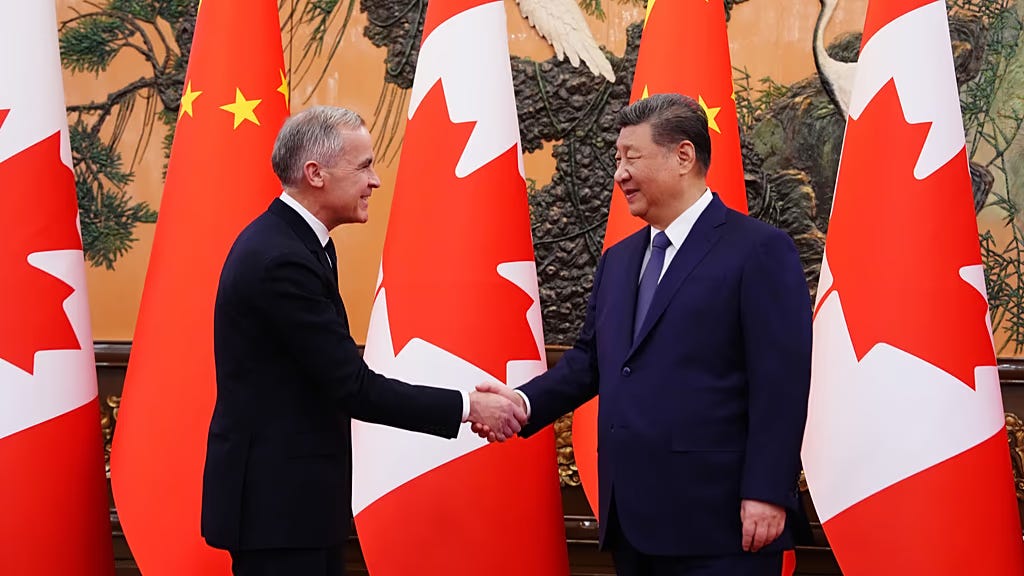
CBC News reports that Canadian Prime Minister Mark Carney met Chinese President Xi Jinping in Beijing, saying the two countries are entering a new phase in relations after signing agreements on energy, agriculture and animal health, while discussions on tariffs affecting electric vehicles and canola continued without resolution.
Xi courts global leaders amid uncertainty over Trump’s world order
The Business Times reports that Chinese President Xi Jinping has hosted a steady flow of foreign leaders as countries reassess diplomatic and economic ties in response to policy shifts under US President Donald Trump. The meetings focused on trade, investment and strategic cooperation, with Beijing presenting itself as a stable partner as global uncertainty rises over US foreign and economic policy direction.
US warns UK over China’s planned mega-embassy in London
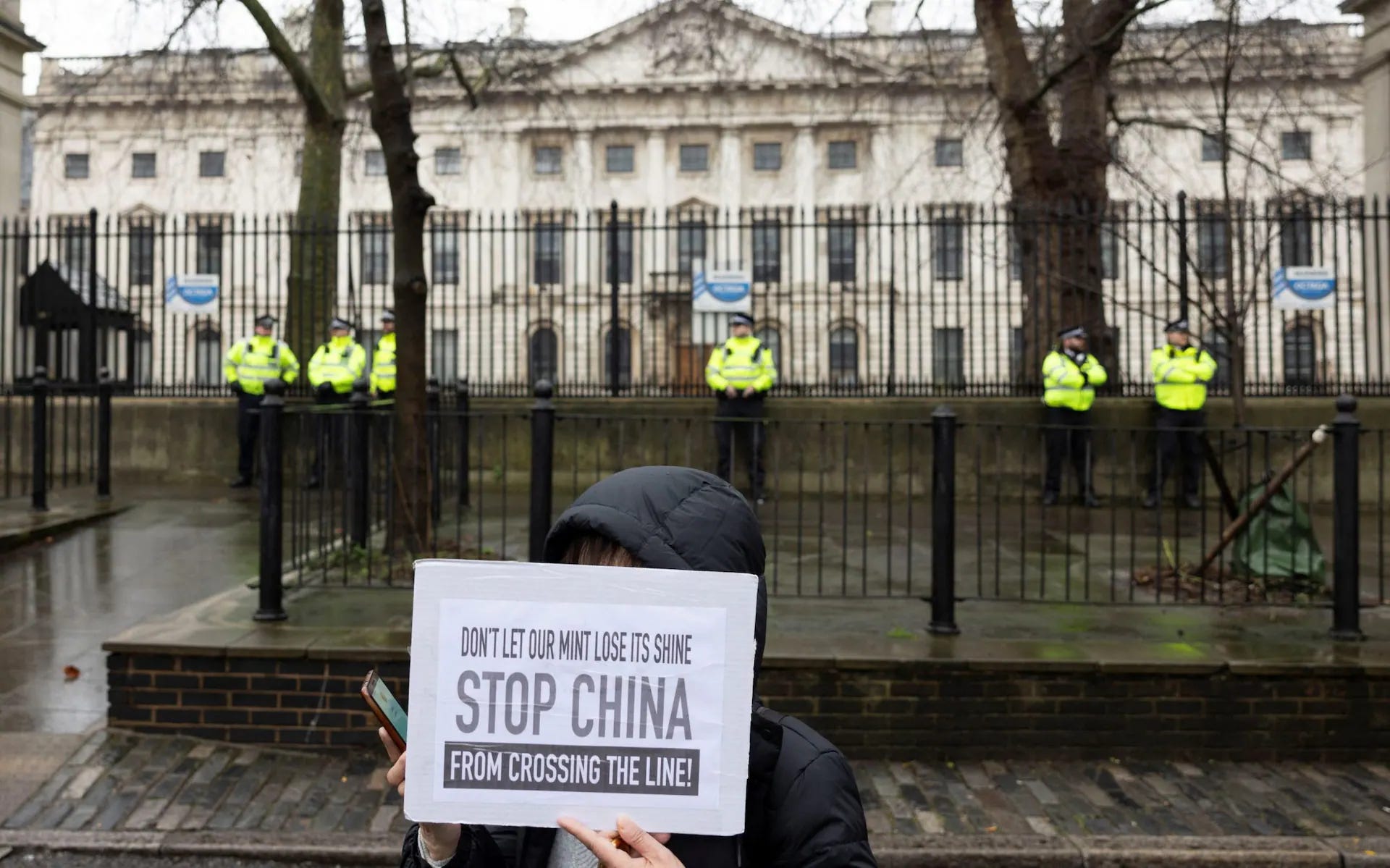
The Telegraph reports that the United States has raised concerns with the UK government over China’s plans to build a large new embassy complex in London, citing security and intelligence risks. The issue has gained renewed attention amid heightened tensions between Washington and Beijing, with US officials urging caution as Britain considers approval for the project.
China-linked port operator faces scrutiny over Panama Canal role
The Wall Street Journal reports that CK Hutchison’s control of ports at both ends of the Panama Canal has drawn renewed political and security scrutiny amid rising US-China tensions. US officials and analysts have raised concerns about strategic leverage over a critical global trade route, while the company has said its port operations are commercial in nature and subject to Panamanian law.
China signals closer engagement with Argentina
Anadolu Agency reports that China said it is ready to strengthen exchanges and cooperation with Argentina, according to its foreign ministry, as both sides seek to deepen ties across political, economic and cultural areas. The comments come amid efforts by Beijing to maintain stable relations with Latin American partners despite shifting regional and global dynamics.
Luxury durian trade booms as China drives South-east Asia demand
BBC News reports that China’s rapidly growing appetite for durians has transformed farming towns across South-east Asia, including Raub in Malaysia, where premium Musang King fruit has become a major export. China imported a record $7bn worth of durians in 2024, more than three times the level in 2020, with over 90 per cent of global exports now destined for the Chinese market, boosting incomes for farmers while also fuelling land disputes, supply pressures, food safety concerns and efforts by China to develop its own domestic durian production.
Indonesia
Indonesia urged to curb risky economic and political policies
Bloomberg Opinion argues that Indonesia faces rising economic and political risks from persistent policy choices that strain public finances, weaken institutions and unsettle investors. The column highlights concerns over fiscal discipline, governance standards and policy predictability, warning that continued tolerance of high risk could undermine long-term growth and stability.
Malaysia
Malaysia and Indonesia block Musk’s Grok over explicit content
CNBC reports that Malaysia and Indonesia have blocked access to Elon Musk’s Grok artificial intelligence chatbot after authorities said it generated obscene and non-consensual sexual content. Regulators in both countries said the action was taken to enforce local laws on online safety and content moderation, with officials demanding stronger safeguards before access could be restored.
Malaysians joke about ‘no oil’ after US embassy satellite post
The Independent reports that Malaysians responded with humour after the US embassy in Kuala Lumpur shared a satellite image of lightning storms over the country, prompting online jokes that Malaysia has no oil and should not attract attention from the Trump administration. Social media users posted self-deprecating comments and memes amid wider discussion of US actions on Venezuela’s oil and President Donald Trump’s remarks about resource control.
Philippines
Philippines to prioritise floods, corruption and trade as ASEAN chair
Fortune reports that Philippine President Ferdinand Marcos Jr said his country will focus on disaster resilience, anti-corruption efforts and trade issues as it prepares to take on the ASEAN chairmanship. Marcos said climate-related flooding, governance standards and the impact of tariffs on regional economies would be central themes during the Philippines’ leadership of the bloc.
Rubbish landslide death toll in Philippines rises to 11
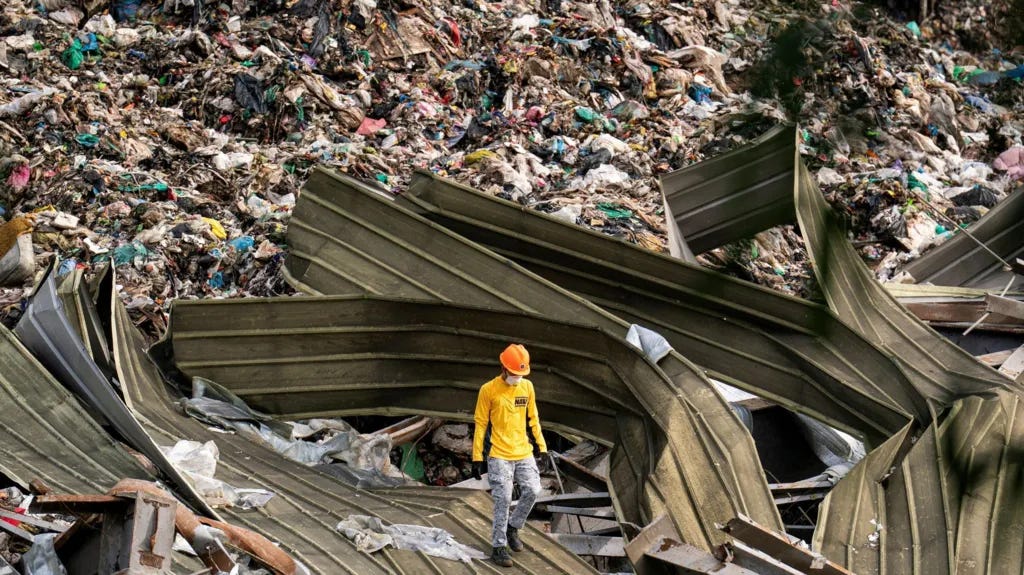
BBC News reports that at least 11 people have been killed after a landfill collapse in Cebu City in the central Philippines, with more than 20 still missing and dozens injured. The landslide occurred at the Binaliw landfill while over 100 workers were on site, prompting the suspension of operations by the landfill operator and investigations into possible causes including heavy rainfall, engineering failures and broader shortcomings in the country’s waste management system.
Bangladesh
EU deploys election observation mission to Bangladesh
European External Action Service reports that the European Union has launched a full Election Observation Mission to Bangladesh for the 12 February 2026 parliamentary elections, following an invitation from the authorities. Led by European Parliament member Ivars Ijabs, the mission began work in late December and is deploying long term observers across all 64 districts to assess the electoral process against national law and international standards, marking the EU’s first full election observation in Bangladesh since 2008.
Bangladesh Catholics seek return of land for country’s first church
EWTN News reports that Catholic communities in Bangladesh are campaigning to recover land linked to what is believed to be the country’s first church, saying it was gradually taken over through state action and private encroachment. Church leaders and local Catholics say the loss has erased an important part of Christian history in the region and are calling on authorities to recognise historical records and restore ownership.
Pakistan
Pakistan signs pact with Trump-linked crypto firm to explore digital payments
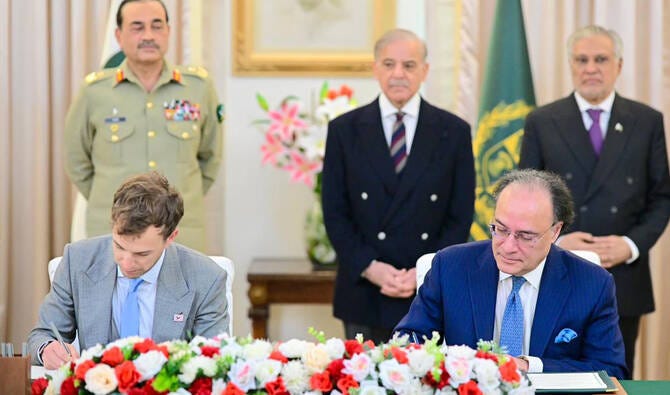
Arab News reports that Pakistan’s finance ministry signed a memorandum of understanding with World Liberty Financial, a crypto venture linked to the family of US President Donald Trump, to explore using a dollar-linked stablecoin for cross-border payments. The deal provides a framework for technical talks on digital payment systems and comes as Pakistan seeks to regulate digital assets and improve remittances, with plans for a central bank digital currency pilot and new virtual asset legislation.
Pakistan and Indonesia closing in on jets and drones defence deal
Arab News reports that Pakistan and Indonesia are nearing a defence agreement that could include the sale of Pakistani combat jets and unmanned drones, following high-level talks between defence officials in Islamabad. The proposed deal reflects growing interest in Pakistan’s military hardware after its aircraft saw deployment in recent regional conflicts.
Japan
Japan coalition partner signals possible snap election
Bloomberg reports that a key partner in Japan’s ruling coalition said the country may be entering a new phase that could lead to a snap general election, amid political uncertainty and pressure on Prime Minister Fumio Kishida’s government. The comments follow weak approval ratings and ongoing debate within the coalition over policy direction and electoral timing.
Japan and Philippines sign military logistics pact amid China tensions
Bloomberg reports that Japan and the Philippines have signed a military logistics agreement allowing their forces to share supplies, fuel and services during joint activities, as both countries deepen security cooperation amid disputes with China. The pact is intended to improve interoperability and operational readiness, reinforcing defence ties as regional tensions persist.
Sri Lanka
World Bank approves $50m grant for Sri Lanka’s digital transformation
CoinGeek reports that the World Bank has approved a $50m grant to support Sri Lanka’s digital transformation agenda, focusing on expanding digital public infrastructure, improving online government services and strengthening digital skills. The funding is aimed at boosting efficiency, transparency and inclusion as the country advances public sector reforms and economic recovery efforts.
Sri Lanka Air Force inducts US-built TH-57 Sea Ranger helicopters

Aerospace Global News reports that the Sri Lanka Air Force has inducted US-supplied TH-57 Sea Ranger helicopters to support pilot training and light utility operations. The aircraft were transferred under a US assistance programme, with officials saying the move strengthens training capacity and deepens defence cooperation between Sri Lanka and the United States.
Thailand
At least 32 killed after crane collapses on train in Thailand
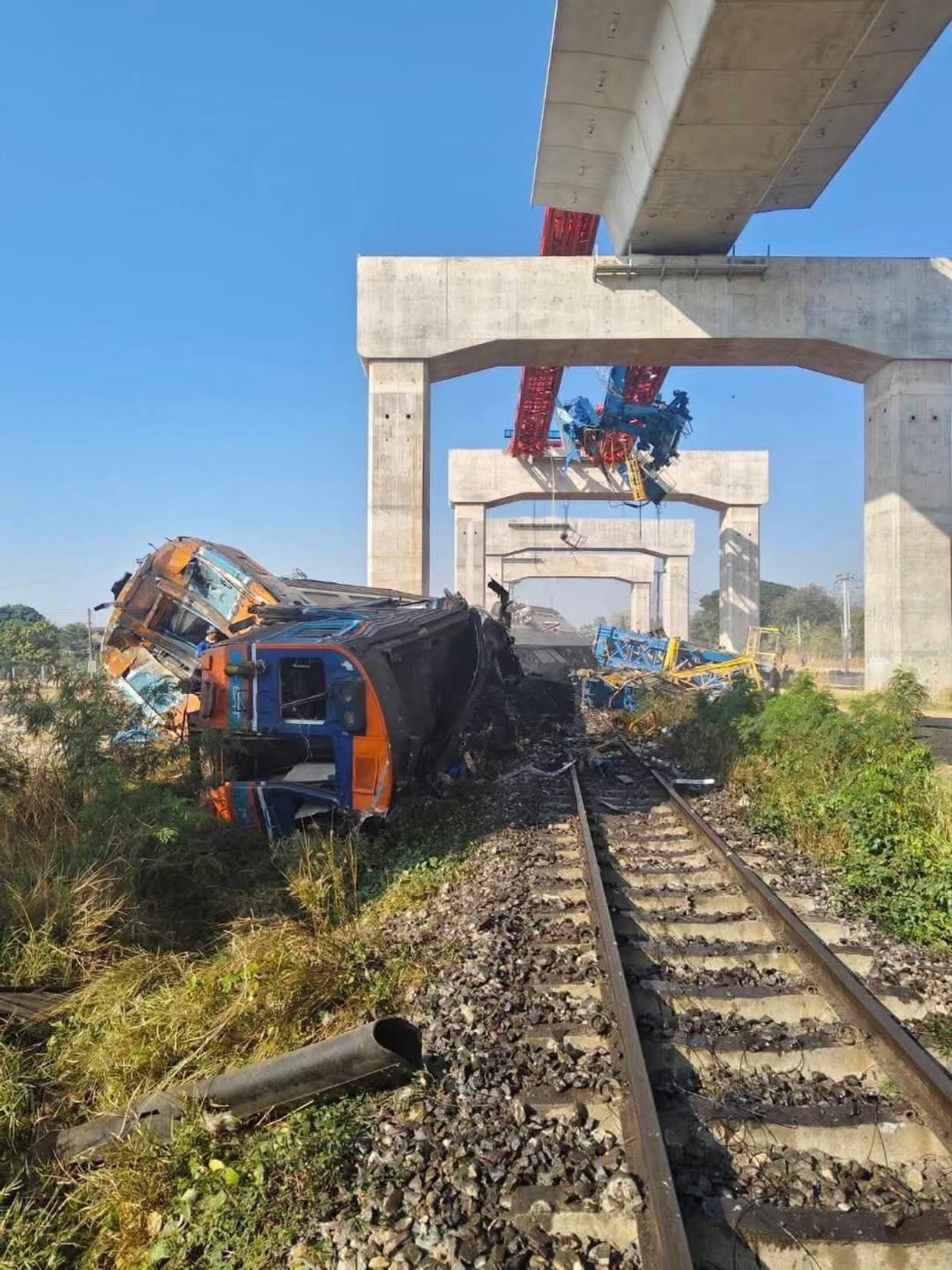
BBC News reports that at least 32 people were killed and 66 injured after a construction crane fell onto a moving passenger train in north-east Thailand, derailing carriages and causing one to catch fire. The train was carrying about 171 passengers when it was struck during overhead rail construction work, with authorities launching an investigation and the State Railway of Thailand pursuing legal action against the contractor responsible.
Singapore
Singapore urged to shift from state-led expansion to productivity growth
Atlantic Council reports that Singapore needs to move away from growth driven by state-led expansion towards a productivity-led model to sustain long-term economic performance. The report argues that slowing labour force growth, rising costs and diminishing returns from public investment require reforms focused on innovation, firm-level productivity, skills upgrading and more efficient capital allocation.
China-linked Manus AI surfaces in Singapore after Meta ties questioned
Axios reports that Manus, an artificial intelligence company linked to China, has emerged in Singapore after scrutiny over its reported connections to Meta and concerns in Washington about potential national security risks. The company said it operates independently, while US policymakers have raised questions about data access, ownership and the use of overseas entities amid growing scrutiny of Chinese-linked technology firms.
Myanmar
Myanmar’s first post-coup elections criticised as fighting continues
PBS NewsHour reports that Myanmar’s planned elections, the first since the 2021 military coup, have been widely criticised by opposition groups and international observers as illegitimate, with large parts of the country affected by ongoing civil conflict. Critics say voting cannot be free or fair amid widespread violence, displacement and the exclusion of key political parties, while the military government maintains the polls are necessary to restore stability.
Vietnam
Google to develop and manufacture high-end smartphones in Vietnam
Nikkei Asia reports that Google plans to develop and manufacture high-end smartphones in Vietnam this year, marking a shift of more advanced production away from China. The move reflects efforts to diversify supply chains and deepen Vietnam’s role in global electronics manufacturing, with local facilities expected to handle both development and assembly for premium devices.
Trump’s Vietnam envoy nominee targets widening US trade gap
The Business Times reports that US President Donald Trump’s nominee for ambassador to Vietnam said reducing the bilateral trade imbalance would be a priority, as Vietnam’s trade surplus with the United States has surpassed China’s. The nominee told lawmakers that Washington would press Hanoi to buy more US goods and address trade practices as economic ties deepen amid shifting supply chains.
Cambodia
Cambodia seeks to reduce reliance on China amid US trade tensions
Financial Times reports that Cambodia is moving to lessen its economic dependence on China, its largest foreign investor, as it faces fallout from the US-China trade war and seeks to diversify trade and investment partners to shield its economy from external pressures.
Laos
Living standards improve in Laos amid signs of economic recovery
Asia News Network reports that living standards in Laos are showing improvement as the economy stabilises, with easing inflation, stronger tourism receipts and rising household incomes contributing to recovery. Officials cited improved access to basic goods, gradual currency stabilisation and increased economic activity as indicators of progress following recent economic pressures.
105 Buddha images unearthed in Laos’ Champasak province

Asia News Network reports that authorities in southern Laos have uncovered 105 Buddha images during excavation work in Champasak province. The artefacts, believed to date back several centuries, were found near an ancient temple site, with officials saying the discovery highlights the area’s historical and cultural significance and will be preserved for further study.
Nepal
Nepalese royalists call for monarchy’s return ahead of March elections
ABC News reports that supporters of Nepal’s former monarchy have staged demonstrations demanding the restoration of the royal system ahead of national elections scheduled for March. Protesters criticised the current republican system, citing political instability and economic hardship, while the government reiterated that Nepal remains a federal democratic republic and that any change to the system would require constitutional processes.
Maldives
Vaadhoo opens renewable energy hydroponics farm to boost food security
Sun.mv reports that the Vaadhoo Green Farm in the Maldives was inaugurated as a renewable energy-powered hydroponics facility designed to produce 600kg of cucumber and 400kg of edible leaves per cycle and generate about MVR 80,000 in monthly income. The project aims to strengthen food security and empower women, with training provided in hydroponic farming and solar system maintenance.
Afghanistan
Trump administration accused of offering incentives to Afghan officials
Zeteo reports that the Trump administration has been accused of attempting to offer financial and political incentives to Afghan officials in exchange for cooperation on US priorities, according to people familiar with the matter. The report says the alleged approach has raised concerns among diplomats and analysts about US credibility and the handling of relations with Afghanistan amid broader regional instability.
Brunei
Brunei and Singapore mark 50 years of defence cooperation
The Star reports that Brunei and Singapore marked the 50th anniversary of their defence ties, highlighting long standing military cooperation, joint exercises and training arrangements. Officials from both countries reaffirmed commitments to deepen collaboration as part of broader efforts to support regional security and stability in South-east Asia.
Global Risk🗺️
Machado gives Trump her Nobel peace prize medal
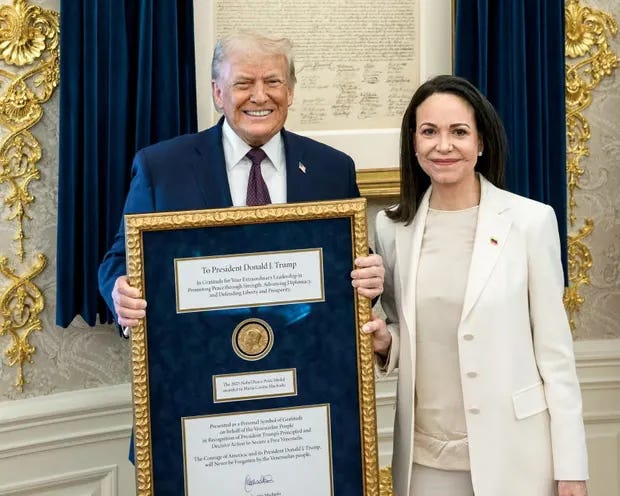
The Guardian reports that Venezuelan opposition leader María Corina Machado said she presented her Nobel peace prize medal to US President Donald Trump during a White House meeting as a symbolic gesture of gratitude, a move acknowledged by Trump but rejected by Nobel organisers, who said the prize cannot be transferred.
US to suspend immigrant visa processing for applicants from 75 countries
Time reports that the Trump administration will indefinitely halt immigrant visa processing for people from 75 countries from January 21, citing concerns about migrants relying on public assistance, while tourist, business and other non-immigrant visas will remain unaffected as part of a broader tightening of legal immigration policy.
Russia expels British diplomat over spying allegations
BBC News reports that Russia has ordered a British diplomat to leave the country within two weeks after accusing him of working as an undeclared intelligence officer at the UK embassy in Moscow. Russian authorities said the diplomat’s accreditation had been revoked and warned of further action if Britain escalates the situation, while the UK government has not yet responded to the allegations.
Western intelligence assesses stability of Iranian regime
Intelligence Online reports that Western intelligence agencies are intensifying efforts to assess the stability of Iran’s political system amid internal strains, elite tensions and regional pressures. Officials are closely monitoring leadership dynamics, security institutions and succession scenarios, as uncertainty grows over the regime’s resilience in the face of economic stress and geopolitical confrontation.
Arab states intervene to prevent US strike on Iran
The New Arab reports that Saudi Arabia, Qatar, Oman and Egypt conducted urgent diplomacy with Washington and Tehran to avert a threatened US attack on Iran over its handling of protests, warning of regional security and economic fallout, before President Donald Trump said he had decided against military action for now.
Qatar confirms precautionary personnel movement from key US air base
Euronews reports that Qatar has confirmed a limited movement of personnel out of a major US air base in the country as a precautionary measure amid heightened regional tensions. Officials said the step was temporary and did not affect base operations or reflect any immediate security threat, emphasising continued coordination with the United States.
AFP’s most wanted fugitive arrested in Iraq
Australian Financial Review reports that Australian Federal Police have confirmed the arrest in Iraq of their most wanted fugitive, following years of international pursuit. The man is accused of serious organised crime offences linked to Australia, with authorities saying his arrest involved cooperation with Iraqi and international law enforcement agencies and extradition arrangements are now under consideration.
UPenn faculty condemn US demand for lists of Jewish staff and students
The Guardian reports that faculty groups at the University of Pennsylvania have condemned a demand by the US Equal Employment Opportunity Commission for names and personal details of Jewish professors, staff and students as part of an antisemitism investigation. The groups have moved to intervene in a federal court case, arguing that compiling such information threatens civil rights and safety, while the EEOC says the request is necessary to identify potential victims of workplace antisemitic harassment.
US government obtained device linked to Havana syndrome cases
CBS News reports that US authorities obtained and examined a device believed to be capable of producing directed energy effects consistent with symptoms reported in Havana syndrome cases affecting diplomats and officials. Investigators said the device had been acquired as part of an ongoing effort to determine the cause of the incidents, which have involved neurological symptoms, while the government has not publicly identified who may have used it or confirmed responsibility.
Syrian Kurds protest Aleppo violence amid fears of wider conflict
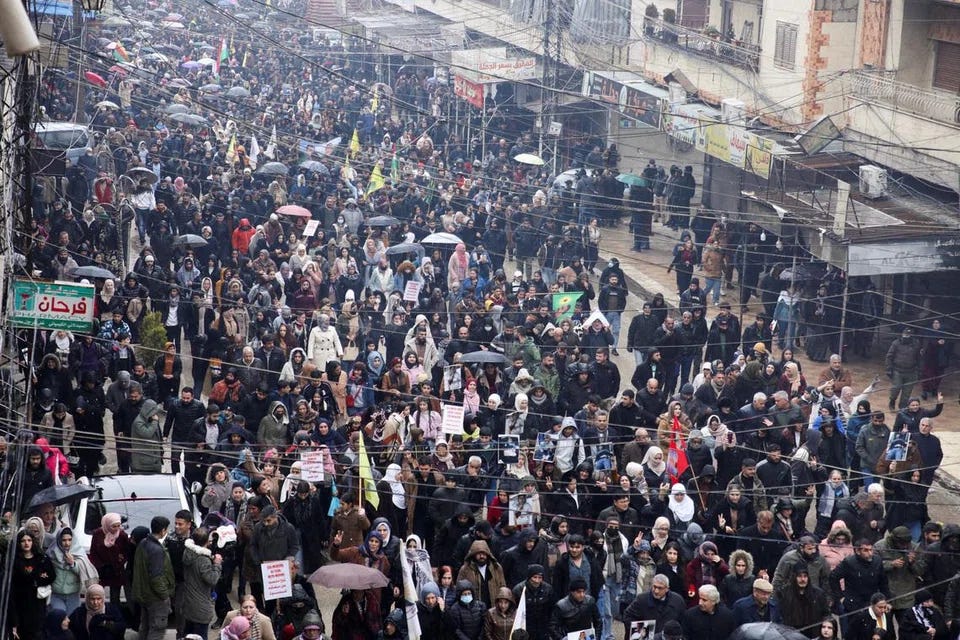
The Straits Times reports that Syrian Kurds staged protests following deadly violence in Aleppo, warning that renewed fighting could trigger a broader conflict. Demonstrations were held in Kurdish-controlled areas as tensions rose between rival armed groups, with concerns that instability could spread beyond the city and draw in regional actors.
Civilians flee Kurdish-held area east of Aleppo amid military pressure
Al-Monitor reports that Syrians began fleeing areas east of Aleppo after government forces set a deadline for civilians to leave amid fears of clashes with Kurdish-led Syrian Democratic Forces, with Damascus accusing the SDF of blocking departures, claims the group denied.
Politics tightens grip on central banks worldwide
The Economist reports that political pressure on central banks is intensifying across advanced and emerging economies, eroding long-standing independence that helped deliver low inflation and financial stability. It highlights US President Donald Trump’s confrontation with the Federal Reserve alongside rising fiscal stress, populist demands and heavy debt burdens in Japan, Britain, the euro zone and parts of the developing world, increasing the risk of government interference in monetary policy despite voters’ continued intolerance of high inflation.
Deaths outnumber births in France for first time since World War Two
Reuters reports that deaths exceeded births in France in 2025 for the first time since World War Two, reflecting a combination of declining fertility and an ageing population. Official data showed births continued to fall while deaths remained elevated, underscoring mounting demographic pressures on the country’s workforce, public finances and social welfare systems.
TSMC profit beats estimates on sustained AI demand
Bloomberg reports that Taiwan Semiconductor Manufacturing Company posted profits above market expectations, citing strong demand for chips used in artificial intelligence applications. The results underscored continued investment by global technology firms in advanced computing, supporting revenue growth despite broader uncertainty in the semiconductor industry.
Google’s Gemini push lifts Alphabet towards $4tn valuation
The Guardian reports that Alphabet’s market value has surged towards $4tn as investors respond to rapid adoption of its Gemini artificial intelligence models across Google products and cloud services. The gains reflect expectations that AI-driven tools will boost advertising, enterprise revenue and productivity, intensifying competition with rivals such as Microsoft and OpenAI.
Cold snap set to test weather records across Asia
Bloomberg reports that a surge of Arctic air is expected to sweep across East Asia next week, driving temperatures in parts of China and Korea more than 10°C below normal and potentially pushing January to be the coldest month since 2021. Forecasts show sharp drops of up to 20°C in cities including Beijing and Shanghai, with the cold wave likely to boost heating demand and lift liquefied natural gas prices as competition for fuel intensifies.
2025 was the third warmest year on record, scientists say
DW reports that global temperatures in 2025 were the third highest since records began, according to international climate monitoring agencies, continuing a long-term warming trend driven by greenhouse gas emissions. Data showed temperatures remained well above pre-industrial averages, with heat extremes recorded across multiple regions despite cooling effects from natural climate variability.
Decypher Data Dive📊
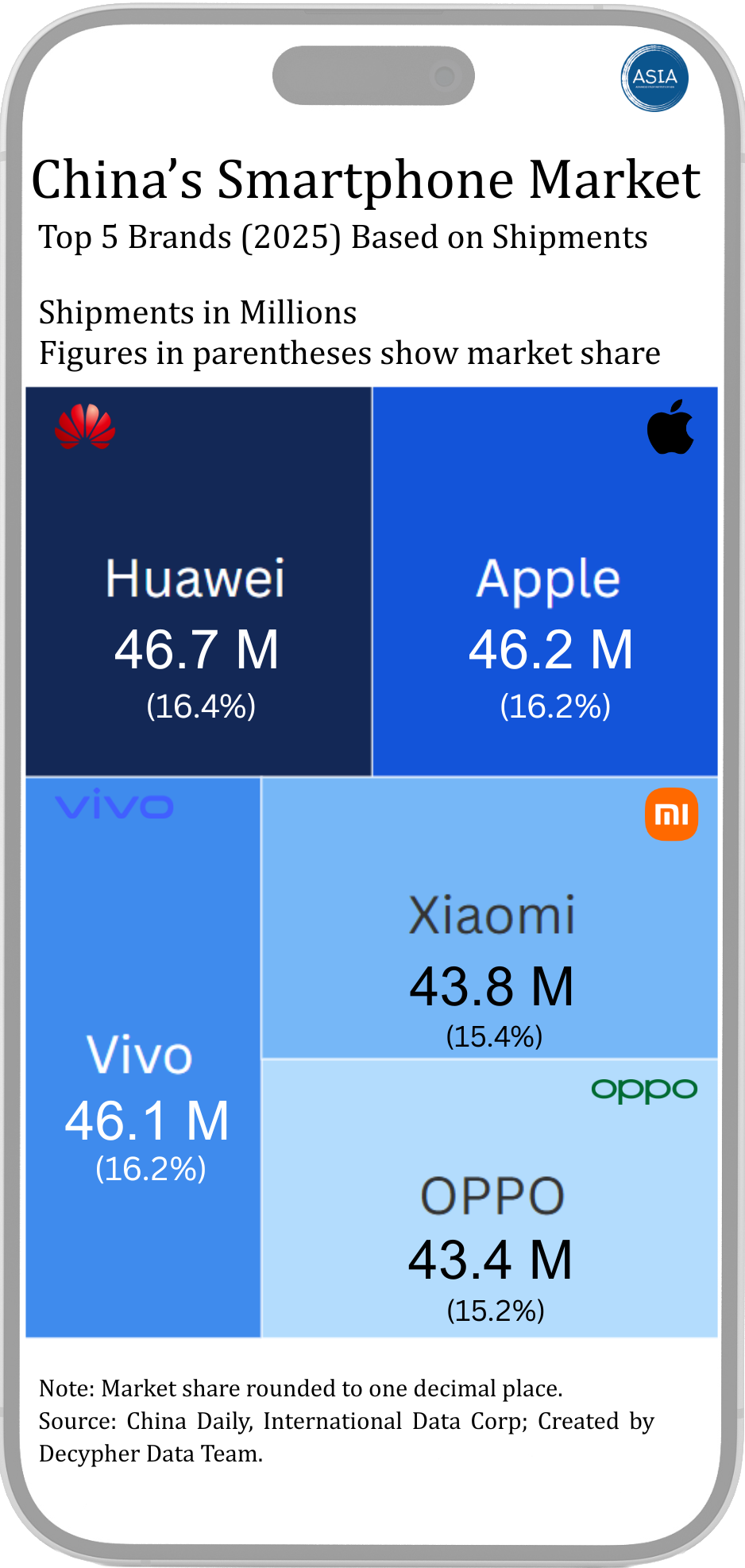
According to the latest International Data Corp (IDC) report on annual smartphone shipments in China, Huawei topped the market in 2025 with 46.7 million units shipped, securing a 16.4% market share. Apple followed closely in second place, shipping 46.2 million units and capturing 16.2% of the market. Overall, the Chinese smartphone market saw a slight contraction in 2025, with total shipments declining by 0.6 percent year-on-year to approximately 285 million units.
— — —
Sitrep By Priyanka
Microessay By Manash
Data By Bhupesh
Edited By Aurko
Produced by Decypher Team in New Delhi, India
— — —