


Twenty-nine states signed up for cheap AI access. The same month, Beijing was quietly deciding what parts of it they’d actually get to keep
A hall in Shanghai, the evening of 16 July 2026. Chandeliers, a long table, twenty-nine foreign ministers and deputy prime ministers waiting their turn with a pen. The UN Secretary-General sits in the front row and not signing, just watching. China’s foreign minister, Wang Yi, signs first. By the time most of the world wakes up to read about it, the World Artificial Intelligence Cooperation Organization already exists, headquartered in Shanghai, its founding text committing every signatory to “the purposes of the UN Charter” and a “people-centered approach.” Guterres himself attended, lending the ceremony a legitimacy no press release could buy on its own. The deputy prime ministers of Kazakhstan, Laos, and Pakistan sign for their governments. Nobody rushes.
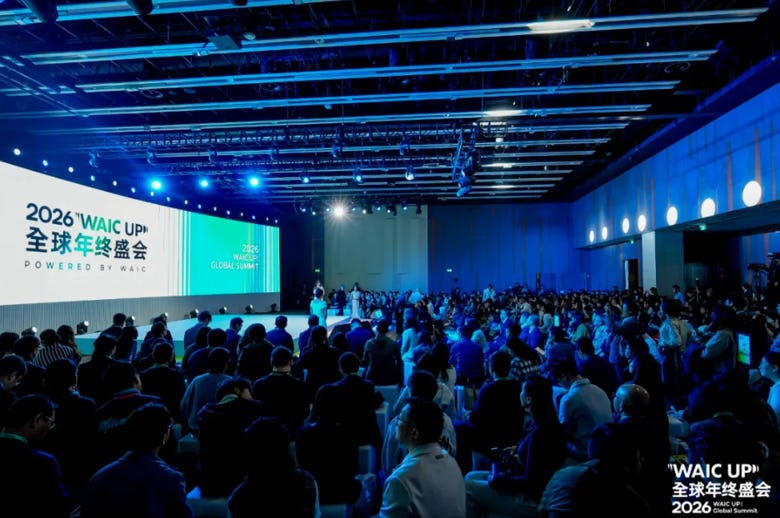
The next morning, Xi Jinping takes the stage at the World AI Conference and delivers the line that will end up in every headline: AI development, he says, should not be “a solo performance by a single country” but rather “a symphony of international cooperation.” It’s a good line. It’s also, notably, aimed at an audience that isn’t in the room, because the room, for all its ceremony, is missing some conspicuous names.
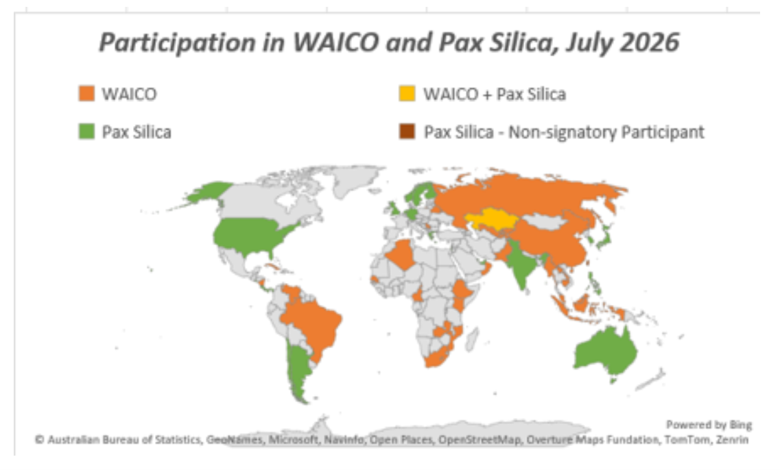
No G7 state signed. No EU member. Not the United States, not the UK, not Japan, not Canada, not South Korea. And not India, which currently holds the BRICS presidency and is, pointedly, the only one of the five founding BRICS members absent from the founding roster. A body built to speak for the developing world just launched without the developing world’s largest democracy at the table.
Whether WAICO is admirable multilateralism or soft-power theatre dressed in UN language is a debate for people who enjoy debates. The sharper question, and the one worth actually answering, is this: what did twenty-nine countries just sign up to receive?
WAICO is a standing intergovernmental organization with a Council and a Secretariat, its mandate spanning capacity-building, technical standards, interoperability, open-source ecosystems, and coordination with existing UN processes, confirmed both by the Observer Research Foundation and by India’s World’s own explainer. It sits deliberately outside the UN system, a design choice, as Caixin’s coverage frames it, not an accident of drafting.
Xi pledged 5,000 AI training and seminar places for people from developing countries over the next five years, continued open-source model releases, and new cooperation centres with ASEAN, the African Union, and BRICS. That’s a number, a timeline, and named partners, which are more concrete than most diplomatic communiqués manage.
The membership rules matter as much as the promises inside them. Anyone can join. No values test, no regime-type screen at the door, the whole architecture is built around development and the global capability divide rather than shared politics. Compare that to the alternatives on offer: the G7’s Hiroshima Process and the American-led Pax Silica initiative are, at bottom, clubs of like-minded states. WAICO deliberately isn’t. Arindrajit Basu of the Carnegie Endowment puts the strategic logic bluntly: with Washington pulling back from AI norm-setting, he says, Beijing is “keen to demonstrate its global leadership” and it’s betting the pitch lands hardest with the roughly 130 countries that are neither chip designers nor chip fabricators, but will make up AI’s largest user base within a decade.
The lineage matters too, because it kills the lazy read that this was thrown together as a fast reaction to a geopolitical opening. It wasn’t. The Global AI Governance Initiative launched in 2023. An AI capacity-building action plan followed in 2024. Li Qiang proposed the organization by name at the 2025 WAIC. Xi reiterated it later that year. The signature came in July 2026. Three years, four deliberate steps. Whatever else this is, it isn’t opportunism.
Same government, same month, different ministries, and this is where the story actually earns its interest. On 7 July, Reuters reported, independently confirmed by TIME and Yahoo, that Chinese regulators, led by the Ministry of Commerce, had met with Alibaba, ByteDance, and Zhipu to discuss restricting overseas access to the country’s most advanced AI models, including systems not yet released. A tiered regime was floated: light filing for less capable open models, formal security review for stronger ones, and a possible ban on public release for the most capable of all. Officials also raised treating the theft or leak of proprietary AI as a national-security offence, which is the kind of legal reclassification that turns a corporate dispute into a criminal one.
Morrison Foerster’s reading of the State Council’s new Regulations on Outbound Investment, which were published on 1 June and came into force a month later, confirms that Article 13 folds technology transfers conducted through deploying technical personnel overseas, or arranging cross-border training, squarely into export-restriction territory. Not just formal IP assignments or licensing contracts. Training itself.
This produces an irony almost too neat to be accidental: WAICO’s flagship deliverable is training 5,000 people from developing countries, and China’s own outbound-investment rules, issued the same month, tighten the screws on technology transfer conducted through exactly that kind of training arrangement. Xi’s own keynote warned other governments against “overstretching the national security concept” in AI, delivered in the same month his government was busy overstretching its own.
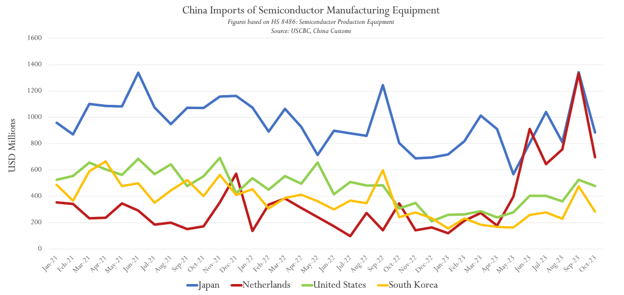
There’s a fair version of Beijing’s position, and it deserves an honest hearing rather than a dismissal. Exporting diffusion while guarding the frontier isn’t hypocrisy; it’s the same instrument the United States has been running, just pointed in the opposite direction along the same stack. Morgan Lewis’s analysis of the BIS rule that took effect 15 January 2026 confirms the shift from a blanket presumption of denial to case-by-case licensing for chips under specific performance thresholds, roughly H200/MI325X-class hardware, conditioned on guaranteed US-market supply first, a hard 50-percent cap on the volume share that can go to China or Macau, mandatory pre-shipment testing by an independent US lab, and know-your-customer obligations on the receiving end.
Both powers have landed on the same design: access to capability at one tier, tight licensing at the next, the gap between the two held as leverage. China has simply bolted an intergovernmental development body onto the front of that structure, something Washington, notably, has not done. White House AI policy advisor Sriram Krishnan has said the quiet part out loud on the American side: America wants “the world” to build on “the American AI stack,” chips and all. Beijing’s pitch is less blunt but not fundamentally different in structure, just dressed in different language and delivered with a training programme attached. Observer Research Foundation’s Basu Chandola calls the strategy “selective shaping” and adds that Chinese openness is best understood as openness to the diffusion of Chinese capabilities rather than open access in any broader sense.
The consequence for WAICO’s members is where all of this actually lands. Capacity-building delivers the use of AI: applications, trained people, and working infrastructure. It does not obviously deliver the ability to build independently, not if the tiered export-control proposal now sitting in Beijing’s consultation process eventually gets adopted. In that scenario, weights, training pipelines, and inference infrastructure would cross borders by licence, not by download, the way most of them do today. A member state could become a genuinely competent operator of Chinese AI without ever becoming a producer of it, running the models fluently, training its people on them, building a domestic services layer on top, while never quite holding the keys to reproduce the stack or negotiate the terms of its next generation. But that whole outcome hinges on an export-control package that, as things stand, remains a proposal under consultation rather than settled law.
India’s stated reason for staying out is security concerns; the broader state of the relationship with Beijing is legible and defensible on its own terms. But staying out is only a strategy if the alternative is properly funded, and that story turns out to be more complicated than a single number suggests.
India budgeted ₹2,000 crore (roughly ₹20 billion) for the IndiaAI Mission in FY 2025–26. According to MediaNama’s reporting on a Rajya Sabha reply from MeitY, dated 9 February 2026, two things happened before a rupee moved. First, the government’s own revised estimate for the year quietly slid from ₹2,000 crore down to ₹800 crore. Second, actual disbursement against that already-lowered figure came in at ₹379.15 crore. Measured against the original ₹2,000 crore line, that’s roughly a fifth, an alarming underspend on its face. As Observer Research Foundation’s Sameer Patil put it on the broader dependency question, access “can be shut down overnight”, a warning that cuts as sharply against India’s own underfunded sovereign push as it does against reliance on any foreign model.
The structural problem sits above the budget line entirely. Beijing intends to expand WAICO’s reach through BRICS and the SCO, two forums where India holds full membership, and where India currently chairs the former, with the eighteenth BRICS summit due in New Delhi later this year. New Delhi is set to negotiate around WAICO’s agenda from inside the room next door, while holding no seat at WAICO’s own table. Adding to the regional picture: five ASEAN states signed on as founding members, Indonesia, Malaysia, Cambodia, Laos, and Myanmar, alongside Kazakhstan, Kyrgyzstan, Tajikistan, Uzbekistan, and Oman. On India’s own periphery, the Chinese framework already has formal institutional standing. India, for now, has a parallel summit track and little else.
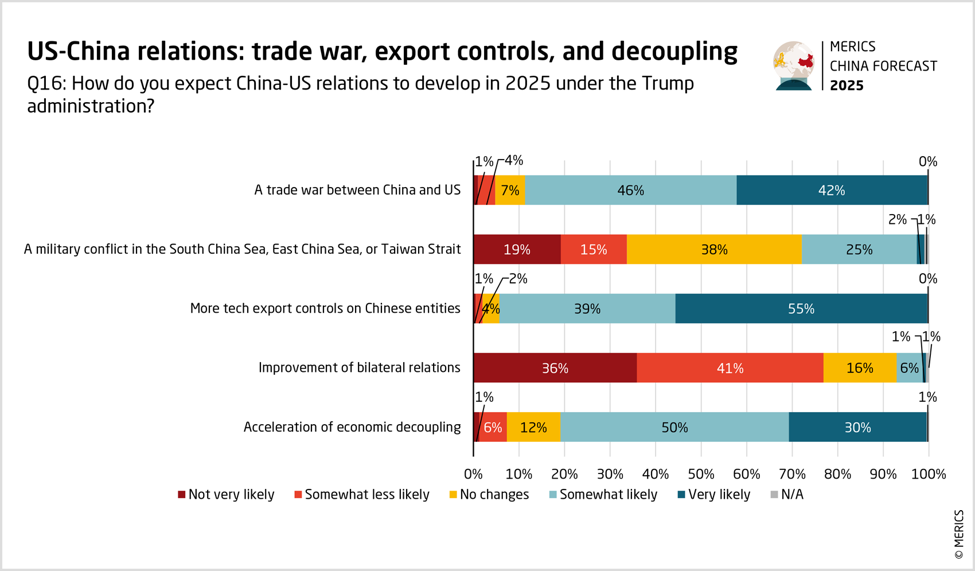
India hosted the 2026 AI Impact Summit, part of the safety-and-standards lineage running from Bletchley through Seoul and Paris, drawing endorsements from more than ninety countries and organizations, the United States, China, the UK, Russia, and Brazil all among them. India has also signed onto Pax Silica. That track carries genuine legitimacy and real Western buy-in. Whether it has much to offer a finance ministry in Lusaka weighing its options is a considerably harder question, and one nobody in New Delhi has fully answered yet.
An important takeaway for the member states, not for Delhi and not for Beijing, is that they seem to have signed a development agreement in the exact month the host government was quietly negotiating an export-licensing regime with its own leading AI labs. Both processes are public and traceable. Any state that joined WAICO on the strength of its capacity-building promises should read the 16 July founding agreement alongside the MOFCOM consultation that’s been unfolding in parallel through late July, and price the offer accordingly. The door is still swinging open: Bangladesh announced on 1 August that it will join as an observer, which is the latest in what looks like a steady trickle rather than a single closing ceremony.
The twentieth-century development bargain ran on concessional finance with policy conditions attached. The bargain now taking shape is assuming Beijing’s export-control consultation lands where the tiered proposal currently points and would run on concessional capability with conditions attached to the export licence instead: terms set in a ministry’s guidance document rather than a loan covenant, just as easily revised without renegotiation the next time the frontier moves. That’s a plausible trajectory based on the evidence gathered so far. It isn’t yet a fact on the ground, and the space between those two things is exactly where the next year of reporting on WAICO needs to live.
Essay: Maseera Shaik- Research Intern (Security, Crisis and Strategy) at The Advanced Study Institute of Asia (ASIA)
Produced by Decypher Team in New Delhi, India